Airbus (Some Call It Airbias) Needs More Germans

At least that’s what the Germans will tell you if you ask them, which of course nobody is.

OK, we’re actually talking about EADS here. “The German government is deeply concerned by the concentration and centralisation of research and development competencies in the headquarters in Toulouse, which have to a large degree led to the current imbalance,” a pissed off big-time German politician has lamented.

So much for Franco-German understanding (yet again). And if it were up to the Germans, they would even see to it that EADS ensure “equal numbers of French and German nationals occupy positions in the top five leadership levels,” although how you would equally distribute five people is unclear to me (government can do this kind of stuff, you know).

But none of this will lead to anything, folks. I can tell you that right now. The Airbus Chief Executive and designated EADS boss isn’t about to let any pigheaded German government official tell him what to do. His name is Thomas Enders and he’s a pigheaded German himself.

EADS was formed in 2000 from French, German and Spanish assets as a counterweight to U.S. aerospace and defense giants.

Speaking Of Ingratitude

Don’t the Libyans appreciate everything the Germans have done for them? Gee, I guess they don’t.

Before the Libyan revolution, Germany was the country’s second-largest trading partner. But then Germany abstained in a 2011 UN vote to militarily intervene in its civil war. Now that the war is over, German businesses and think tanks are finding that most Libyans want little to do with them.

“Water doesn’t flow uphill on its own / And wars, too, don’t stop themselves.”

Thanks But No Thanks

Undank ist der Welten Lohn (nothing is so hard as man’s ingratitude).

What were you expecting, Germany? The Greeks have politely but firmly said no to a recent offer made by 160 German tax collectors who were ready, willing and able to fly down to Greece and help their Greek tax collector buddies gather Greek taxes in a more efficient and Teutonic-like manner.

The Greeks may be broke, but they’re not crazy. Not even Germans can stand German tax collectors

Als Begründung müssen die “hart arbeitenden griechischen Beamten” herhalten.

“We don’t like your profligate spending,”

Germans are always lecturing the Greeks. “Except when it comes to buying our ridiculously expensive weapons systems,” they maybe ought to add.

Over much of the past decade, Greece – which has a population of 11 million – has been one of the top five arms importers in the world.

Most of the vastly expensive weapons, including submarines, tanks and combat aircraft, were made in Germany, France and the United States.

The arms purchases were beyond Greece’s capacity to absorb, even before the financial crisis struck in 2009. Several hundred Leopard battle tanks were bought from Germany, but there was no money to pay for ammunition for their guns. Even in 2010, when the extent of the financial disaster was apparent, Greece bought 223 howitzers and a submarine from Germany at a cost of €403 million.

Film Critics And Other Smart People Disappointed

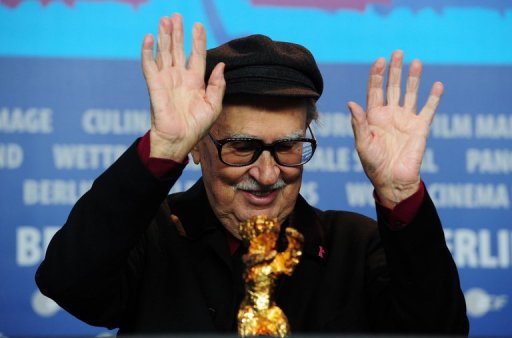
This year’s winner of the Golden Bear for best film at the Berlinale was actually a real dog, German film critics and other intellectual thinking folks and artist types everywhere are saying.

It’s not that the Italian film “Caesar Must Die” was bad in a cinematic sense or anything. It just didn’t meet the standards that modern film-makers and their kind aspire to, that’s all.

It was, in other words, too “humanist,” not at all a “strong, political film from young, engaged film-makers” (the film-makers who made this non-political film are old, engaged film-makers) and, worst of all, “it was a very conservative selection.” Pfui (yuck)!

Geez. If they had wanted to watch human, uplifting drama they would have gone to some other film festival. I don’t know which one that would be, of course, but it certainly wouldn’t/shouldn’t be the Berlinale.

“The jury shunned almost all the contemporary films that were admired or hotly debated at an otherwise pretty remarkable festival.”

But Germans Deny Wrongdoing All The Time

Germans on the street, I mean.

And they’re always open to receiving bribes or being granted advantages.

And they regularly blur the lines between personal, business (and political) advantage.

And the actions they take are never illegal.

So why should one lone guy up top be singled out and have to resign for doing the same damned things that they do? Just because he holds a meaningless, ceremonial office that nobody here respects in the first place, I mean.

I’ll tell you why. It’s because people always tend to get more upset about those who resemble them most. This guy just had to go.

Auch der Mainzer Karneval reagierte kurzfristig und änderte einen Wagen für den Rosenmontagszug. Wulff wird auf dem Wagen als geprügeltes Staatsoberhaupt im Boxring gezeigt. “Das Wort “angeschlagen” werden wir in “K.o.” verändern.”

Not One, Not Two…

But three films about Fukushima are being shown this year at the Berlinale.

That was to be expected, I guess. Especially now since Fukushima hysteria has all but disappeared from the Bildfläche (screen), even here in Germany.

It’s hard to keep people scared for months on end, now matter how important you think your agenda is. They just get tired and want to move on with their lives. The latest media stunt I just barely heard about had a lot of potential, for a few minutes, but then it rolled over and died, too.

I am looking forward to the big one-year anniversary media terror show bombardment to be held here in Germany next month, of course. But what are they going to be able to scare us with then? The German nation threatening to shut down all it’s nuclear power plants? Been there, done that. It makes you wonder sometimes why they even take the trouble to keep on agitating at us like they do. Now that the war is over and all, I mean. There’s just no place else to agitate at the moment, I guess (thanks for nothing, “Occupy Movement”). It must be hard being progressive sometimes. Much less all the time.

The 11-day film festival, which prides itself on its generally edgier and more politically-overt line-up over other film showcases, was perhaps a fitting backdrop for the documentaries.

Berlinale Predictably Boring

As usual. But at least we get to look at Angelina Jolie for awhile this year.

She and her husband what’s-his-name have been here for days now and refuse to go home, giving the notoriously anti-Hollywood Berlin Film Festival that all important Hollywood touch.

But as for the movies, the only Lichtblick (bright spot) I have heard about so far is a film called Barbara, “a harrowing reminder of what life was like two decades earlier behind the Iron Curtain and Berlin Wall that stood just a few meters to the east of theatres where the Berlinale is based.” You know, it’s a film about how suffocatingly horrible communist East Germany was. But who wants to see that? Here in Berlin of all places, I mean.

That and that flick about the Nazis on the dark side of the moon, of course.

“It’s not a film about East Germany, it’s a film about how people survive in a country that was on its way out.” – Hmm. Sounds like a film about Syria.

A Life Sentence?

In Germany? I don’t think so.

“An Islamic extremist who admitted killing two U.S. airmen at Frankfurt airport last year has been convicted of murder. The state court in Frankfurt found 22-year-old Arid Uka guilty Friday and sentenced him to life in prison for the March 2 attack on Afghanistan-bound servicemen as they boarded a bus at the airport.”

Well, that simply isn’t true. You may have known that there is no death penalty in Germany, but don’t be tricked by that ridiculous “life in prison” misnomer that Germans like to use all the time (lebenslänglich). Nobody spends life in prison here.

What Germans mean with a life sentence (in Germany) is 15 years. After that the convict gets paroled. Or, as in this terribly severe case, paroled and then “threatened” with possible  deportation.

Uka droht nach seiner Haft die Abschiebung.

Speaking Of The Dark Side

Here’s a little tidbit about the dark side of “Germany’s jobs miracle.”

“BEST LOW WAGE SECTOR IN EUROPE”

Job growth in Germany has been especially strong for low wage and temporary agency employment because of deregulation and the promotion of flexible, low-income, state-subsidised so-called “mini-jobs”.

The number of full-time workers on low wages – sometimes defined as less than two thirds of middle income – rose by 13.5 percent to 4.3 million between 2005 and 2010, three times faster than other employment, according to the Labour Office.

Germany can only hope that other European countries do not emulate its own wage deflationary policies too closely, as demand will dry up: “If everyone is doing same thing, there won’t be anyone left to export to.”

PS: Like I noted on a post the other day, the USA and Germany have more in common than they think. Now the Greeks are burning German flags, too.