It’s more like a Vollbremsung. That’s German for full braking or emergency stop.
Germany’s highest court just cancelled the Green’s latest rush-rush trick, I mean plan to save the planet at German taxpayers’ expense.
Germany’s Green Slowdown – While voters may still broadly support net zero goals, they’re not necessarily on board with the escalating costs of the transition.
… Today, it’s the Greens’ proposed ban on new gas boilers in homes that’s causing trouble. Against a backdrop of sliding poll ratings, the party’s partners in the coalition forced a dilution of the plan last month in a package that also included a massive road-building program.
In another blow to the policy — dubbed Habeck’s Heating Hammer by the opposition — Germany’s constitutional court has made a highly unusual intervention in the legislative process and ordered the government to give parliament more time to scrutinize the plan.
They have this annoying tendency to not spend money they don’t have.
It has to do with something they call “debt.” Whatever that is.
Analysis: Spend the recession away? Not the thrifty Germans – A drop-off in spending by inflation-hit consumers was one of the main reasons Germany fell into recession in the first quarter, even as other countries in the region managed to avoid it.
What’s more, even with inflation starting to ease across Europe, the signs are that Germany’s famously thrifty shoppers are not ready to spend their way out of recession – meaning the region’s largest economy will have to look elsewhere for growth.
The good news? Germans still have schlechte Laune (they’re still in a bad mood).
The bad news? They’re not in as bad a mood as they ought to be.
German consumer morale slows down on path to recovery – German consumer sentiment is set to nudge up in April as energy prices have relented somewhat from record highs, though a full recovery is not in sight anytime soon, showed a GfK institute survey on Wednesday.
The institute forecast its consumer sentiment index to improve to -29.5 heading into April from a revised reading of -30.6 in March, slightly below the expectations of analysts polled by Reuters of -29.0.
When prices rise, people buy less. Who would have expected that?
German retail sales post surprise plunge in December amid rising prices – German retail sales unexpectedly fell in December as a Christmas shopping period weighed down by high inflation and the energy crisis revived fears of a more marked slowdown in Europe’s largest economy.
Retail sales decreased by 5.3% in December compared with the previous month, the federal statistics office said on Tuesday. Analysts polled by Reuters had forecast a 0.2% rise in price-adjusted terms.
This is a brilliant new German invention (both the word and the concept) meaning that energy providers must first explain why they will be raising prices before going ahead and raising them anyway. Thanks German government (the ones who created this energy crisis in Germany in the first place), German citizens are most certainly saying, we wouldn’t be able to sleep soundly at night without you.
Germany to force energy providers to justify future price hikes – The German government plans to allow energy providers to raise prices next year only if objectively justified, the economy ministry said on Saturday, denying a media report that Berlin planned a ban on all energy price hikes for consumers.
Buying mood in Germany drops to all-time low – Consumer sentiment in Germany has reached an all-time low due to the high cost of living. The consumer barometer of the German Retail Association (HDE) fell for the third month in a row, reaching a value of 84.14 points in October, the association announced on Tuesday. The value had already fallen to 90.53 at the beginning of the Corona crisis in April 2020 but then temporarily rose again to more than 100.
Consumer pessimism is expected to have a “negative impact on private consumption in the coming months,” the association said.
No. Not those kind of tanks. Like tanks of gas. Germans will soon only have to pay an arm for their gasoline. They can keep their legs. For now.
German finance minister plans gasoline discount – German Finance Minister Christian Lindner plans to introduce a discount on gasoline to help motorists cope with doaring prices, Bild daily reported on Sunday.
There must be a better word than “stimulus” for that.
Wherever medication is given in huge and sudden doses, there’s a risk of unpleasant side effects. In Germany, and Europe generally, one of these may be a lasting shift in governing philosophy from market-friendly policies to state interventionism. That needn’t end in central planning. But even going part of the way would mean buying relief today at the price of misery tomorrow…
First, governments tend to confuse a company’s size with strength. Second, they’re usually worse than private investors at spotting winners, and always worse at pulling money out of losers. Third, they turn the economy into a big lobbying competition for businesses, which eventually hurts taxpayers and consumers.
No customers, no purchases, no spend money, no make money, no business, no future.
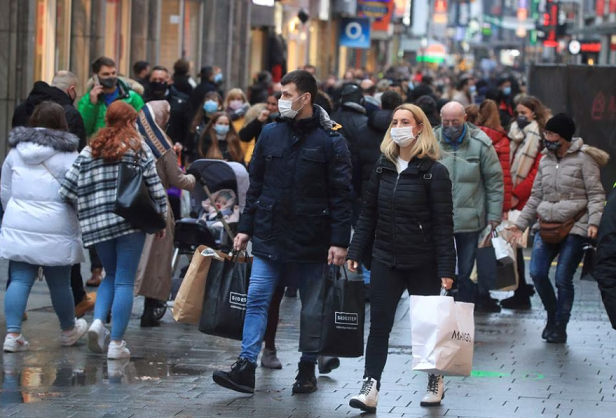
‘No lines, no crowds’ — Germans stay home as stores begin to reopen after coronavirus lockdown – German consumers are counting their pennies rather than returning to shop in large numbers as stores gradually reopen after being locked down during the coronavirus crisis, the national retailers association said on Wednesday.
“Consumers are in a crisis mode, consumer sentiment is in the doldrums.”





 Observing Hermann