Sunny, Windy, Costly And Dirty

What’s not to like here?

Super Minister

“Super minister?” I’d say this is more like a job for Superpenner.

The difference between the market price for electricity and the higher fixed price for renewables is passed on to consumers, whose bills have been rising for years. An average household now pays an extra €260 ($355) a year to subsidise renewables: the total cost of renewable subsidies in 2013 was €16 billion. Costs are also going up for companies, making them less competitive than rivals from America, where energy prices are falling thanks to the fracking boom…

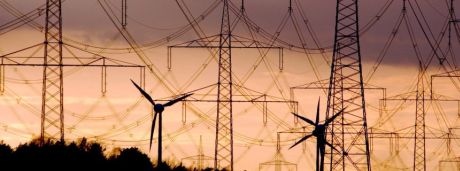
Cost is not the only problem with the Energiewende. It has in effect turned the entire German energy industry into a quasi-planned economy with perverse outcomes. At certain times on some days, sun and wind power may provide almost all German electricity. But the sun does not always shine, especially in winter, and the wind is unpredictable. And “batteries”—storage technologies that, for example, convert power to gas and back again to electricity—on a scale sufficient to supply a city are years away. Nuclear-power plants are being phased out (this week’s court decision that the closure of a plant in Hesse was illegal will raise costs even more, as it may entitle the operator to more compensation). So conventional power plants have to stay online in order to assure continuous supply. 

I Got The Power

The power bill, I mean. The Power Bill Blues, actually. Just like everybody else here in Germany.

Power

The electricity prices in Germany are the highest in the EU. A household here shells out 1000 euros annually (approx. $1,370). The French pay half. The EU average is around 700 euros.

Is this what they meant by the Energiewende (energy turnaround)? The power may be renewable here but I’m not sure how much longer the money is going to be.

Well, at least the electricity prices in Germany will be going up even higher again next year.

Bei den Strompreisen gehört Deutschland innerhalb der EU zu den Spitzenreitern. Ein Haushalt zahlt mehr als 1000 Euro, der EU-Schnitt liegt bei 700. Und im kommenden Jahr dürfte es noch teurer werden.

German Word Of The Day: Zwangsumlage

Zwangs- = compulsory. Umlage = levy, share in the costs. Put those two together and what do you get? Forced to share. But we’re talking about money here folks so let’s  just call it another tax and get it over with already.

Strom

This latest planned tax consists of forcing German households to purchase so-called “smart meters” or modern electricity meters that are supposed to regulate energy consumption by drawing electricity from that so wonderfully green German energy grid whenever this energy is cheaper. You know, like when hell freezes over?

This will only set back German consumers another 70 or 80 euros after already having been hit with a seven percent energy bill increase planned for next year, too (the seven can and will change, of course, and we all now in which direction it will be going).

Turn it around as much as you want. Anyway you turn this German energy turnaround around, you’ll always get the same result. Once you’ve turned it around, I mean. She is like way too expensive, señor.

But what can you expect from a government that is about to go retro and way back in the Wayback Machine to the good old days of SPD Never-Never Land again?

“Verbraucher sollten mit attraktiven Angeboten überzeugt, statt mit immer mehr ordnungsrechtlichen Einbaupflichten gezwungen werden.”

PS: The next German word of the day will be Abzocke. Here’s a tip: It means rip-off.

Taxing Nuclear Fuel Rods That Aren’t Being Used?

You can never be too rich or too thin, I guess. And if you’re Germany, you can never tax too much, either.

Taxation

Germany’s biggest utilities, still reeling from the country’s early exit from nuclear power, scored a major victory Tuesday when a Hamburg court said the national tax on nuclear fuel rods may violate European law.

The Hamburg finance court said it “cannot assess beyond any doubt” whether the tax on nuclear fuel used for electricity generation complies with European law. It will now ask the European Court of Justice to decide whether the levy conforms with rules that prohibit member states from creating new taxes on electricity for “general budget financing purposes.”

The tax was introduced at the beginning of 2011 and came as part of an extension of nuclear reactors’ operating lives that the government had agreed on. However, the nuclear disaster at Japan’s Fukushima power plant in March of that year triggered a U-turn in German energy policy, with Chancellor Angela Merkel ordering the immediate shutdown of the oldest plants and the early phaseout of nuclear energy by 2022. Out of 17 reactors that were in operation in March 2011, only nine are still producing power. But the fuel-rod tax remains in place, to the utilities’ annoyance.

Das Hamburger Finanzgericht will vom Europäischen Gerichtshof (EuGH) in Luxemburg zentrale Fragen zur umstrittenen Brennelementesteuer klären lassen.

Debacle, Disaster, Fiasco…

Just a reminder here again: “There is no free lunch.” Honest.

Lunch

Government intervention at its best (again). Germany’s deliberate attempt to make its energy greener using price guarantees and mandatory quotas for green energy IS NOT WORKING.

Try and remember: The whole idea was to make renewable energy more competitive and, therefore, in the end, cheaper. Well this attempt is so not working right now that German consumers pay higher prices now than ever before and German industry is soon to follow. And this, even though there is actually an oversupply of power. In essence, an energy bubble has been created because Germany’s renewable energy producers get a guaranteed minimum price for what they produce (this now includes farmers and communities and anybody else who can still get into the ponzi scheme).

Imagine you have various consumers going to a grocery store. Some of them want to buy a bottle of beer for 1 USD. Others would like to buy a bottle of champagne for 30 USD. In normal life people would just pay 1 USD for the beer and bubble-lovers would pay 30 USD for champagne. The German energy market is different. People who want the champagne pay 2 USD for it and those who want beer have to pay 2 USD. It’s a good deal for the champagne drinkers, getting subsidized by the beer buyers.

…Perhaps the least fair part of the whole scheme is how these prices disproportionately impact low-income households, who are forced to subsidize green energy for richer families to support politicians’ green energy visions.

Time To Say Goodbye

To “clean power rebates” for German industry, that is.

Germany collects surcharges from power users to help fund operators of solar and wind power installations. Heavy electricity users such as cement, steel and some chemical plants are exempt to keep them from being priced out of the global market.

Industry

The EU now wants to change this. And that should make almost everybody happy. Now many of these German industries will get priced out of the market or maybe moving their production facilities to other countries altogether.

MEHR ALS DIE HÄLFTE DES INDUSTRIESTROMS VON UMLAGE BEFREIT

PS: Grid nationalisation in Berlin? Close but no cigar. Nice try but now you’ll just have to grid and bear it.

Berlin Finally Beats Paris And London

And every other major city in the European Union, too. By a long shot. When it comes to paying the most for electricity, that is.

Berlin

Hot damn. No more provincial image here! This German Green Revolution rocks so bad that ich kann nicht soviel fressen wie ich kotzen möchte (I can’t eat as much as I want to barf about it).

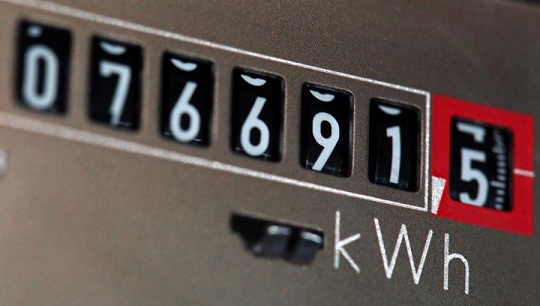
In September, Berliners paid an average of nearly $0.40 per kWh of electricity they purchase from the local power grid. To put this in perspective, the highest average electricity price in the continental United States is about $0.18 per kWh in Connecticut, according to the Energy Information Administration.

Whoopee! The Electricity Prices Are Going Up Again!

Seven percent in the coming year! For starters.

Strom

Hot dog. And all because of the The German Renewable Energy Act.

And this act kind of goes like this: Every kilowatt-hour that is generated from renewable energy facilities receives a fixed feed-in tariff. Renewable energy plant operators receive a 20 year, technology specific, guaranteed payment for their produced electricity. Anyone who produces renewable energy can now sell his ‘product’ for a 20-year fixed price.

And who pays this tariff? You guessed it.

Die EEG-Umlage steigt im kommenden Jahr voraussichtlich um einen Cent je Kilowattstunde.

Green Logic

This is how you save the world (from Climate Change).

Energy

German consumers already pay the highest electricity prices in Europe. So it follows, then, that the prices Germans pay for electricity need to be increased.

That is why a turnaround must be introduced – the infamous Energiewende or “energy turnaround” – with which, for instance, a renewable energy surcharge is levied that increases every consumer’s electricity bill from 5.3 cents today to between 6.2 and 6.5 cents per kilowatt hour — a 20-percent price hike. For starters, of course.

You see, this way everybody is happy because every single one of us then feels painfully, on a day-to-day basis, just how much he or she is pulling his or her own CO2 weight, all for the good of mankind, not to mention Planet Earth. And Mother Nature too, of course. Whoever she is.

In the near future, an average three-person household will spend about €90 a month for electricity. That’s about twice as much as in 2000.

Alternative Reality Expensive As Hell

As part of Germany’s switch to renewables, industry has been exempt from paying higher prices associated with solar and wind energy. The European Commission, however, believes the practice distorts competition on the Continent. Huge penalties could be in store.

Bill

The costs of start-up financing for green energy and the compensation for expansion of the power grid are added to customers’ electricity bills in the form of a special tax. The entire subsidy system is supposed to come to an end when green energy becomes competitive. That, at least, is the theory.

But the reality is different. No longer can one simply describe the tax as a way to get renewable energies off the ground. Indeed, following Berlin’s decision two years ago to shelve nuclear energy and accelerate the expansion of renewables, the EEG (Renewable Energies Act) has become a giant redistribution machine.

“The fact that German electricity prices are among the highest in Europe despite relatively low wholesale prices must serve as a warning signal.”