Are Even The Germans Starting To Wake Up?

From this Green nonsense?

Nope. But there are signs of hope.

Sidelined Greens lose faith in the German coalition – Governing partners accuse each other of ‘crowbar’ politics and ‘exploiting social qualms’

The German Greens once thought they were in the driving seat of Olaf Scholz’s coalition. Some now feel like back-seat passengers on a political road to nowhere.

“There’s a lot of frustration,” said Rasmus Andresen, a Green member of the European parliament. “This coalition promised progress and a fresh start, but, to be honest, I don’t see much evidence of that now.”

The source of their anger is the series of painful concessions forced on them late last month by their coalition partners, Scholz’s Social Democrats and the liberal FDP, which dismayed senior Green leaders and enraged the party’s rank and file.

Scholz is for many Greens the cause of their plight. They once saw him as a natural ally — he had, after all, campaigned at the last election to become Germany’s “climate chancellor”. But these days they increasingly see him as an obstacle, ready to sell out Green interests for the sake of political peace.

“Scholz has sided with the FDP,” said Reinhard Bütikofer, another Green MEP. “The FDP and SPD obviously decided they could score political points by exploiting social qualms about climate policy. But that’s populism.”

Boost Your Defense Industry

Not your defense.

That’s how it’s always been in today’s Germany. Search here (in the upper left) for “beautiful German weapon sale” to get just a few examples.

Thanks to Putin, Business Is Booming for Germany’s Defense Contractors – As governments rearm in response to Russia’s invasion of Ukraine, the German arms industry is a prime beneficiary, and that’s making some of the public uncomfortable.

PS: Happy Good Friday to that.

Germany’s Education System Sucks Almost As Much As US-Amerika’s

But we’re still number one! USA! USA!

85 percent of Germans dissatisfied with the education system, survey reveals – A staggering 85 percent of people are dissatisfied with schools and educational policy in Germany, according to a recent representative survey by the Forsa Institute. 85 percent of survey respondents said that they believed the German education system did not sufficiently equip children and young adults for leaving school.

Pupils’ delayed learning caused by school closures during the coronavirus pandemic was among the biggest concerns for respondents. Recent data from Destatis revealed that the number of children repeating an academic year increased by 67 percent between 2021 to 2022; the academic year 2021 / 22 saw 155.800 pupils retake a year. The survey results also come as Germany reckons with a debilitating teacher shortage, with between 32.000 and 40.000 posts unfilled.

German Of The Day: Schicht

That means shift. As in shift work.

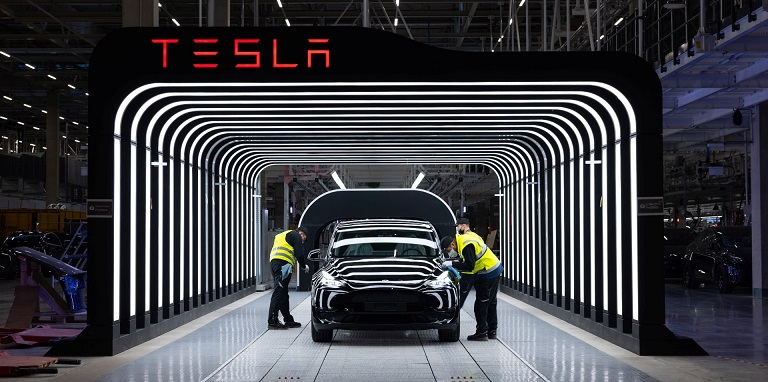
Tesla is reportedly looking to add a fourth production shift at Giga Berlin in Germany to double production in hopes of meeting a manufacturing rate of 500,000 vehicles annually.

Tesla has already ramped up its third shift, which helped the automaker obtain a weekly production volume of 5,000 vehicles per week, it confirmed in late March.

Managing Director Jochem Freyer from the employment agency in Frankfurt confirmed to rbb24 that Tesla has filled all of its openings for the third shift, and now the company is considering a fourth shift, which could help the company double its production output from 5,000 vehicles per week to 10,000.

First We Take Ostelsheim

Then we take Berlin.

A Syrian who arrived in Germany as a refugee in 2015 has been elected as the mayor of a village in the south-west of the country.

Ryyan Alshebl, 29, who is a member of the German Greens but stood as a non-party candidate, won an absolute majority in Sunday’s mayoral election in Ostelsheim, a small municipality of about 2,500 inhabitants in the state of Baden-Württemberg.

German Companies Leaving Hungary Almost As Fast As They’re Leaving Germany

In Germany they can’t afford to stay (energy costs).

In Hungary they can’t afford to pay (baksheesh). Or so they say.

Viktor Orbán Ups the Pressure on German Companies to Leave Hungary – German companies have long been active in Hungary. But now, Viktor Orbán is trying to force some of them to leave. And when they do, his closest allies stand to profit.

You Can Always Count On Us

To not be counted on.

Don’t thank us. It’s just what we do. Or don’t do, in this case.

German minister expects Bundeswehr shortages beyond 2030.

German Defense Minister Boris Pistorius has said the country’s military, the Bundeswehr, will not be able to bridge gaps in funding and supplies by 2030.

“We all know that the existing gaps cannot be completely closed by 2030… It will take years. Everyone is aware of that…”

Chancellor Olaf Scholz announced a special fund to raise €100 billion for the Bundeswehr last year, although this has not yet been put to use. The government last week also earmarked €12 billion over the next nine years to supply Ukraine with newly produced weapons and ammunition rather than from German stockpiles.

Now It’s Credit Crunch Time

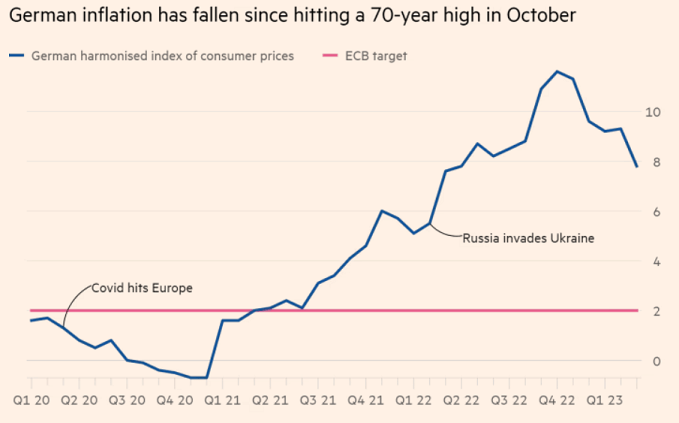
Energy price falls spark drop in German and Spanish inflation – Headline pressures ease but investors bet ECB will have to raise interest rates in May.

Some members of the governing council have called for the bank to adopt a more cautious approach after raising interest rates by half a percentage point this month.

The turmoil in the banking sector has also opened up the prospect of a potential credit crunch that could slam the brakes on both inflation and growth in the coming months.

German Of The Day: Schlechte Laune

The good news? Germans still have schlechte Laune (they’re still in a bad mood).

The bad news? They’re not in as bad a mood as they ought to be.

German consumer morale slows down on path to recovery – German consumer sentiment is set to nudge up in April as energy prices have relented somewhat from record highs, though a full recovery is not in sight anytime soon, showed a GfK institute survey on Wednesday.

The institute forecast its consumer sentiment index to improve to -29.5 heading into April from a revised reading of -30.6 in March, slightly below the expectations of analysts polled by Reuters of -29.0.