Charges Dropped Against German Comedian Because He Wasn’t Being Funny On Purpose

He was only being funny by accident, investigators say, so that’s OK.

Comedy

If he had been funny while trying to be funny on purpose, however, this guy would have been up Scheiße Creek  without a paddle. Germany comedy is no laughing matter, folks.

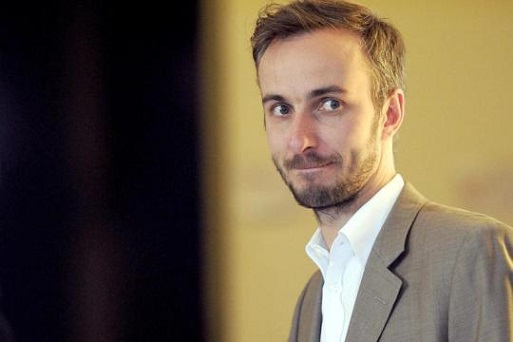
Prosecutors have been praised in Germany for dropping a criminal probe into a poem perceived as insulting by Turkish President Recep Erdogan. Satirist Jan Böhmermann’s wording unleashed a diplomatic row last April…

In a three-page declaration Thursday, the prosecutors said their investigation had not established a deliberate intent to insult (insult comedy = to be funny, or can be), sufficient to lead to a criminal conviction.

Es ist enorm wichtig für mich als Künstler in solchen Zeiten einen starken, selbstbewussten öffentlich-rechtlichen Sender mit klarer, unabhängiger Haltung hinter sich zu wissen.

Ninjas Not Allowed In School

I meant niqabs, of course (I always mix those two up for some reason).

Veil

A Muslim woman who had been accepted to night school in Osnabrück showed up for class wearing a niqab. When asked to remove it she refused and was subsequently expelled. She then went to court to fight the decision but didn’t bother to show up for a court appointment set to help clarify the matter. The court has now decided in favor of the school.

The whole thing is very schleierhaft, if you ask me. You know, “veiled in mystery?”

Eine Muslima, die an einem Osnabrücker Abendgymnasium mit einem Gesichtsschleier am Unterricht teilnehmen wollte, ist vor Gericht gescheitert.

PS: In a related story, you can now pick up pepper spray at one of Germany’s popular drugstore chains. Supply and demand and the invisible hand. Capitalism is a wonderful thing, folks.

You Gotta Have Rules

In order for the EU to work properly, I mean. Take deficit spending (please). The infamous Maastricht “deficit criterion” from 1992 is one of my personal favorites. It’s limited to 3 (three) percent.

Rules

The euro convergence criteria (also known as the Maastricht criteria) are the criteria which European Union member states are required to meet to enter the third stage of the Economic and Monetary Union (EMU) and adopt the euro as their currency…

2. Government budget deficit: The ratio of the annual general government deficit relative to gross domestic product (GDP) at market prices, must not exceed 3% at the end of the preceding fiscal year (based on notified measured data) and neither for any of the two subsequent years (based on the European Commission’s published forecast data). Deficits being “slightly above the limit” (previously outlined by the evaluation practice to mean deficits in the range from 3.0–3.5%[9]), will as a standard rule not be accepted, unless it can be established that either: “1) The deficit ratio has declined substantially and continuously before reaching the level close to the 3% limit” or “2) The small deficit ratio excess above the 3% limit has been caused by exceptional circumstances and has a temporary nature (i.e. expenditure one-offs triggered by a significant economic downturn, or expenditure one-offs triggered by the implementation of economic reforms with a positive mid/long-term effect)”.[5][6][10] If a state is found by the Commission to have breached the deficit criteria, they will recommend the Council of the European Union to open up a deficit-breached EDP against the state in accordance with Article 126(6), which only will be abrogated again when the state simultaneously comply with both the deficit and debt criteria.

I don’t understand everything there under item 2, of course, but apparently neither did most of the countries that signed the treaty (at least I get the 3 percent part). See the graph above about the EU’s top “deficit offenders.” It’s been going on like this for years and years, too. Any questions?

In Italien droht ein Bankenkollaps, in Spanien, Portugal und Frankreich herrscht der Schuldenstaat: Die Eurozone driftet auseinander, Regeln werden kaum noch eingehalten.
Remember: These Folks Don’t Represent All Muslims Living In Germany

They only represent about HALF of all the MODERATE ones: Nearly half of Turkish immigrants in Germany put Islam above law.

Turks

That’s right. The latest Emnid poll indicates that 47 per cent of the more than three million Turkish citizens living in Germany admit following their religion was “more important” than obeying “the laws of the land in which I live”.

32 per cent said they yearn to live in a society of the times of the Prophet Mohammed.

I guess we don’t even want to know what the radical Muslims out there are thinking. Like duh. We already do.

36 Prozent der Befragten überzeugt, nur der Islam könne die Probleme der Zeit lösen. 47 Prozent halten die Gebote des Islams für wichtiger als die deutschen Gesetze.

Many Germans Feeling Ill Already

Germany will legalise medical cannabis in early 2017.

Pot

Now the government just has to figure out how to grow the stuff – The ultimate goal of German health authorities is to grow medical marijuana on German soil at specially approved sites.

It is a high art, after all. And knowing how our half-baked buds in government regularly blow things sky high, the whole thing might just end up going to pot. I bet you it’s going to toke them forever to sucseed, in other words.

Um die Versorgung mit Cannabis in kontrollierter Qualität sicherzustellen, will die Regierung den Anbau der Droge zu medizinischen Zwecken unter staatlicher Kontrolle ermöglichen. Über den Anbau wacht das Bundesinstitut für Arzneimittel und Medizinprodukte.

German Of The Day: Majestätsbeleidigung

That means a slight or an insult against a sovereign majesty-type person (lèse majesté).

Law

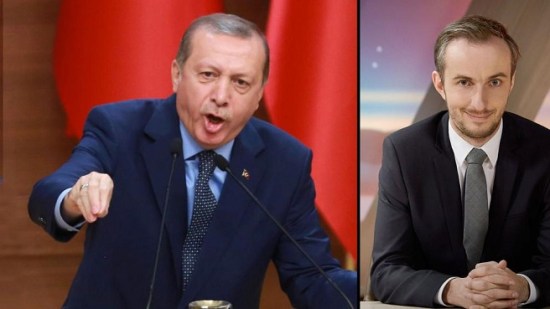
You know, the crime German comedian Jan Böhmermann recently committed against the Top Sultan What’s in Charge in Turkey? In the year 2016, I mean?

Anyways, this law, paragraph 103, is still on the books here in Germany and Hamburg’s justice minister has decided to go way out on the limb here and give it a shot and see if he could maybe sort of like get rid of this ridiculous piece of legislation already. It would be a big step forward into the unknown and all that, of course, but I, for one, am convinced that German civilization will be able to handle it.

Die Justizbehörde geht davon aus, dass das Gesetz noch vor der Sommerpause gestrichen werden könnte und das Verfahren gegen Böhmermann dann eingestellt werden müsste. Davon unberührt blieben jedoch Ermittlungen gegen Böhmermann wegen Beleidigung nach Paragraf 185 Strafgesetzbuch.

Censorship Is For Everyone

Just like Liebe.

Rammstein

Hey, you know the deal here in Germany: Anything that is not expressly allowed is strictly forbidden. Or at least very, very, very suspicious. You know, like free speech?

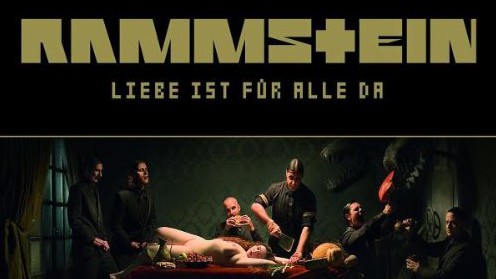
Rammstein has filed a lawsuit against Germany for having temporarily indexed the album “Liebe ist für alle da,” said a spokesperson of the Bonn Regional Court on Monday (04.04.2016). The rock band is seeking 66,000 euros (nearly $75,000) in damages.

In 2009, the Federal Department for Media Harmful to Young Persons, a German governmental agency responsible for listing works that could potentially harm youths, had decided that one of the songs of the album, “Ich tu dir weh,” as well as the pictures in the booklet accompanying the CD, were “brutalizing” and “immoral.” The entire album was indexed.

Once a work gets listed by the organization, it may not be advertised and can only be sold under strict conditions – limiting its potential success.

Ist alles, was nicht ausdrücklich verboten ist, erlaubt?

VW Too Big To Fail?

Then it’s too big. Think GM (Government Motors). Only different. As in much worse.

VW

At Volkswagen AG, political connections come already fitted.

When it comes to Volkswagen, German chancellors don’t intervene in company decisions. But the unique arrangement in Lower Saxony (it holds 20 percent of the company) has spawned alumni in high places with an interest in the boardroom, including Merkel’s Social Democratic predecessor, Gerhard Schroeder. Schroeder, who sat on VW’s supervisory board for eight years as state premier, was known as the “auto chancellor” when he led Germany from 1998 to 2005 because of his perceived closeness to the car industry.

Following him to Berlin after serving at his side in Lower Saxony was Frank-Walter Steinmeier, now in his second stint as Merkel’s foreign minister. Sigmar Gabriel, who succeeded Schroeder as state premier — and VW board member — is now vice chancellor and economy minister. He also heads the Social Democratic Party, Merkel’s junior coalition partner. Christian Wulff, a Christian Democrat like Merkel who succeeded Gabriel in the state capital Hanover, made it all the way to the German presidency, before resigning in 2012 amid a legal probe.

Im Abgas-Skandal, dessen Auswirkungen noch unübersehbar sind, rückt die Frage nach der Mitverantwortung der deutschen Politik in den Fokus. Und weil die politischen Spitzen der Republik wie geschockt schweigen und selbst die sonst geliebten Talkshows meiden, werden Vorwürfe laut, die Bundesregierung habe mit Volkswagen gekungelt und möglicherweise sogar von den Manipulationen gewusst.

“Journalism Isn’t Treason”

That’s very true. But that’s not the issue here. Go ask folks like Edward Snowden or Julian Assange and they’ll tell you. We now live in an age where treason isn’t treason, either.

Treason

The case centres on the Netzpolitik.org (Net politics) blog, which earlier this year published documents on plans by Germany’s domestic security agency to expand its Internet surveillance.

“The freedom of the press and of expression is a valuable asset. But this freedom, including on the Internet, is not limitless. It does not absolve journalists of the duty to comply with the law.”

Uber And Out

Always remember: What is not expressly allowed in Germany is strictly forbidden.

Uber

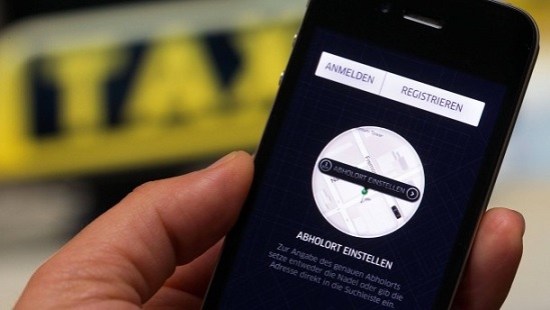
A court in Frankfurt has ruled that the UberPop ride-hailing service may not operate anywhere in Germany for the simple reason that, uh, well, you ought to have an official permit to do so. To be the driver, I mean.

This is a big relief for everybody here because if people didn’t have to have official permits to use the service then anybody could just simply offer or choose to use the service on his or her own, without being regulated. One can’t have that here because this would make the people who would otherwise make the regulations and hand out the permits superfluous and also make taxi driving more competitive and even bring down prices for the consumer, without these prices being properly regulated first, I mean. There are a lot of bad implications here, people. So, like I said, strictly forbidden. Or verboten, if you prefer.

And besides, they spell Uber wrong.

„Ubers Geschäftsmodell basiert auf Rechtsbruch.“