Going, Going…

Pirates!

This is what happens when you fail to deliver (even when nobody ever really knew what you were supposed to deliver in the first place). Hey, what goes around comes around. Or was it what comes around goes away? I, for one, thought they’d never be von gestern (yesterday’s news).

“Since the Pirates have been around, the optical decorum has lapsed, and it’s undignified.”

Must See TV 4 Me

Finally, German TV for the rest of us. Hot diggity dog.

A new mini-series is starting on ZDFneo called “German Angst” and promises to finally and definitively answer a question that has been puzzling me for many years: “Are Germans really as neurotic as everybody thinks they are and just what is it that they are afraid of?” Actually, it’s the second part of that question I’m interested in. I already know the answer to the first part.

Of course if the show can actually hold that promise or not, that’s another thing. And how the hell are they going to find all this out in just 6 short episodes?

“Ich bin Autor und Reporter auf der Suche nach der Angst.”

Dreck am Stecken

That means having a skeleton in your closet. You know, like Germany’s Commerzbank seems to have.

Commerzbank has said it could be fined by the US authorities over its handling of transactions linked to Iran, Sudan, North Korea and other countries that are the subject of US sanctions.

Die Commerzbank soll gegen das Iran-Embargo verstoßen und Geldtransfers in das Land ermöglicht haben.

Size Matters

There appears to be only one thing that Germans love more than being greener than green and concerned about saving the environment (and having to pay soaring fuel prices all the damned time in the process).

And that’s buying big honking high-horsepower cars with ever bigger engines all the freakin’ time. Vroom! Vroom!

In the first seven months of 2012, the average horsepower of the engines of new cars sold in Germany stood at 138 hp, up from a previous record of 135 hp seen in 2011 and 130 hp in 2010.

Die Deutschen lieben immer stärkere Autos – im Schnitt hat jeder Wagen um drei PS zugelegt.

The Time Tunnel

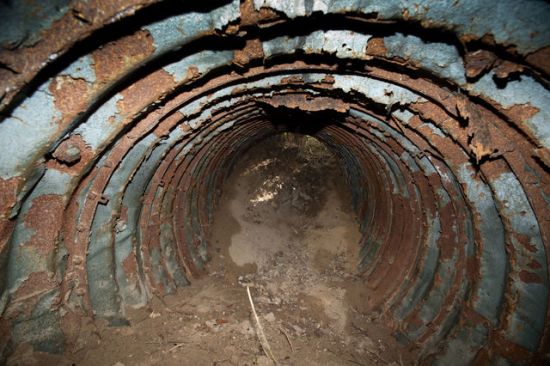
A section of an ingenious tunnel built by U.S. and British spies to intercept Russian phone conversations in Cold War Berlin has been found after 56 years in a forest 150 kilometers from the German capital.

The 450-meter-long tunnel, built in 1955, led from Rudow in West Berlin to Alt-Glienicke in Soviet-occupied East Berlin. By tapping into the enemy’s underground cables, Allied intelligence agents recorded 440,000 phone calls, gaining a clearer picture of Red Army maneuvers in eastern Germany at a time when nuclear war seemed an imminent threat.

Decision Delayed On Delayed Airport’s Latest Delay

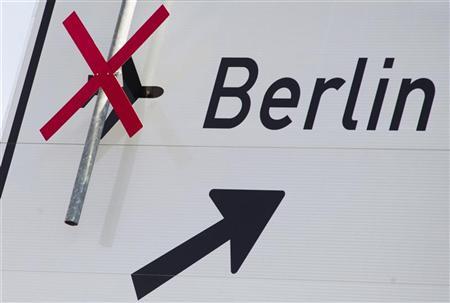
Late for a delayed press conference, which was then delayed again, Berlin officials have now announced their decision to delay their decision to delay Berlin’s delayed Airport’s latest delay.

Berlin mayor Klaus Wowereit, a Social Democrat who has made the Berlin-Brandenburg Airport his flagship project, wasted no time in delaying further comment for later, unless delayed.

“Wowereit is making the city look more and more ridiculous in international eyes.”

No One Can Explain German Power Grid Instability

But as far as I can tell, it seems to have begun sometime shortly after the Fukushima nuclear disaster in Japan.
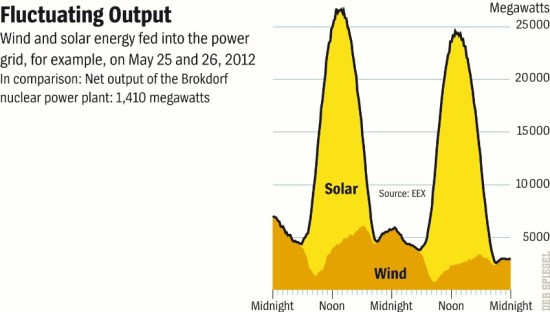
Sudden fluctuations in Germany’s power grid are causing major damage to a number of industrial companies. While many of them have responded by getting their own power generators and regulators to help minimize the risks, they warn that companies might be forced to leave if the government doesn’t deal with the issues fast…

The problem is that wind and solar farms just don’t deliver the same amount of continuous electricity compared with nuclear and gas-fired power plants. To match traditional energy sources, grid operators must be able to exactly predict how strong the wind will blow or the sun will shine.

“Every company — from small businesses to companies listed on the DAX — are buying one (APC emergency power generators) from us.” 

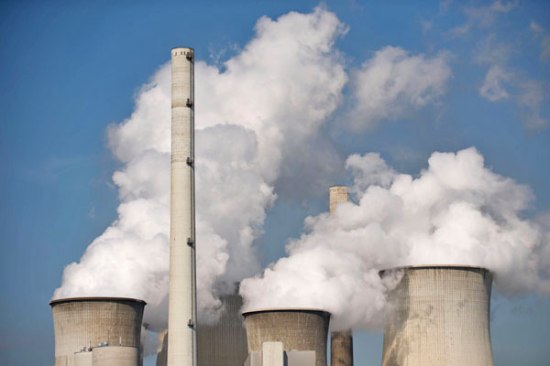
World’s Largest Brown Coal Power Plant Inaugurated In Germany To Help Save Environment

This German energy turnaround stuff can get really complicated, I find.

But as far as I can tell, dirty energy is clean energy here, too. As long as it’s German-made, that is.

“Dieser Neubau ist ein herausragender Beitrag zum Gelingen der Energiewende.” 

Clean Power Cleaning Us Out

The German textile industry, among others, is mad as hell and isn’t going to take it anymore. Not when it comes to having to pay billions into the governments way cool Ökoenergie-Förderung (clean energy surcharge = tax).

That is why three companies now plan to challenge this surcharge subsidizing renewable energy in court.

More good government in action again, I guess. Energy companies have to pay the price for electricity generated through renewable technologies, and transfer the extra cost on to their customers. While energy-intensive industries like aluminum or steel are free from the surcharge, most of the textile industry has to pay.

“You cannot get an energy turnaround for free.”