Buy Our Debt, Please

Angela Merkel just finished up another quick and dirty visit to China, this time to calm the Chinese down about the euro zone debt crisis and, well, to grovel for money. Neither aim was achieved just yet. But hey, you’ve got to be really patient with the Chinese, I’m told.

“The trip has a lot of ambitions: one, is to explain the euro zone debt crisis to the Chinese and two, convince the Chinese to keep supporting the euro zone and buying the bonds from some of the euro zone countries such as Italy and Spain and also Germany.”

And just in case you were wondering, no. She did not find the time to express German concern for human rights violations in China during this visit.

As Europe’s crisis persists, China increasingly sees Germany—its largest European trading partner—as a vital player in pulling the continent out of its slump, analysts say. Mr. Wen said his talks with Ms. Merkel Thursday have made him “more confident” in Europe’s ability to resolve the crisis.

Grid Your Teeth

And just keep on paying. Or how about grid and bare it?

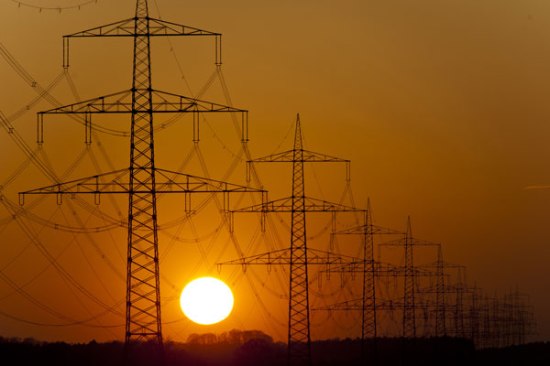
Germany’s power grid hasn’t kept up with the explosion of new alternative energy sources — particularly the offshore windparks being built in the Baltic Sea and the North Sea off the country’s north coast. Many of those projects are at a standstill, with no way to deliver the power they generate to the mainland.

On Wednesday Merkel’s cabinet hopes to agree on a stop-gap measure to compensate power companies for losses accrued as a result of the delays, but again it will be German consumers who will ultimately suffer.

“The primary reason for the problem lies in the ‘third path’ policymakers have chosen to lead us into the renewable future. There is neither a centrally planned economy to steer the energy system nor are the rules of the market economy allowed to regulate the system according to the laws of supply and demand. Instead, a model of ‘decentralized planned economy’ is being pursued. Municipalities, states, the federal government and the European Union are all creating plans independent of each other and of those affected. There is no coordination…. The result is a fair amount of chaos with policymakers struggling to keep up. Everyone is aware that the situation cannot continue if the renewable energy revolution is to be a success. As such, the question is whether we want to move from where we are today in the direction of a centrally planned economic model or rather in the direction of market economy principles.”

The 30 Percent Solution

That’s how much more German households will likely have to pay for energy in the coming years due to the country’s way cool “energy turnaround.”

Investments of at least 150 billion euros will be needed in the next few years and that’s just the beginning and absolutely positively nothing is working out reibungslos (smoothly) as not planned. And that’s the crux of the biscuit: This is what happens when you do your panicked decision making first and your planning later.

“Wir müssen davon ausgehen, dass die Gestaltung der Energiewende länger dauert als geplant.”

Going, Going…

Pirates!

This is what happens when you fail to deliver (even when nobody ever really knew what you were supposed to deliver in the first place). Hey, what goes around comes around. Or was it what comes around goes away? I, for one, thought they’d never be von gestern (yesterday’s news).

“Since the Pirates have been around, the optical decorum has lapsed, and it’s undignified.”

Must See TV 4 Me

Finally, German TV for the rest of us. Hot diggity dog.

A new mini-series is starting on ZDFneo called “German Angst” and promises to finally and definitively answer a question that has been puzzling me for many years: “Are Germans really as neurotic as everybody thinks they are and just what is it that they are afraid of?” Actually, it’s the second part of that question I’m interested in. I already know the answer to the first part.

Of course if the show can actually hold that promise or not, that’s another thing. And how the hell are they going to find all this out in just 6 short episodes?

“Ich bin Autor und Reporter auf der Suche nach der Angst.”

Dreck am Stecken

That means having a skeleton in your closet. You know, like Germany’s Commerzbank seems to have.

Commerzbank has said it could be fined by the US authorities over its handling of transactions linked to Iran, Sudan, North Korea and other countries that are the subject of US sanctions.

Die Commerzbank soll gegen das Iran-Embargo verstoßen und Geldtransfers in das Land ermöglicht haben.

The Time Tunnel

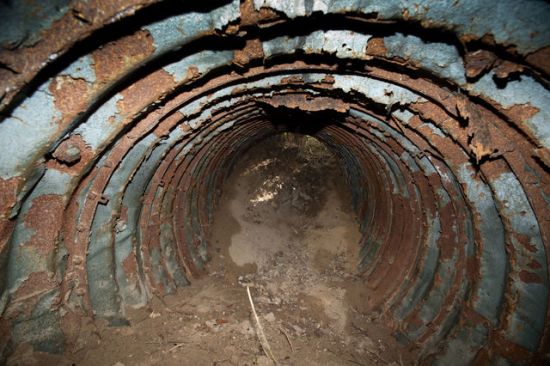
A section of an ingenious tunnel built by U.S. and British spies to intercept Russian phone conversations in Cold War Berlin has been found after 56 years in a forest 150 kilometers from the German capital.

The 450-meter-long tunnel, built in 1955, led from Rudow in West Berlin to Alt-Glienicke in Soviet-occupied East Berlin. By tapping into the enemy’s underground cables, Allied intelligence agents recorded 440,000 phone calls, gaining a clearer picture of Red Army maneuvers in eastern Germany at a time when nuclear war seemed an imminent threat.

Decision Delayed On Delayed Airport’s Latest Delay

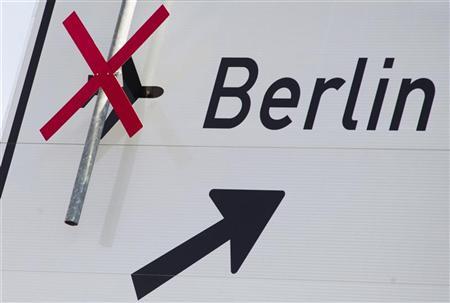
Late for a delayed press conference, which was then delayed again, Berlin officials have now announced their decision to delay their decision to delay Berlin’s delayed Airport’s latest delay.

Berlin mayor Klaus Wowereit, a Social Democrat who has made the Berlin-Brandenburg Airport his flagship project, wasted no time in delaying further comment for later, unless delayed.

“Wowereit is making the city look more and more ridiculous in international eyes.”

No One Can Explain German Power Grid Instability

But as far as I can tell, it seems to have begun sometime shortly after the Fukushima nuclear disaster in Japan.

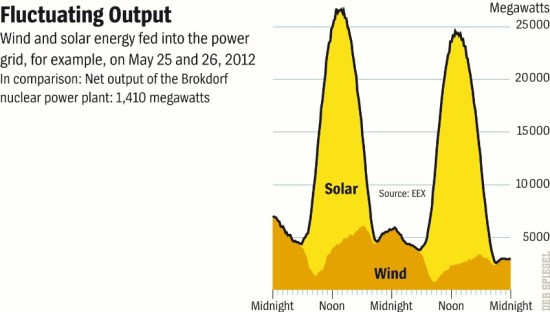
Sudden fluctuations in Germany’s power grid are causing major damage to a number of industrial companies. While many of them have responded by getting their own power generators and regulators to help minimize the risks, they warn that companies might be forced to leave if the government doesn’t deal with the issues fast…

The problem is that wind and solar farms just don’t deliver the same amount of continuous electricity compared with nuclear and gas-fired power plants. To match traditional energy sources, grid operators must be able to exactly predict how strong the wind will blow or the sun will shine.

“Every company — from small businesses to companies listed on the DAX — are buying one (APC emergency power generators) from us.” 

World’s Largest Brown Coal Power Plant Inaugurated In Germany To Help Save Environment

This German energy turnaround stuff can get really complicated, I find.

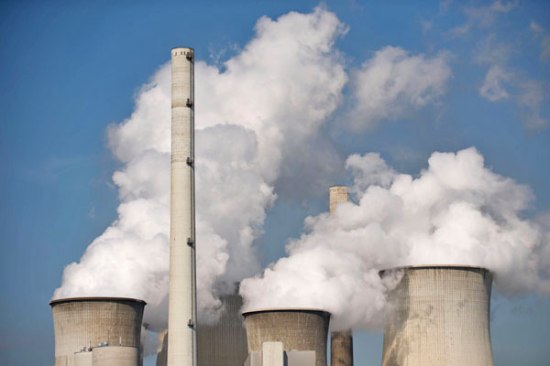
But as far as I can tell, dirty energy is clean energy here, too. As long as it’s German-made, that is.

“Dieser Neubau ist ein herausragender Beitrag zum Gelingen der Energiewende.”