Germans Suddenly Poor

The Bundesbank (Germany’s central bank) has just published a study showing that the average German household is a full three times less wealthy than its crisis-hit Spanish or Italian counterparts.

Poor

Whereas the median Spanish household has net wealth of €178,000, the equivalent in Germany is €51,000.

“These German households are downright poor,” a spokesman for the Bundesbank said after presenting the study. “Relatively speaking, I mean. In fact they are so poor that they have to eat cereal with a fork just to save milk.”

“Poor? These households are so poor they only have two TV channels: On and off.”

“We’re talking poor here, folks. These households are so poor that the ducks throw bread at them.”

Germany’s relatively low level of home ownership is one of the principal reasons suggested for the wealth disparity.

Germany Not Trying To Dominate Europe

Honest. Why try when it comes so naturally?

Gauck

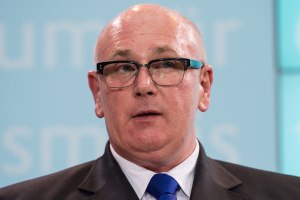
No, seriously folks. Poor German President Joachim Gauck. He certainly means well (and somebody’s talking head has to say this stuff, I guess), but how can you not think that Germany is imposing a “diktat” on the rest of the continent when he goes out of his way to tell you that Germany is not imposing a “diktat” on the rest of the continent?

“In Germany, more Europe doesn’t mean a German Europe. To us, more Europe means a European Germany.”

Well, nice try, but you forgot about the German European Germany variation. It’s not that we don’t trust you, Germany. It’s just that we don’t trust you. It’s called the BKB Syndrome (or at least that’s what I call it). You know, The Big Kid on the Block Syndrome? It’s incurable and there’s not a damned thing you can do about it and you’re guilty until proven guilty so just go ahead and kick back and get used to the situation (as if you weren’t already). And, oh yeah, welcome to the club already, too.

“I was shocked to see how quickly perceptions became distorted, as if today’s Germany stood in the tradition of German imperialism, even of German crimes.”

Euro Crisis Is Over Or Something

So have a Happy New Year already.

Germany’s finance minister says the worst of euro area’s debt crisis appears to be over after three years of worries over Greece and other members of the group of 17 European Union countries that use the single currency.

Meanwhile…

Austerity in action.

Berlin’s mantra about spending cuts in the eurozone is bringing unemployment and spreading hopelessness across Europe.

So take your pick, it’s both.

“I think we have the worst behind us.”


More Godwin’s Law In Action

And it’s particularly popular with Germans, for some strange reason: “In other words, Godwin observed that, given enough time, in any online discussion—regardless of topic or scope—someone inevitably makes a comparison to Hitler or the Nazis.”

Hitler or what?

OK, technically this wasn’t online, but the latest unnecessary comparison to Hitler came from a certain Andreas Köhler, head of a German doctor lobby group here (die Kassenärztliche Bundesvereinigung).

“Julius Caesar, Charlemagne, Napoleon, Adolf Hitler, Angela Merkel – the list of leaders is very long when it comes to those who have tried to unite Europe. And these attempts have always failed because no one can imagine living together in one and the same European house.”

Uh, is the doctor in?

Ein KBV-Sprecher sagte der dpa, aus der rein internen Feier seien Sätze ohne weiteren Zusammenhang nach außen gelangt.

Brilliant “Master Solution” Falling Apart

When “good guys” like the Deutsche Bank get raided after being suspected of incorrectly claiming some €211 million in tax rebates from the trade in carbon tax certificates, then it’s time to also suspect that the days of this nonsensical European emissions trading have finally reached their end.

Cap-and-trade

In case your were wondering: Emissions trading or cap-and-trade is a market-based approach used to control pollution by providing economic incentives for achieving reductions in the emissions of pollutants.  A central authority (usually a governmental body) sets a limit or cap on the amount of a pollutant that may be emitted. The limit or cap is allocated or sold to firms in the form of emissions permits which represent the right to emit or discharge a specific volume of the specified pollutant. Firms are required to hold a number of permits (or allowances or carbon credits) equivalent to their emissions. The total number of permits cannot exceed the cap, limiting total emissions to that level. Firms that need to increase their volume of emissions must buy permits from those who require fewer permits.

Well, it turns out that the European “carbon market” is now flooded and recent EU efforts to fix the system have only served to highlight how lame it is, yada, yada, yada, thus further eroding the price of a ton of carbon dioxide emissions permitted. Government intervention at its best again, in other words.

You know how that old saying goes: “The nine most terrifying words in the English language are ‘I’m from the government and I’m here to help.’

EU-Klimakommissarin Connie Hedegaard will den Preisverfall der CO2-Zertifikate stoppen, der nach ihrer Meinung ein System unterminiert, das einst als Meisterlösung für die weltweite Klimaverschmutzung gepriesen wurde.

Europe Speaking With One Voice Again

Not.  Ho hum. Been there, done that.

Ahead of the United Nations vote that is set to recognize a Palestinian state, Germany has announced it will abstain.

Having strong European support strengthens the Palestinian bid for recognition in the face of US resistance, and they have likely found it in Austria, Denmark, Norway, Finland, France, Greece, Iceland, Ireland, Luxembourg, Malta, Portugal, Spain and Switzerland. Meanwhile the Czech Republic and the Netherlands appear to be leaning toward a “no” vote, while Britain could abstain along with Germany.

So in case you were wondering, European unity never was, is or will be a possibility.

“The German government has, through its own tactical maneuvering, failed to come to an understanding with its partners. This will further diminish the weight of Europe in the Middle East.”

National Weapons Registry Planned For Nation In Which Practically Nobody Owns A Weapon

Except criminals, of course (but they won’t have to get theirs registered).

Germany is introducing a national firearms registry that will be operational next year, implementing a European Union directive two years ahead of its due date.

The register will pool nearly 550 local-level databases of gun owners, the Interior Ministry said in an e-mailed statement today. The EU weapons directive requires every member state to put in place a national registry by December 31, 2014.

…In a second step, the registry will also track producers, traders and importers of legally bought weapons in Germany.

“The national weapons registry contributes significantly to the security in Germany.”

Merkozy This Is Not

How about Hollmerk?

The two capitals (Berlin and Paris) always begin from very different positions, whether there is a socialist or conservative administration in Paris.

The concern in Berlin is over what is seen as the absence of a clear strategy on eurozone reform from the new French government. There is a deep suspicion that France is happy to have a weaker euro, higher inflation, and a looser monetary policy than Germany.

Mr Hollande’s refusal to incorporate the recent “fiscal compact” into the French constitution is one reason that Germany is now pushing for every country to sign a bilateral budget “contract” with the European Commission, that can be enforced by a powerful budget commissar… But Paris regards Ms Merkel as being overly focused on building deeper European political integration in a way that ignores deep-seated reticence in France reflected in the 2005 referendum defeat of the then-planned EU constitution. 

This Still Doesn’t Beat Obama’s Nobel Peace Prize

But it comes close.

Many euroskeptics clearly just don’t get it. Of course the Norwegian Nobel Committee’s decision to award the Nobel Peace Prize to the European Union is “beyond parody,” “laughable” and an “April Fool’s Joke.” That’s been the whole point of the thing for years now.

Hasn’t it?

In Britain, Friday’s award has been the subject of particularly heated commentary. Iain Martin, a columnist with the conservative Daily Telegraph dismissed the prize as “beyond parody.” He writes that the prize has been awarded prematurely because “we have no idea how the experiment to create an anti-democratic federation will end.” Besides, he writes, “daftest of all is the notion that the EU itself has kept the peace.” Instead, he writes, it was the Brits and the Americans who brought peace to the Continent.

Even the EU-friendly Economist columnist Charlemagne writes, “Hmmm,” questioning the timing of the award, given that the EU is currently threatened with a break-up.

BEA-EADS-RIP

Massive political resistance or pure economic theory? Or both?

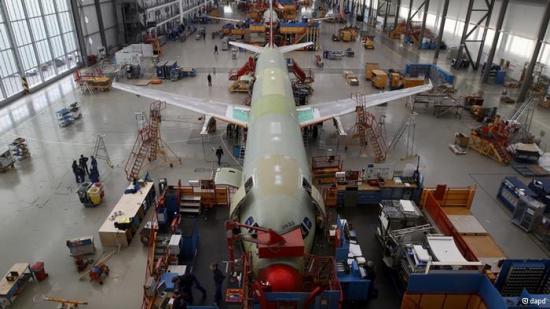
“From an economic perspective, this should of course be avoided. Pure economic theory would say that the state should stay out of it and leave the market alone.”

“The massive political resistance was ultimately too great to overcome.”