German of the day: Langstreckenraketen

That means long-range or deep-strike missiles.
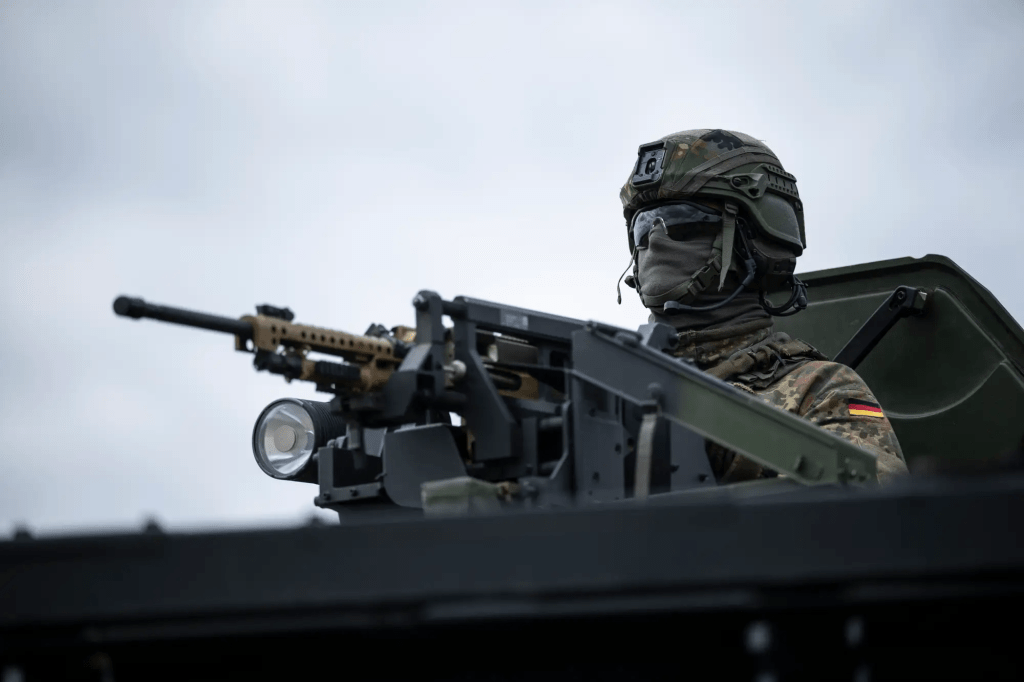
Inside Germany’s roughly $14 billion plan to deter Russia with a new arsenal of deep-strike missiles – The German government expects it will need almost €12 billion — roughly $14 billion — to build a new arsenal of long-range weapons aimed at deterring Russia.

The weapons would give German forces the ability to hit military targets hundreds or even thousands of kilometers behind the front — including command centers, airfields, missile launchers, and supply hubs.

Internal documents call the effort a top priority for both Germany and NATO.
German of the day: Berlin war gestern

That means Berlin was yesterday.

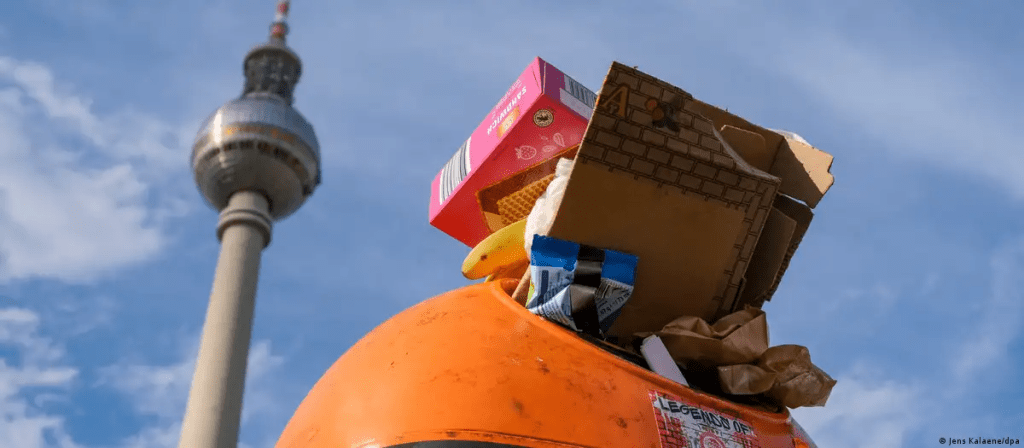
Germany news: Berlin losing its appeal for many Germans – Fewer than a third of Germans find their capital city “fascinating”, a sharp fall from 20 years ago, a survey has found.

More Germans think Berlin ‘lacks charisma’ than those who find it ‘fascinating,’ according to a survey.

German of the day: Aufgetaucht

That means surfaced, emerged, turned up.

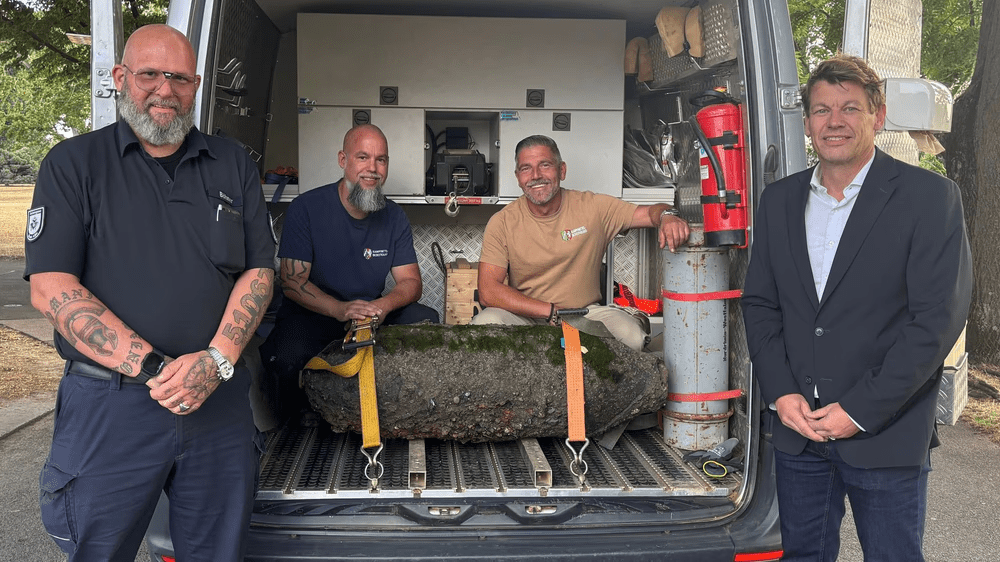
World War II Bomb Defused in Cologne-Deutz – Road Closures Lifted.

An unexploded bomb from World War II was found in the Rhine in Deutz on Wednesday. The bomb was defused on Thursday.

After an unexploded bomb from World War II was found in Cologne-Deutz on Wednesday, the American five-zentner bomb was successfully defused on Thursday evening…

Low Water Levels: Do Not Touch Suspicious Objects – Although the low water levels in the Rhine are currently causing problems for shipping, they facilitated recovery efforts.

German of the day: Schmarotzer

That means freeloaders.

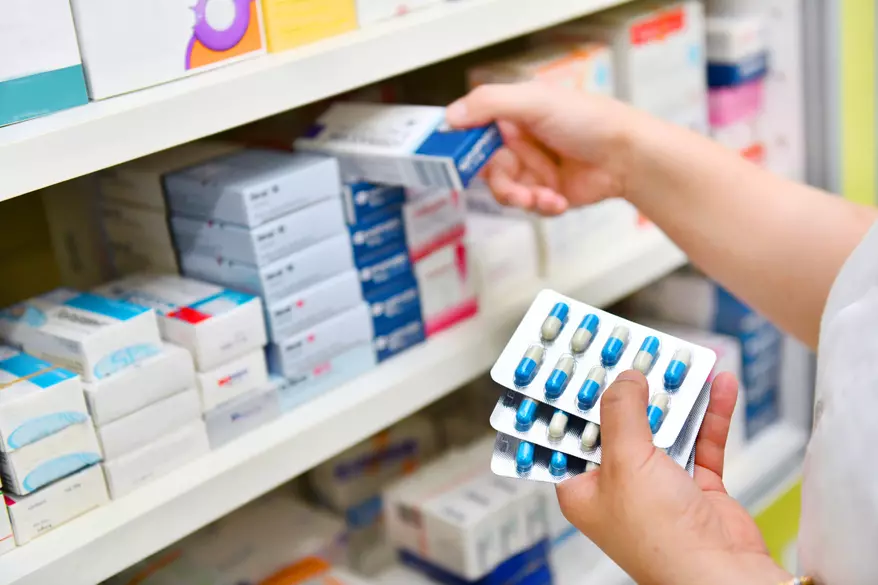
Germany’s new drug law is a case study in foreign freeloading – U.S. patients will bear even more of the global bill.

At the very moment President Donald J. Trump is demanding that wealthy nations pay their fair share for American medicines, Berlin moved the other way. Its new cost-containment law squeezes more savings from the American companies that discover these medicines and leaves U.S. patients bearing even more of the global bill.

The German parliament passed the law last month. It more than doubles the mandatory rebate that manufacturers pay on brand-name medicines, from 7% to 15.5%. It locks German list prices in place through 2030. And for the first time, it lets German insurers force patented, brand-name medicines into tender-style price competitions — a tactic Germany had reserved for generic drugs until now. Berlin called it a fix for its strained insurance system. In plain terms, it is a wealthy nation balancing its books on the backs of American patients.

German of the day: Arbeitslosigkeit

That means unemployment.

Germany news: Unemployment tops 3 million as industry slumps – Over three million people are currently unemployed in Germany, with 1.1 million drawing unemployment checks, authorities say.

Germany’s employment agency recorded a jump of 71,000 in monthly unemployment numbers, pushing the total to over 3 million.

EU’s biggest economy reports 6.4% overall unemployment rate.

German of the day: Blutung

That means hemorrhage.

Germany news: Industry hemorrhaging 15,000 jobs a month – Industry boss Tanja Gönner says the situation is critical but offers opportunity.

The head of the Federation of German Industries (BDI) says the country has become less competitive and called on politicians and business leaders to usher in a course correction.

German of the day: Ladenöffnungen an Sonntagen

That means store hours on Sunday.

There are none in Germany, in case you didn’t know. Germans are very religious. Hardy, har, har.

But wait! Suddenly. In the year 2026…

Debate Over Expanding Sunday Store Hours – Following libraries and bakeries, the retail sector now also wants to fight for the right to open stores on Sundays. It has received support from the Bundestag’s Economic Committee. Churches and labor unions view the initiative critically.

Following the government’s announcement that it would extend Sunday opening hours for bakeries and pastry shops, the discussion about general store opening hours on weekends is now gaining momentum: The Bundestag’s Economic Committee has called for a significant relaxation of the current ban on Sunday openings…

German of the day: Eigentor

That means own goal.

The great German own goal – In economics, as in football, they’ve lost their edge.

Can it be a coincidence? For three World Cups in a row, Germany has failed to make it to the last 16. For the 16 previous tournaments — from 1954 until 2014 — it never failed to reach the quarter finals. You can be unlucky once, or even twice, but three times? Especially when we see a similar pattern in the Euros, this failure can’t be explained away by the glorious randomness of football.

The year of the 2018 World Cup also marked a turning point for the German economy. Until then, it was considered one the most successful in the world, a reputation it had enjoyed almost without interruption since the Second World War. I spent a lot of time back then warning that Germany’s strategy was not sustainable — even if it superficially seemed to work. From 1945 to 2018, after all, Germany was Europe’s manufacturing powerhouse. The last eight years, though, have been marked by deindustrialisation, price spikes, and persistent economic disappointment…