Take From The Rich

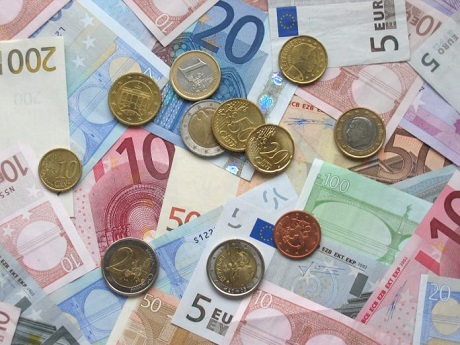
And give it to the SPD, Left party, Greens, etc. They’ll give it to the poor later, right?
Earn

This is getting increasing more difficult to do in Germany, however, as a recent study reveals that the top ten percent of the working population (those who earn the most) already pay half of all income tax the country takes in.

And as recently reported, an average earner here already has to give up nearly half of what he earns. Sheesh. Crime just doesn’t pay anymore. If you’re a dyed-in-the-wool Robin Hoodlum kind of criminal, I mean.

Die Studie zeigt auch, wie stark Gering- und Durchschnittsverdiener durch Steuern und Sozialabgaben belastet werden. So zahle zum Beispiel ein Single mit einem Bruttogehalt von 1.940 Euro im Monat 46 Prozent Steuern und Abgaben. Ein alleinstehender Durchschnittsverdiener mit 3.250 Euro monatlich müsse 51 Prozent abführen, also mehr als jeden zweiten Euro.

German Of The Day: Netto vom Brutto

That means net pay from the gross. And gross is it ever. Only Belgium (think Land of the EU) does it better. Meaning worse, of course.

Netto

According to a report just published by the Organization for Economic Cooperation and Development (OECD), Germany has the second biggest tax burden worldwide. And we’re talking about middle-income people here, people. Not millionaires or anything.

The OECD calculated each country’s tax wedge – the gap between what employers take home in pay and what it costs to employ them, including personal income tax and social security contributions. Germany had a tax wedge for single, childless workers of 49.4 percent, behind Belgium at 54 percent. That means nearly half of a single person’s income goes towards taxes and social security contributions in Germany.

Please remember this the next time somebody starts telling you again how wonderful everything over here in ze Europe is (“socialized medicine” and all that). There simply is no free Mittagessen (lunch).  You can go broke eating free lunch over here.

„Die Belastung der Bürger ist deutlich höher, als uns bewusst war.”

Remember: Germans have more words for taxation than Eskimos have for snow.

You Say You Want A Revolution?

An energy revolution? Then pay up front, Germany. It’s going to cost you a zillion dollars and you may not be able to come up with the cash for it later.

Germany

Germany spent 25 billion euros ($26 billion) on renewable energy in 2016, most of which—23 billion euros—consumers paid through a surcharge on their electricity bills. The rise in that surcharge is the single biggest reason that the amount the average German household spent on electricity rose to 1,060 euros in 2016, up 50% from 2007.

Next Delay For Berlin Airport Opening Postponed Until 2018

German newspapers are reporting that the latest delay announcement expected for the opening of Berlin’s troubled old new airport will now push the currently planned postponement back until the spring of 2018.

Airport

Disappointed Berliners had been hoping that the next delay announcement could have come as late as the spring of 2017 but this will now have to be moved forward as a new round of cost overruns and construction errors have caused yet another delay for that next planned delay.

Rumor has it that the Berlin Brandenburg Klaus Wowereit International Airport had originally been set to open in 2011 but no one can be located who can verify this with any certainty anymore.

The official announcement for the delay of the delay has been postponed until next year.

“Mir ist keine Entscheidung zwischen Weihnachten und Neujahr bekannt.”

No Taxation Without Decent Stations!

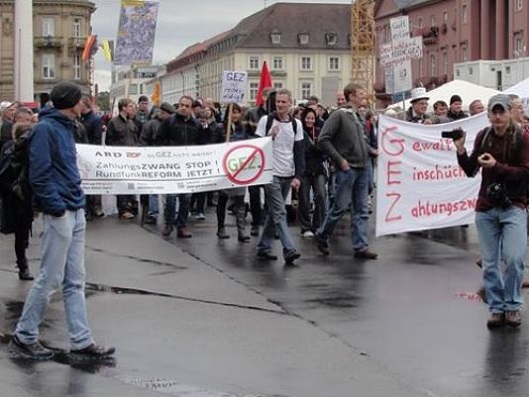
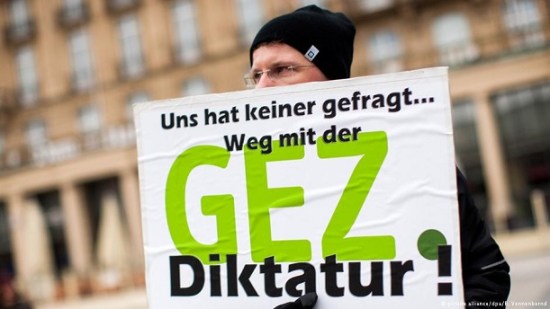
You say you want a revolution? Then GEZ out on the street and do something about it, people. “Public” TV? Sure. As long as the public has a choice about being forced to finance it or not.

GEZ

Since the 1970s, every German household with a television or radio has paid a monthly fee, called the GEZ, to finance public TV and Deutschlandradio, the national public radio network.

But in 2013, the government began to require every household and business to pay the approximately $20 monthly fee even if they don’t own a TV or radio…

In a sign of growing resistance, Beitragsservice issued more than 25 million warnings to households last year for not paying the fee, a 20% increase over 2014, according to its latest figures.

480 Millionen Euro nur fürs Personal: Das plant das ZDF mit Ihren GEZ-Gebühren.

Next Brilliant Green Idea Set To Explode In Their Brilliant Green Faces

Having years of experience when it comes to introducing ideas that nobody likes and losing votes and power because of it,  the German Greens now plan to introduce a “wealth tax” to ensure that they will continue to lose votes in the upcoming 2017 election, as well.

Tax

In traditional re-distributive, Robin Hoodlum manner, they announced during their party conference in Wald Nottingheim (Nottingham Forest) that it is time to ask the “super rich,” whoever they might be, for a higher contribution to wasteful state spending and through this thus ensure that countless Mittelstand (middle class) companies in Germany will be disproportionately burdened. This will of course make them more competitive internationally. Not. As in Nottingham.

If industrialized countries, such as the US following Donald Trump’s victory, opted for a national orientation of their economy, German small- and medium-sized businesses would need their reserve funds more than ever before, Kretschmann stressed. The state should not go after these savings.

Tax Cuts Not Wanted?

In a country that registered a $250 billion surplus last year? That’s what some survey results are indicating here in Germany.

Taxes

Doesn’t make any sense, right? Well maybe it does. Germany is also a country where “about half of Germans, including students, pensioners and unemployed are living on state aid.”

Nach dem Regierungsentwurf soll der Bund trotz zusätzlicher Ausgaben zur Betreuung von Flüchtlingen und weiterer Investitionen auch in den kommenden Jahren auf neue Schulden verzichten und einen ausgeglichenen Etat mit der “Schwarzen Null” bis 2020 halten.

German Of The Day: Fiasko

That means fiasco. You know, like the state-ordained Energiewende?

Wind

Berlin likes to think of itself as a green-energy example to the rest of the world. It sure is.

It makes you wonder if there’s any form of energy-price signal that governments won’t ignore. Germany’s 16-year-old Energiewende, or energy transformation, already has wrecked the country’s energy market in its quest to wean the economy off fossil fuels and nuclear power. Traditional power plants, including those that burn cleaner gas, have been closing left and right while soaring electricity prices push industries overseas and bankrupt households. Job losses run to the tens of thousands.

But now Berlin is going to fix all of this – again.

Derzeit gehe der Ausbau zu schnell und werde zu erheblichen Mehrkosten bei der Umlage zur Ökostrom-Förderung führen.

Speaking Of State Control…

There may not be any punishment here for producing awful television shows but if YOU get sassy and don’t pay your GEZ TV tax (or “mandatory fee,” as the tax collectors prefer to call it) you can go to jail.

GEZ

I’m not making this up. All German households must shell out 17.50 euros ($20) a month to watch great entertainment like Traumshiff, Lindenstrasse and Tatort, Tatort, Tatort as well as be submitted to propagandistic-indoctrination-like nightly news programs à la the Tagesschau by those good old fashioned unelected and nameless state TV official folks over there at the ARD and the ZDF (exhale now). Or else.

A woman was freed from prison after a court in Chemnitz had admitted that they had kept her in custody for 61 days because of her refusal to pay the GEZ fees.

Regional state broadcaster MDR applied for an arrest warrant against Sieglinde Baumert in September 2015 in an attempt to force her to sign a statement about her assets, which she refused because, as she told “Die Welt” newspaper, “With my signature I would confirm the legality of the mandatory fees.”

“I feel patronized, I get the decision taken away from me about what I’m paying my money for.”

Coffee From Togo To Be Heavily Taxed

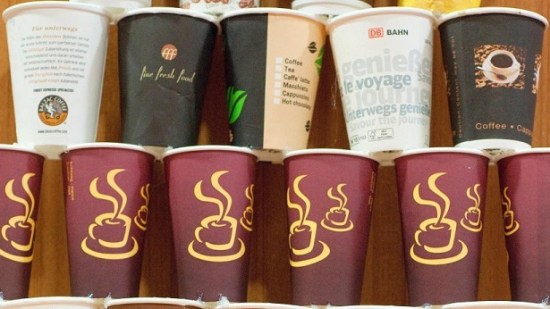
At last count, Germans who purchase coffee from Togo toss some 3 billion of the disposable cups used to temporarily carry it in each and every year.

Togo

Predictably outraged by this, German green shirts have predictably outraged German coffee vendors by suggesting that a 20-cent tax be placed on this luxury drink to encourage coffee Togo connoisseurs to bring along their reusable and occasionally re-washable coffee Togo coffee cups with them, preferably hanging on the environmentally friendly coffee Togo belt loop hangers attached to their biodegradable pants.

Should this prove to be too impractical for some customers, the ecological crusaders suggest, vendors should offer them a discount option (taxpayer subsidized) of drinking the invigorating beverage directly from their trembling cupped hands.

“Nehmen Sie sich ein wenig Zeit und trinken Ihren Kaffee vor Ort – aus einer Tasse.”