Reproduction Regulators Recommend Rigorous Reform

The logic appears to go like this: Germans will only have children if they are paid by the state to do so.

Children

That this money must first be taken from them by the state to only later be given back to them if they behave properly (improperly?) is the first oddity here but not really the issue at the moment – or at least not the one German politicians want to talk about. The problem now is that Germans aren’t having enough children (only 12% of families with children here have 3 or more). They are not following the German reproduction regulation logic like they are supposed to and are refusing to have large families despite regular increases to the child benefit or Kindergeld payments given here.

In an attempt to counteract what is now the German one-child-per-family-if-they-have-any-children-at-all tradition, some reproduction regulators are suggesting that families now be given higher payments for each successive child born. I’m sure this will work just great. Well, I’m kind of sure it might work maybe, I mean.

Of course more money will first have to be taken in from the Germans before some of it can be given back to some of them again but that’s never bothered legislators here before so why break with a tradition like that now?

“Die wirtschaftliche Situation von Familien verbessert sich trotz der staatlichen Unterstützung im Durchschnitt nicht.”

Eat More Rich People!

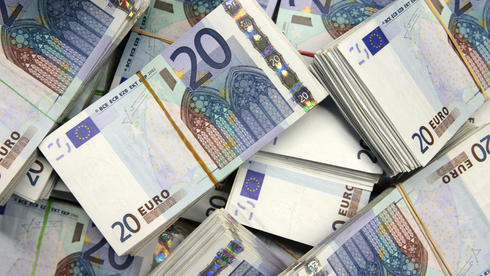
Germans should be ashamed of themselves. Again, I mean. The amount of personal wealth just keeps on rising here – another 79 billion this past quarter – and has reached yet another historic level. The Germans, it seems, have never been richer. And this, as we all know, is a bad thing.

Rich

Haven’t you people ever heard of Umverteilung (redistribution) over here? What do you need all that damned money for? It’s not like it’s yours or anything. Well it is but it isn’t, if you know what I’m sayin’. And who says it doesn’t stink? It stinks that you still have it. What you folks need is leadership like we have now been graced with in New York City itself. You’ve already got all the tax loopholes you’ll be needing so roll up your sleeves and let’s get this party started!

Im vierten Quartal 2013 wuchs das Vermögen der privaten Haushalte in Form von Bargeld, Wertpapieren, Bankeinlagen oder Ansprüchen gegenüber Versicherungen im Vergleich zum Vorquartal um rund 79 Milliarden Euro oder 1,6 Prozent auf den historischen Höchstwert von 5,15 Billionen Euro, teilte die Deutsche Bundesbank mit.

Crime Does Not Pay TV

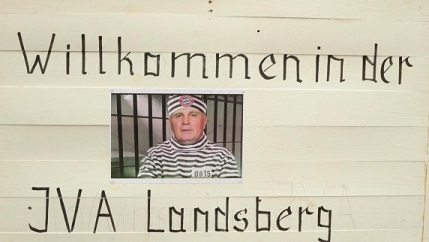
Uli Hoeness hasn’t yet begun his three-and-a-half year jail sentence for seven cases of tax evasion (his lawyers are appealing the decision) but when he does, it’s going to be absolute hell.

Uli

The JVA Landsberg prison he will most likely be doing time in does not allow cell phones and prisoners have to buy their own TVs! But even more cruel and unusual here is that they don’t allow prisoners to have satellite pay TV receivers. Watching Fußball on Sky just ain’t going to be happening, Uli.

By the way, this is where Hitler wrote Mein Kampf and he didn’t have a satellite receiver, either. I think I’m going to be keeping my eyes on this one.

Das bedeutet unter anderem, dass den Häftlingen kein Fernseher gestellt wird. „Sie müssen sich selber einen Fernseher kaufen und können damit dann die üblichen Kabel-Programme empfangen“, sagt Eichinger. Auch die Kabel-Gebühren müssen von den Häftlingen getragen werden. Da für den Bezahlsender Sky aber ein Receiver benötigt werde, könne dieser nicht empfangen werden.

L’Etat, C’est You

Or at least the national deficit is all yours, my German friends (and mine – I live and pay taxes here, too).

Debt

But there’s good news, at least. Sort of. It’s only going to get worse!

It’s a paradoxical situation: The economy is braving the euro crisis, tax revenue is making the coffers ring and the German state still goes further into debt. The public sector deficit climbed to 30 billion euros during the first nine months this year. First and foremost the federal government, but also social security and other benefits have gone into the red.

And economists fear that this is just the beginning. Billions of new burdens have been tucked away in the coalition agreement just signed between the Union and the SPD. Tax, social insurance and other contribution increases are right around the corner.

Hey, you voted this coalition government into office, Germany. Oh, that’s right. You didn’t.

Trotz guter Konjunktur und steigender Steuereinnahmen macht Deutschland Milliarden neue Schulden. Jetzt befürchten Ökonomen: Das wird die Bürger teuer zu stehen kommen – und zwar schon bald.

I Love You, You Big Dummy

Come to Berlin Country! Come to where the City Tax is!

City Tax

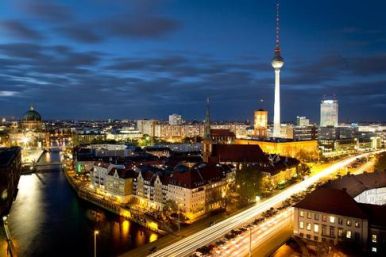
The city of Berlin loves youz tourists, honest it does. Sort of. In fact, the local yokel politicians here love youz guys so much that they feel the pressing need to show you just how much that is. And it’s a full 15 percent more than any of you out there were expecting. And that’s 15 percent more for getting absolutely nothing in return!

That’s right. Starting next month you will be permitted to pay an additional 15 percent City Tax on top of your hotel room bill here, at no extra cost to them and absolutely not free of charge for you! Now that’s what I call big City Tax hospitality!

I love you, you big dummy. You big dumb tourist. Book your flight to Berlin now!

“Es ist absolut nicht rechtssicher und wird ein bürokratisches Verwaltungsmonster sein.”

German Word Of The Day: Zwangsumlage

Zwangs- = compulsory. Umlage = levy, share in the costs. Put those two together and what do you get? Forced to share. But we’re talking about money here folks so let’s  just call it another tax and get it over with already.

Strom

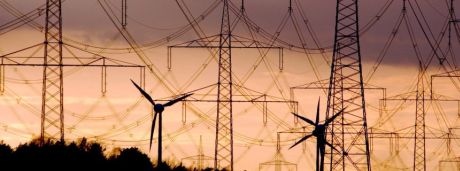
This latest planned tax consists of forcing German households to purchase so-called “smart meters” or modern electricity meters that are supposed to regulate energy consumption by drawing electricity from that so wonderfully green German energy grid whenever this energy is cheaper. You know, like when hell freezes over?

This will only set back German consumers another 70 or 80 euros after already having been hit with a seven percent energy bill increase planned for next year, too (the seven can and will change, of course, and we all now in which direction it will be going).

Turn it around as much as you want. Anyway you turn this German energy turnaround around, you’ll always get the same result. Once you’ve turned it around, I mean. She is like way too expensive, señor.

But what can you expect from a government that is about to go retro and way back in the Wayback Machine to the good old days of SPD Never-Never Land again?

“Verbraucher sollten mit attraktiven Angeboten überzeugt, statt mit immer mehr ordnungsrechtlichen Einbaupflichten gezwungen werden.”

PS: The next German word of the day will be Abzocke. Here’s a tip: It means rip-off.

Taxing Nuclear Fuel Rods That Aren’t Being Used?

You can never be too rich or too thin, I guess. And if you’re Germany, you can never tax too much, either.

Taxation

Germany’s biggest utilities, still reeling from the country’s early exit from nuclear power, scored a major victory Tuesday when a Hamburg court said the national tax on nuclear fuel rods may violate European law.

The Hamburg finance court said it “cannot assess beyond any doubt” whether the tax on nuclear fuel used for electricity generation complies with European law. It will now ask the European Court of Justice to decide whether the levy conforms with rules that prohibit member states from creating new taxes on electricity for “general budget financing purposes.”

The tax was introduced at the beginning of 2011 and came as part of an extension of nuclear reactors’ operating lives that the government had agreed on. However, the nuclear disaster at Japan’s Fukushima power plant in March of that year triggered a U-turn in German energy policy, with Chancellor Angela Merkel ordering the immediate shutdown of the oldest plants and the early phaseout of nuclear energy by 2022. Out of 17 reactors that were in operation in March 2011, only nine are still producing power. But the fuel-rod tax remains in place, to the utilities’ annoyance.

Das Hamburger Finanzgericht will vom Europäischen Gerichtshof (EuGH) in Luxemburg zentrale Fragen zur umstrittenen Brennelementesteuer klären lassen.

Debacle, Disaster, Fiasco…

Just a reminder here again: “There is no free lunch.” Honest.

Lunch

Government intervention at its best (again). Germany’s deliberate attempt to make its energy greener using price guarantees and mandatory quotas for green energy IS NOT WORKING.

Try and remember: The whole idea was to make renewable energy more competitive and, therefore, in the end, cheaper. Well this attempt is so not working right now that German consumers pay higher prices now than ever before and German industry is soon to follow. And this, even though there is actually an oversupply of power. In essence, an energy bubble has been created because Germany’s renewable energy producers get a guaranteed minimum price for what they produce (this now includes farmers and communities and anybody else who can still get into the ponzi scheme).

Imagine you have various consumers going to a grocery store. Some of them want to buy a bottle of beer for 1 USD. Others would like to buy a bottle of champagne for 30 USD. In normal life people would just pay 1 USD for the beer and bubble-lovers would pay 30 USD for champagne. The German energy market is different. People who want the champagne pay 2 USD for it and those who want beer have to pay 2 USD. It’s a good deal for the champagne drinkers, getting subsidized by the beer buyers.

…Perhaps the least fair part of the whole scheme is how these prices disproportionately impact low-income households, who are forced to subsidize green energy for richer families to support politicians’ green energy visions.

Time To Say Goodbye

To “clean power rebates” for German industry, that is.

Germany collects surcharges from power users to help fund operators of solar and wind power installations. Heavy electricity users such as cement, steel and some chemical plants are exempt to keep them from being priced out of the global market.

Industry

The EU now wants to change this. And that should make almost everybody happy. Now many of these German industries will get priced out of the market or maybe moving their production facilities to other countries altogether.

MEHR ALS DIE HÄLFTE DES INDUSTRIESTROMS VON UMLAGE BEFREIT

PS: Grid nationalisation in Berlin? Close but no cigar. Nice try but now you’ll just have to grid and bear it.

Franz-Peter Tebartz-van Bling

I mean Tebartz-van Elst, of course.

Bling

“I got your church and state for ya right here, pal.”

What’s all the excitement about? Religious Germans contribute freely to their churches. It’s not as if the money this guy burned had been levied by taxation or anything. Uh, wait a second. OK. So I guess it had been.

Germany separates church and state much less clearly than does America but more explicitly than Anglican Britain or Orthodox Greece. Its post-war constitution, in a clause carried over verbatim from the Weimar constitution of 1919, favours no particular faith but lets all churches levy taxes on their members through the income-tax system (8% or 9% of a taxpayer’s bill, depending on the state).