BMW: Bring Me West

German engineering at its best.

Talk about a mother of invention…

In 1963, a man named Klaus-Günter Jacobi decided to help his best friend escape East Berlin and before being forced to report for duty in the East German army. To do so, he decided to modify his BMW Isetta to be able to hide a body.

Now, if you’re not especially familiar with the Isetta, it’s a tiny bubble car with a motorcycle engine at the back and barely enough room for two people to sit in the bench seat behind the front opening door. Space is at a premium, but Jacobi — who had trained as a mechanic — found that there was a dead space behind his seat and next to the Isetta’s tiny engine that could be used to smuggle a person.

The Small Escape

It’s Called Paranoia

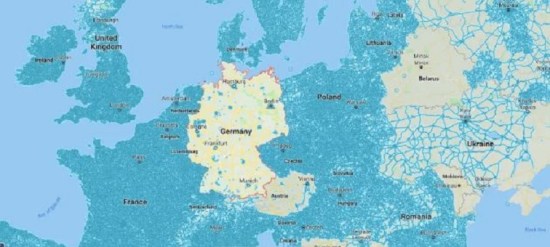
Why is Germany a blank spot on Google’s Street View? See above.

Paranoia

There are good historical reasons why Germans are suspicious of surveillance — but is Google as bad as Gestapo or Stasi?

It’s to do with Germans’ curious sense of privacy: they’d rather flaunt their private parts than their personal data…

While public nudity is a big no-no in the United States for example, Germany has a long tradition with what is known as FKK – short for Freikörperkultur, or “Free Body Culture.” Certain beaches and areas of city parks are dedicated to nude sunbathing, and even Nacktwanderung (“nude rambling”) is a thing.

On the other hand, Germans are extremely possessive of their personal data — and are shocked by the readiness with which Americans (and others) share their names, addresses, friends’ lists, and purchase histories online.

According to research presented in the Harvard Business Review, the average German is willing to pay as much as $184 to protect their personal health data. For the average Brit, the privacy of that information is only worth $59. For Americans and Chinese, that value declines to single-digit figures.

“Crotchety, Over-Critical Culture” Part II

As reported earlier, Germans themselves will be the first to admit that, when it comes to entrepreneurship, they have a “crotchety, over-critical culture, with its fear and condemnation of failure,” but it is what it is and they are what they are.

Cars

There’s even a saying/joke here that goes “anything in Germany that is not expressly permitted is forbidden.” Take electric cars, for example. Their production may not be expressly forbidden but the German automobile industry is doing its damnedest to pretend like they don’t exist. One could say this has more to do with “never touch a running system” (this industry still makes piles of money) but it really gets down to being crotchety again. They’re missing the boat and they know it.

Concern is rising in Europe’s automobile heartland about the economic impact of the industry’s move to electric vehicles from gasoline-powered cars.

Officials and executives in Germany fear the country’s big car companies and rich ecosystem of suppliers and service providers are insufficiently prepared for the transition, and that their leadership may not be assured in an electric-car world, threatening jobs, tax revenue and even growth.

Assembling electric cars isn’t as complex or labor intensive as making traditional vehicles and relies partly on imported technology. At the same time, China has made rapid forays in electrification and is shaping up as a potentially formidable competitor in the field.

The trepidation is particularly acute in the city of Stuttgart, hub to one of the country’s biggest automotive clusters at the heart of the nation’s dynamic south. It comes as Europe’s largest economy is showing signs of weakness amid a chill in global trade.

“The greatest catastrophe would be if the industry fell asleep at the wheel. It is crucial for jobs that companies like Daimler make a massive push into this technology and build locally.”
Berlin’s First Driverless Bus Hits The Street…

Killing five.

Bus

Just kidding.

Berlin is already teeming with last-mile mobility options like shared bikes and e-scooters.

Now the city’s public transport company Berliner Verkehrsbetriebe (BVG) is set to add driverless buses to the mix, testing its first autonomous shuttles on a public road this month.

The BVG has been testing the self-driving bus, developed by French company EasyMile, in the confines of a campus for the past year. This month it will face real-world traffic conditions on a 600 metre stretch from an underground station in the north-western part of the capital.

OK, folks. The key term here is BVG (Berliner Verkehrsbetriebe), the city’s public transport company. The joke around town is that BVG actually stands for Bin Vorsichtshalber Gelaufen or “decided to walk, just in case.” They’re not terribly reliable here, you see.

“Crotchety, Over-Critical Culture”

Comparing Germany’s entrepreneurial business world to Silicon Valley’s? This post will be even shorter than usual.

Silicon

One reason why California continues to draw talent out of Germany is the contrast between Germany’s crotchety, over-critical culture, with its fear and condemnation of failure.

This compares unfavorably with California’s inspiring can-do optimism and fail early, fail often, keep trying until you succeed” mantra. Additional reasons are the much higher salaries paid to engineers and programmer in California, the sunnier, warmer weather and California’s huge head start in building a startup-friendly business ecosystem.

“We need to build critical mass in one city, and that city is Berlin. It’s built a global reputation as a cool, hip, affordable city with a lively startup scene. We should double down on that.”


What Difference Does It Make?

Germany: Bundeswehr grounds ‘Tiger’ helicopters due to technical faults.

Tiger

The Bundeswehr and Bundesmarine (German army and navy) ain’t ever going to be deployed anywhere anyway so who cares if nothing works or not?

Bundeswehr’s enduring equipment woes – The incident is the latest in a series of embarrassments for the Bundeswehr and the German government concerning equipment, especially as regards government-issue aircraft. Chancellor Angela Merkel, Foreign Minister Heiko Maas, and Finance Minister Olaf Scholz have all been delayed by faulty airplanes while carrying out official duties in the past year. Bundeswehr officials have also long complained that much of their equipment is outdated and broken, as increasing defense spending becomes more and more unpopular politically.

“Security is the top priority for the Bundeswehr.”

German Of The Day: Flaschenhals

That means bottleneck.

Flashenhals

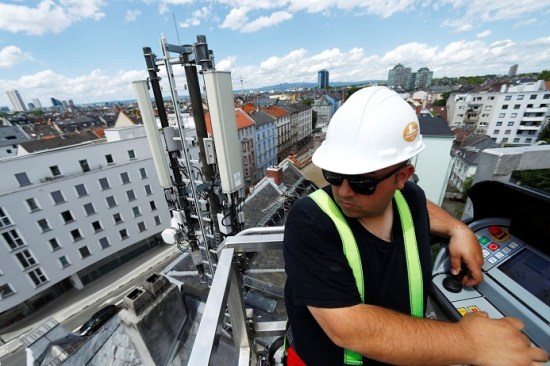
Germany is looking for new ways to power its economy as the traditional growth engines of manufacturing and exports falter. But the country’s outdated internet is acting as a bottleneck.

The sorry state of the online network has become a national joke and an economic liability. Germany ranks 33rd in the world in average monthly fixed broadband connection speeds, and 47th for mobile, according to Speedtest Global Index.

“It’s too slow. If you’re really world class in production, having a ranking of, say, [33rd] in working internet does not fit together with that image.”

Productivity?

What’s that? I live in Berlin.

Productivity

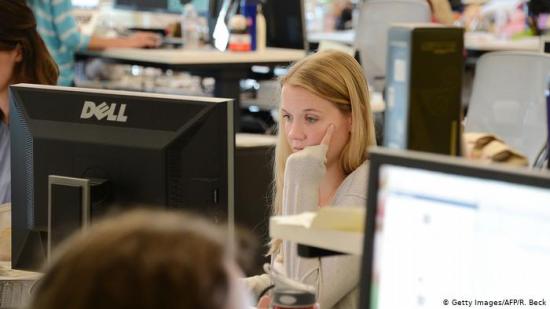
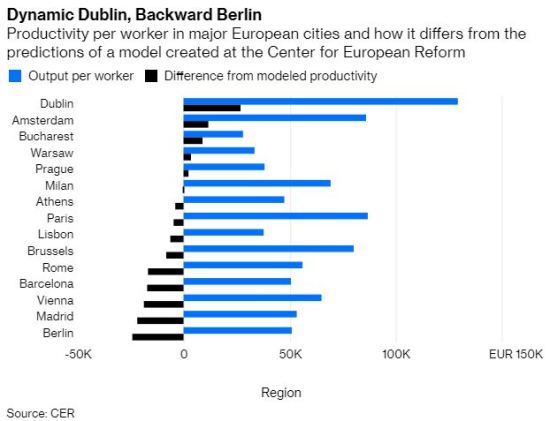
Asked which region in Europe has been the absolute worst at realizing its economic potential, most people probably wouldn’t name Berlin. The German capital isn’t just nice to live in, it’s throbbing with excitement; a startup is reportedly created here every 20 minutes, and if you leave for a night out, you risk not coming back for a week. But according to a study of the economic performance of European regions, Berlin is indeed the worst.

What is more important: productivity or a city’s peculiar, esoteric feel? Berlin is one of the places where this question is especially poignant.

German Of The Day: Litfaßsäule

That means advertising column.

Pillar

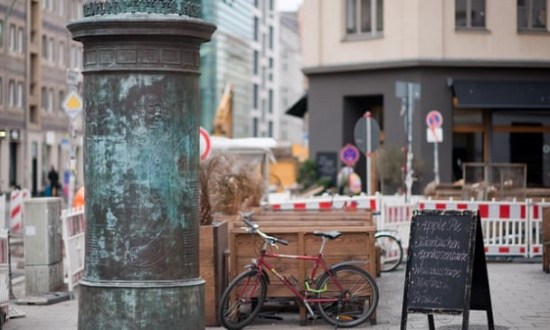
Take a good look. They won’t be around much longer. They’re going to a better place – the same place the LPs, dial phones, typewriters and carrier pigeons went.

They have been an integral part of the city’s furniture for so long, Berliners admit to taking them for granted.

But concrete advertising pillars, known as Litfaßsäule – or Litfaß columns – after the man who invented them, around 3,000 of which dot the German capital, are under threat. A low-key, grassroots protest has sprung up in an effort to save them from destruction and sparked a trend involving writing messages on the pillars, as well as poems and heart felt tributes.

It takes two or three people to group hug a Litfaßsäule, and that has also become another way of highlighting the reluctance to let them go.

“I’m certainly still more drawn to a catchy poster on the Litfaßsäule, than I am to something that flashes up on my mobile phone which I’m likely to swipe away in annoyance.”

Colombia

Beautiful German weapons sale of the week.

Guns

OK, in this case beautiful German judicial deal of the week.

Because somebody has to admire them.

Three former executives at German gun-maker Sig Sauer, including one who became CEO of a sister company in the United States, reached a deal with prosecutors over allegations they illegally exported arms to Colombia and likely won’t go to prison, a court official in Germany said Wednesday.