German Is A Tough Language To Learn

Even if you’re, well, a German cop-to-be in Berlin.
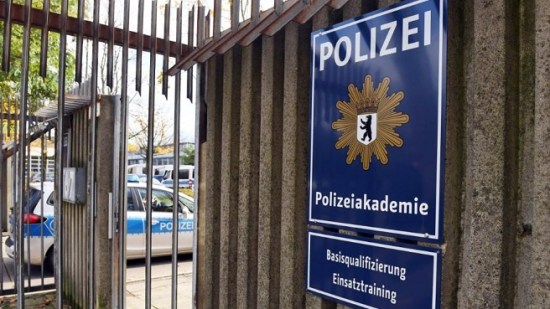
Police

And the English language is at fault. Sort of.

Germany’s cops are bombarded with countless criticisms today, but this one definitely stands out – it emerged that police cadets in Berlin, many of whom have immigrant backgrounds (some 40 percent), have difficulty using… the German language.

Many cadets attending Berlin’s police academy have “fundamental difficulties” writing in German without spelling or punctuation errors, revealed Tanja Knapp, the newly appointed head of the institution. She said it was really disappointing to learn that these cadets are unable to produce written texts. And since after every stakeout or chase you have to write a report, that’s discouraging news.

Part of the problem is that too much emphasis is placed on learning English, Knapp said. Over the years, Berlin has evolved into a truly international city where English is sometimes spoken more frequently than German.

“Of course, it makes sense to be able to speak English to the capital’s many tourists,” Knapp said. “But if the basic required level of German is too low, then the focus should be on German.”

Berlins Polizeischüler sollen künftig weniger Englisch- und dafür mehr Deutschunterricht erhalten. Es gebe bei vielen Polizei-Azubis „grundsätzliche Schwierigkeiten“ mit der Sprache.

Make Law International Again

Ouch. The Kremlin certainly wasn’t expecting that one.

Maas

After Russia’s latest display of disregard for territorial sovereignty, Germany’s foreign minister Heiko Maas has bravely stepped forward and told the roughhouse renegade of a nation that it must now respect international law again. Or else. Or something.

To achieve this, Germany and its European allies need clear principles and a “true dialogue” on common security in Europe, Maas added.

Wow. Dialogue. That’s never been tried before. This guy is the greatest thing since Bismarck. No, not the herring. That chancellor dude.

“The aim must be that Russia sticks to international rules again and that it does not violate the territorial sovereignty of its neighbors.”

PS: The EU ITSELF would have done the lecturing but it’s too busy trying to get rid of daylight savings time. Actually, it’s not all that busy anymore. It just failed at that attempt. Kind of like it always does at practically everything it tries. But to be fair, it was way too ambitious a project for the EU to handle in just one generation.

This Guy Needs Immediate Medical Attention

After Russia’s seizure of three Ukrainian ships in the Black Sea, Ukraine’s ambassador in Berlin has called for – now get ready for this – the deployment of German warships to help clear up the situation.

Ukraine

Either he’s been drinking too much happy juice or he’s living in some parallel universe none of the rest of us have access to. Germany doesn’t have any worships to begin with (that are ready for deployment) and how can you expect a country that isn’t even willing to defend itself to defend somebody else’s country? Coo coo for Coco Puffs!

Kann Deutschland der Ukraine in der neuen Krimkrise militärisch beistehen? Zumindest wünscht sich das der ukrainische Botschafter in Berlin. Die Nato berät in Kürze über das weitere Vorgehen.

Let The Christmas Cheer Begin!

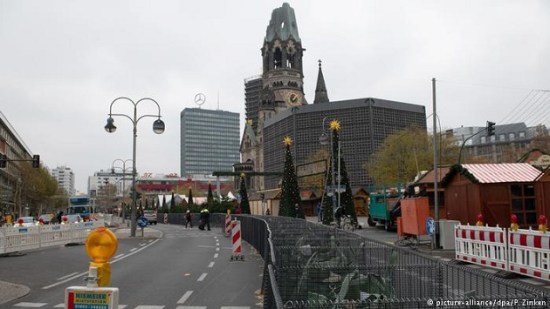
New fortified security measures at Berlin Christmas market.

Christmas

All week, workers have been installing 160 giant, square, lattice-work frames on the perimeter of Charlottenburg’s Breitscheidplatz, the site of the fatal attack.

Enormous sand-and-stone-filled bags have been lowered into each frame, which have all been bolted to the next to form a long row. Narrow access points have been protected with extra bollards.

During the market, private guards will patrol the grounds, joined by a heavy presence of uniformed and plainclothes police officers.

The Berlin Senate has said the elaborate €2.5 million ($2.9 million) installation will provide “unprecedented protection” against trucks weighing up to 40 tons.

This reminds me of German oddity 234. Germany is a country that now places the ugly security controls, bollards and heavily armed police it used to have on its national borders at Christmas markets and Volksfeste around the country instead.

Germany Can’t Abolish The Death Penalty

It never had one to begin with (not since the war).

Death penalty

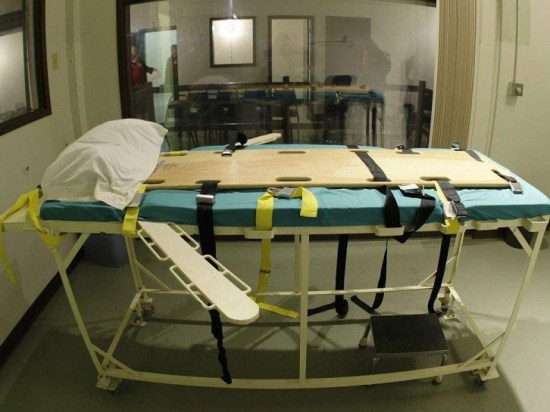
Germany abolishes death penalty in public vote. But please read a little further: The ballot was purely symbolic, because Germany’s federal constitution and European treaties mean the death penalty is already banned in the country as these override state law.

Germany is a country where lebenslänglich (a life sentence) is fifteen years and somebody wants to suggest that they have a death penalty here? It’s interesting fake news, I guess, but it’s fake news all the same.

“There was a fear if a terrible crime was committed… then the vote could do the wrong way.”

PS: And yes, despite that morbid theme, Happy Thanksgiving!

German Of The Day: Kindergeld

That means child benefit payments. The “Kindergeld” benefits consist of monthly payments for each child in a family, starting at €192 per month per child for the first two children. Payments are then staggered depending on the number of children.

Kindergeld

The funny part is – hardy, har, har – these German Kindergeld payments are also going to parents of children who don’t even live in Germany but in other EU countries (€600 million per year). It’s another big scam, in other words. This has raised some concern here in Germany, believe it or not, and attempts have been made to restrict this.

So the really funny part is – hardy, har, har, har, har, har – is that the unelected officials over at the EU Parliament’s Sozialausschuss (Social Committee) have just ruled that Germany has to keep on making these payments anyway or else face disciplinary action from the EU. Wow. When Brussels says “social” (something for free), they mean it. You wanted Europe, Germany. Now you’ve got it. And you can bet there will be more good stuff like this to pay for in the future.

Deutschland, Österreich und Dänemark hatten gefordert, dass das Kindergeld für Ausländer an das Preisniveau des jeweiligen EU-Landes angepasst wird. Der Vorstoß ist im Sozialausschuss des EU-Parlaments gescheitert.

German Of The Day: Tagesschnellsten

That means the fastest of the day.

License

It took an eighteen-year-old kid from North Rhine Westphalia a mere 49 minutes to lose his brand now driver’s license. Thrilled by the thrill of it all, I suppose, he and some buds got caught by the cops doing 95 in a 50 kmh zone. Now that he’s had his driver’s license revoked he also gets to pay a big fine and go back to his driving school again for some more expensive retraining. At least he’s earned a lasting reputation with his friends (and everybody else who’s ever known him) for not being the fastest. When it comes to being fast, I mean.

Mit im Auto saßen den Angaben zufolge vier Freunde des 18-Jährigen. Die Polizei bezeichnete ihn in einer Pressemitteilung ironisch als “Tagesschnellsten”.

Conservative, Male, Wealthy?

What has this guy been smoking? How could anybody with credentials like that ever hope to become the chairman of Germany’s conservative party?

Merz

Conservatives don’t exist in this country. It’s against the law or something. And if they did, they would have to be liberal, female and have a very modest income. Germans also have a big Neid (envy) problem, you see.

German businessman Friedrich Merz, who is running to replace Chancellor Angela Merkel as leader of the Christian Democratic (CDU) party, disclosed for the first time that he earns about one million euros (S$1.57 million) a year, Bild am Sonntag newspaper reported on Sunday (Nov 18).

Merz verrät sein gigantisches Einkommen, zählt sich aber nicht zur Oberschicht.

German Of The Day: Preiserhöhung

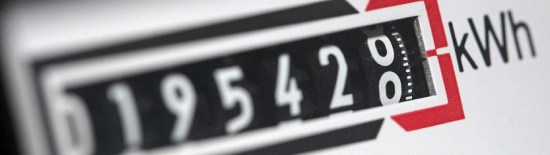
That means price rise. For German electricity bills, in this case. Another big one on the way. Wonder why?

Energy

Keen to drastically reduce greenhouse gas emissions and transform its energy sector, German leaders adopted a vast program called Energiewende eight years ago and the country prides itself on setting the pace for change in the European Union…

But earlier this year, officials admitted the country will not hit the 2020 goal, saying it would reach 32 percent at best (40 percent was the goal).

Greenhouse gas emissions in Germany have not decreased for the last nine years and emissions from the transportation sector have not fallen since 1990. In fact, the United States has reduced carbon emissions more than Germany, in both real and nominal terms…

The growing pains have led to higher prices, largely shouldered by residential power customers.

Between 2015 and 2017, Germany inched ahead of Denmark for the highest electricity prices for household customers (35 cents per kilowatt-hour, in U.S. currency), according to the statistical office of the European Union.

Viele deutsche Haushalte müssen im kommenden Jahr deutlich mehr für Strom bezahlen. Berechnungen von Online-Vergleichsportalen zeigen, dass die Preise in der Grundversorgung um durchschnittlich vier bis fünf Prozent steigen werden.

Shoot The Hoop

Better late than never. Actually, maybe never would have been better than late this time but you never know about never. Before it’s too late.

Hoop

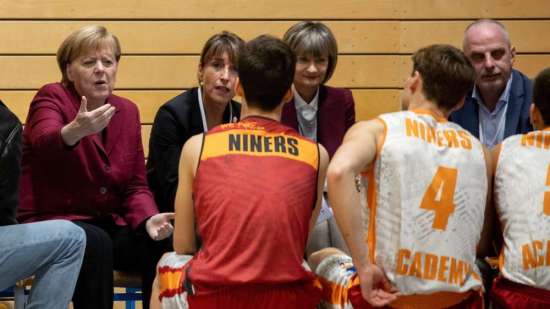
Angela Merkel traveled to Chemnitz Friday to meet with residents, three months after the eastern city was the scene of violent, far-right protests that highlighted divisions in Germany — and the chancellor’s own party — on the issue of migration.

Merkel met with the Niners Chemnitz — a local basketball team — before heading to a town hall-style discussion with readers of the Chemnitz Freie Presse newspaper at which the recent unrest was expected to be a central issue.

The protests were triggered after the killing in August of a German man that authorities blamed on recent migrants. Far-right groups flocked to the city, about 200 kilometers (124 miles) south of Berlin, clashing with counter-protesters in scenes that drew widespread condemnation.

Ludwig warf der Kanzlerin eine „praktisch seit drei Jahren währende Sprachlosigkeit“ vor, deren Folgen sich besonders beim Thema Integration zeigten. Die Debatte werde viel zu oft denen überlassen, die Ängste oder tatsächliche Probleme instrumentalisierten.