
Happy Thanksgiving!
Like the cold of winter? Unaffordable energy bills? Renewable energy pipe dreams that will never succeed? You know. Stuff like that? That’s why.

Why can’t Germany break up with nuclear energy? – Germany has spent 25 years flipflopping on nuclear power. An energy crunch caused by the war in Ukraine is the latest reason to reconsider the technology.
“Really, I think of myself as against nuclear energy, but I have to admit that you see the situation a bit differently now.”
While making this mistake again. The dependency mistake. See the Russian energy dependency mistake. This time it’s the hooked on China mistake.

China is a key market for German automakers including Volkswagen, BMW and Mercedes-Benz. If not the key market. And it will remain that way, despite the German government’s latest public relations move.
German auto industry could face tougher rules over China relations – Germany’s auto industry could face tougher rules on disclosing information over its China relations.
Germany’s foreign ministry plans to tighten the rules for companies including automakers that are deeply exposed to China, making them disclose more information and possibly conduct stress tests for geopolitical risks.
“I’m taking Blackout Basics. Which one did you enroll in?”

The folks who caused the situation in the first place (German voters) are now teaching each other how to avoid the situation they already caused in the first place. Go renewables! Nuclear energy? Nein, Danke!
Growing number of Germans won’t be left in dark with blackout courses – Once purely the stuff of action movie plots, the prospect of the lights going out in Europe’s biggest economy has become a conceivable threat during the current energy crisis.
Looking to be the heroes in a real-life blackout, a growing number of Germans are turning to citizens’ courses to learn how to act if they find themselves plunged into darkness.
“If the electricity goes out then absolutely nothing works any more. And we need to understand what ‘nothing working’ really means,” said Birgitt Eberlin, an instructor at the Workers’ Samaritan Federation (ASB).
Is that an Olympic discipline? Or lack of discipline, I should say?
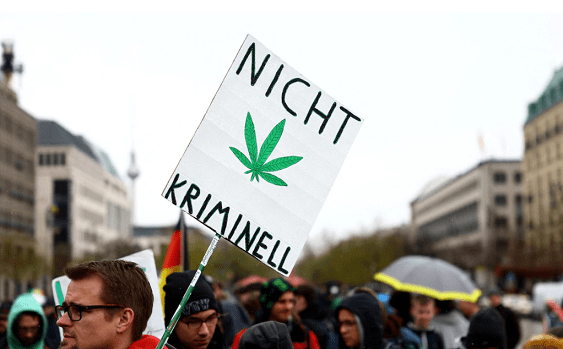
You can never have enough recreational taxation here.
Germany moves to legalize recreational cannabis – Germany on Wednesday announced plans to legalize cannabis for recreational use. It was a move the country’s health minister said would make Germany Europe’s “most liberal cannabis legalization project” but also its “most tightly regulated market.”
Ausgeschlossen (no way)! German authorities would never allow such a thing.
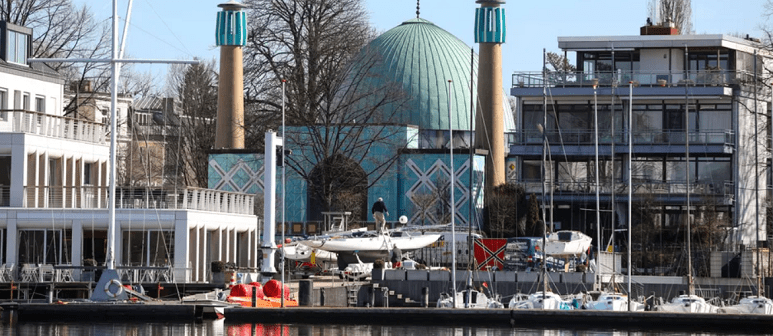
Hamburg Mosque Reportedly a Hotbed for Iranian Propaganda – The Hamburg Islamic Center is considered the most important outpost of the Iranian regime in Germany. But since it is also reportedly used to spread the mullahs’ propaganda across Europe, calls are growing for its work to be restricted.
Germany’s domestic intelligence agency, the Office for the Protection of the Constitution, which is charged with keeping tabs on all forms of extremism, has been observing the IZH community for many years and describes it, besides the Iranian Embassy, as “Iran’s most important representation in Germany and a significant center of propaganda” in Europe.
That means job cuts.

Energy crisis: Quarter of German companies ‘plan to cut jobs’ – In order to tackle rising energy prices, a quarter of German companies revealed in a new survey that they planned to cut jobs, among other cost saving measures.
Around 25 percent of German companies plan to axe jobs as a cost saving measure, according to a survey of 1,080 German firms led by the Munich-based Stiftung Familienunternehmen released on Monday.
Thank God. The Germans are relieved. For a while there things were starting to look way too positive.
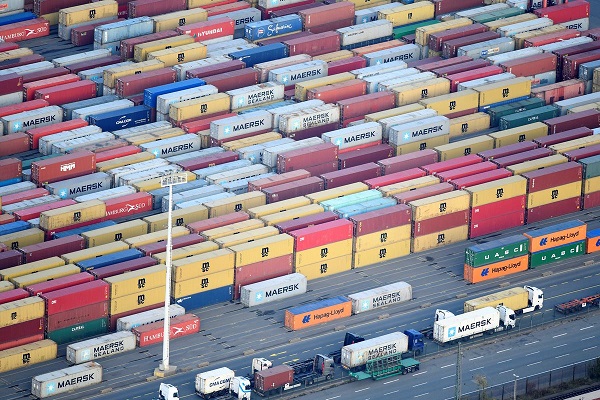
Post-Brexit-wise.
Positive trend in German exports to Britain no cause for optimism – DIHK.
German exports to Britain this year could grow for the first time since 2015, statstics office data showed, but the DIHK business association said the numbers did not mark a turn for the better, especially in light of Britain’s current turbulence.
Let’s turn off our remaining nuclear power plants too.

We have a reputation for being gründlich (thorough), after all.
Germany’s scramble to revamp its energy policy – Germany woke up too late to the risks of energy dependence on Russia. Moscow’s natural gas shutoff may make it one of the hardest-hit EU economies.
At a dinner at the German embassy in London on October 23, 1980, German Chancellor Helmut Schmidt shocked British Prime Minister Margaret Thatcher when he told her that West Germany relied upon the Soviet Union for 14 percent of its daily natural gas consumption. “That was very dangerous and unwise,” she said. Mr. Schmidt responded, “My dear Margaret, the Russians have always been the most reliable suppliers. They need us as much as we need them. There is no danger at all.” For nearly 40 years, the chancellor’s optimistic assessment appeared accurate, and Germany’s dependence on Russian gas only kept increasing.
They’ll be using their own, domestically produced broomsticks for training in the future, I guess.
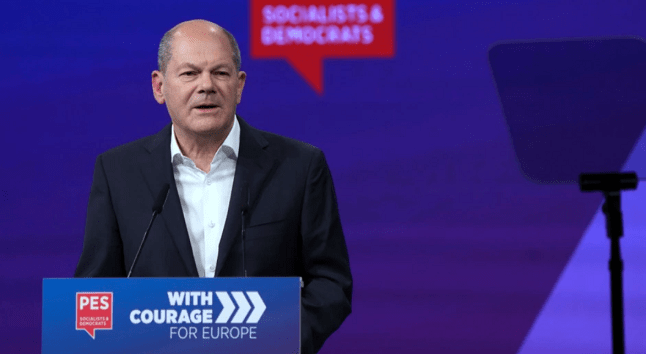
German Chancellor Calls for EU Reforms, Military Autonomy – German Chancellor Olaf Scholz Saturday called for reforms of the European Union to make it fit for the admission of new countries as well as more military autonomy of the 27-country bloc.
Speaking at the Congress of the Party of European Socialists in Berlin, Scholz advocated for gradually abolishing the principle of unanimity for decisions in foreign policy, but also in other areas such as tax policy…
Scholz also supports more military autonomy of the EU. He called for coordinated procurement of weapons and equipment, the establishment of an EU rapid reaction force by 2025, and for an EU headquarters for European armed forces.
 Observing Hermann