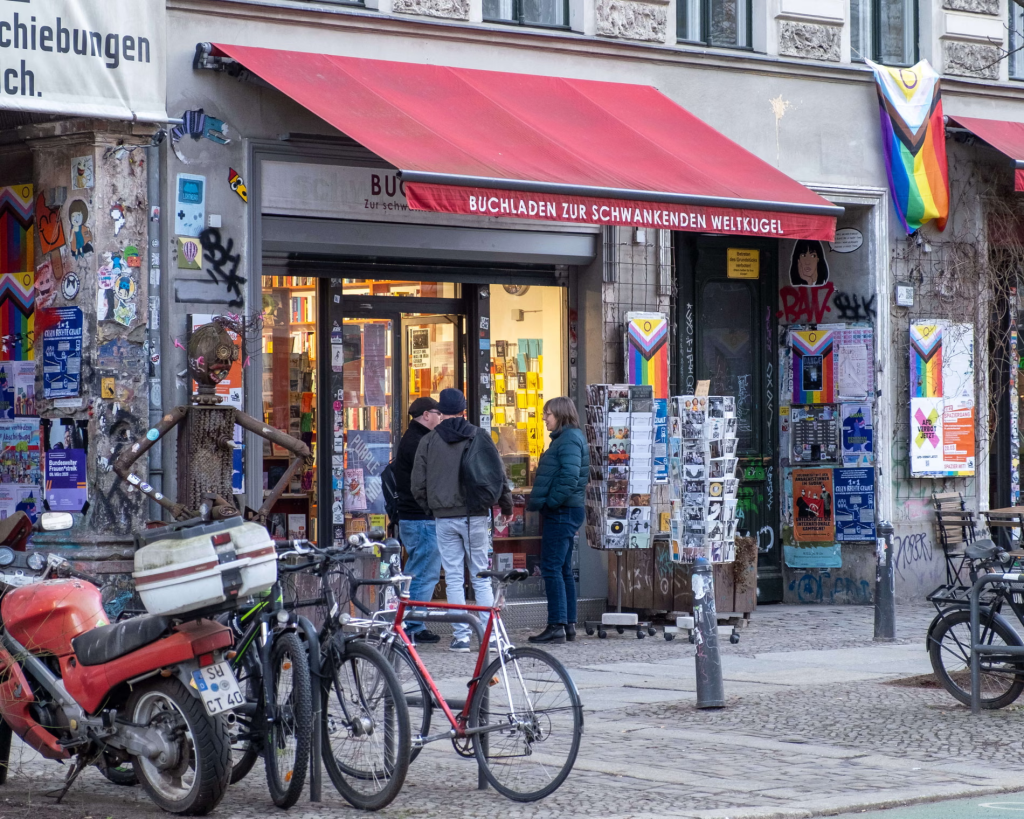
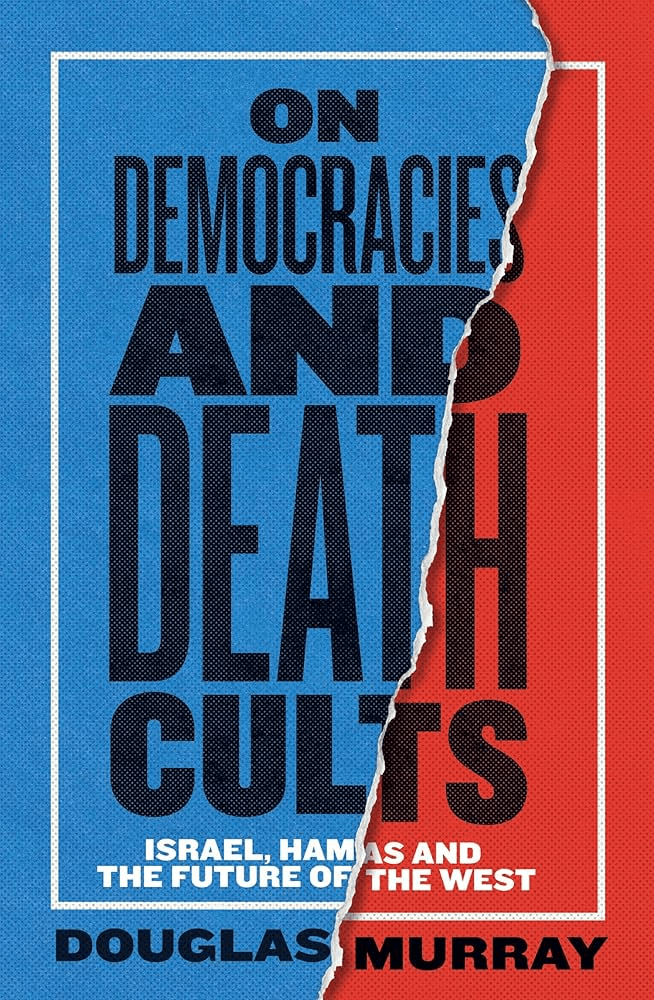
Douglas Murray has been blacklisted in Berlin – as a British writer living in Berlin, I recently attempted something that now passes for quietly provocative: I tried to buy a book. Not just any book, but On Democracies and Death Cults, the latest from Douglas Murray.
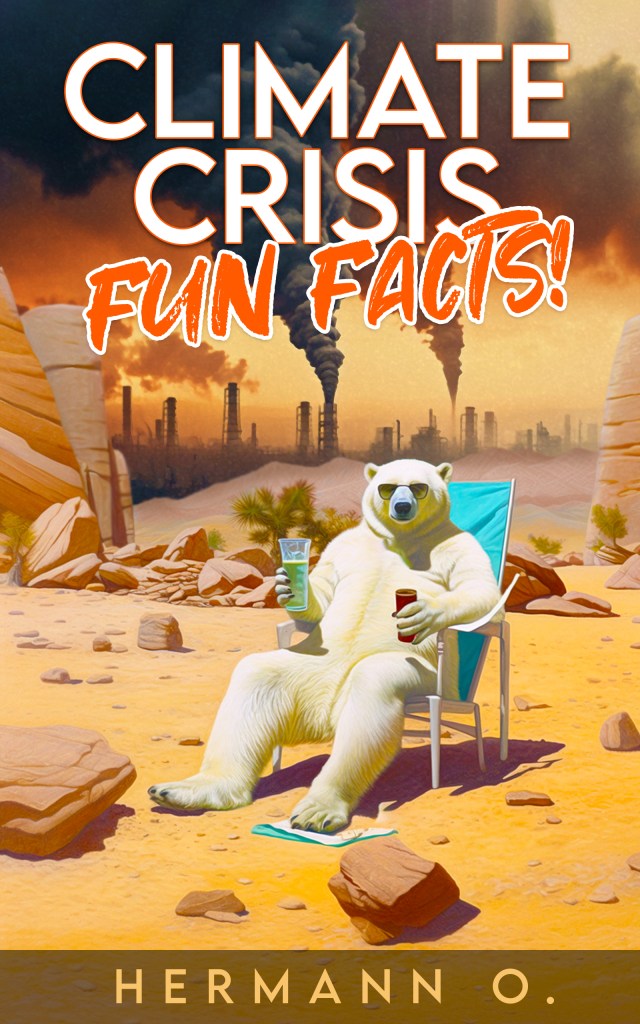
The weather is not your fault. The climate (weather over time) is not your fault either. Yes, the climate is changing. It is changing because it has never not changed. But no, the “pollutant” CO2, anthropogenic or otherwise, is not driving this change. It is driving plant growth. The narrative you are being led to believe is false. The causes for climate change are all natural. Natural, although not yet fully understood.
How do we know this? We know this because of the historical records our ancestors have left behind and the physical evidence Nature gives us from the vast, pre-industrial past. What we are experiencing has all happened before, only usually much worse. This is why we don’t need to worry about slowing down or stopping the changes we have been conditioned to fret about. These changes can’t be stopped and we can’t “save the planet” because it doesn’t need to be saved. We only need to worry about how we can best adapt to these changes, something humankind has been doing for countless millennia already.
But, huh? How could the rest of the world have reached a different consensus if CO2 isn’t a threat? Because consensus is a political, not a scientific term and those who profit from it also control public opinion. “They” are the aggregate of the professions, groups, institutions and industries that profits financially or in any other way from the CO2 narrative. And they manipulate the public very effectively by exploiting at least three well-known human weaknesses. The first is fear. Fear is easily planted and maintained in the minds of the dis-, mis- and uninformed. Those who plant it know that short of any real and present danger, we humans will find something to worry about ourselves. We look for things to fear, in other words, and our false narrative beneficiaries are here to help us find them. The second is our need to conform. Being firmly rooted in social hierarchies and strongly influenced by group dynamics, we have a primal need to belong. This need is so great that we are willing to deny our own reason to avoid the ban of social outcast. The third weakness is our anthropocentrism. We innately feel that human beings are the center of the universe and are somehow in control of Nature. We are neither, of course, and this leads to hubris, narcissism, ruinous decision-making and ultimate failure. We lack humility, in other words.
Humility is a good thing, however. And this book is an exercise in humility. It aims to offer those who feel uncomfortable with the arrogant CO2 Climate Crisis consensus of our age a chance to step back and doubt. It is a modest collection of well-documented facts and logical observations (most taken from the books listed in the bibliography) that will hopefully help you choose to refuse. Choose to refuse the bias and the hard sell. Refuse the fear mongering. Refuse the indoctrination and the religious fervor.
Remember that only the individual thinks. Only the individual reasons. You don’t have to take part in this mob psychology – or mass delusion, mass hysteria, mass psychogenic illness, mass formation psychosis, etc., if you prefer calling it that. This is what is currently plaguing our planet, not CO2. Just say no and step away. To choose isn’t hard to do. So, without much ado, may the skepticism be with you.
The Virtue signaling industry is high gear again. And morally intoxicanted, as usual.
It’s a dangerous combination but we’re used to it, right? Cowardly search for and find something that might offend somebody somewhere, remove it from its historical context and then call yourself brave as you loudly apply a current attitude to the long-dead past.
German publisher pulls Winnetou books amid racial stereotyping row – Ravensburger Verlag reacts as debate rages over depiction of Native American character in children’s books.
A German publisher has announced it is withdrawing two new books paying tribute to a highly popular character in children’s fiction after facing accusations of racism and cultural appropriation.
At least this is a first. As far as I know, Germans have never banned books in the past. Or burned them or anything.
And an ordinary psychopathic dictator. What could have possibly gone wrong with that mix?
What did ordinary Germans really think of Hitler? – Julia Boyd’s exceptional new book gets to the root of the matter by focusing exclusively on the inhabitants of one small village.
The village in question, Oberstdorf, is a postcard-perfect holiday resort high up in the Bavarian Alps…
Germany’s early victories were greeted with general rejoicing, but even as the war drew to a disastrous close there were fanatics whose faith in the Führer remained unshaken.
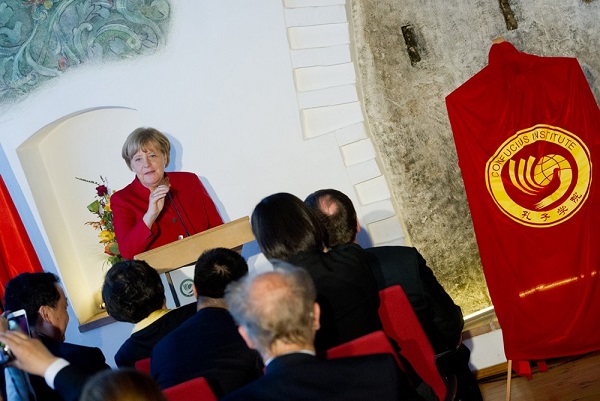
German Academic Freedom Is Now Decided in Beijing – German universities are bowing to China on censorship.
The two German journalists Stefan Aust and Adrian Geiges were disinvited from giving public talks at the German Confucius Institute about their new biography of China’s president, Xi Jinping: The Most Powerful Man in the World. The disinvitation came at the behest of the Chinese consul general in Düsseldorf. Aust told the German newspaper Die Welt that an institute staffer informed the journalists that “you cannot talk about Xi Jinping as a normal person, he is supposed to be untouchable and unmentionable now.”
Sandel: Yes. Think of Hillary Clinton’s use of the word “deplorables.” She used it in the last election campaign in reference to Trump voters, blue-collar workers. It showed an arrogance toward the less educated. Obama spoke of people who “cling to guns or religion…”
Sandel: It is true that the Democrats have repeatedly made this promise with good intentions: to show people a way out of the inequality that has worsened as a result of globalization. They emphasize university education as the avenue for upward mobility. But this leaves out over half of the population.
That’s easy. Practice very aggressive social distancing. You know. Like, move to France?
Have you ever walked on the bicycle lane? Put a refundable bottle into a regular bin? Asked a bus driver how much the ride costs? In Germany, these beginners’ mistakes might earn you a good scold. Here’s how to avoid it…
“The point is not whether they are right or not, it’s that anyone here thinks they’re allowed to educate you.”
German Oddity 177. Germany is what you might call a correcting culture. It is not uncommon for perfect strangers to publically reprimand you here if you do not abide by what is considered the societal norm. Newcomers are usually shocked when discovering that others have no qualms about telling you that you’re doing something wrong, as if you were a small child. If they don’t tell you outright there will at least be a display of disapproving headshaking.
This can only be a German production. Or a Berlin one, I should say.
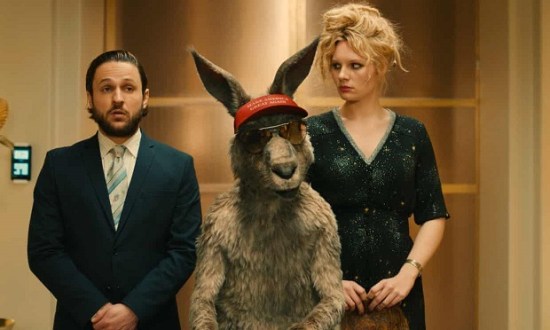
The Kangaroo Chronicles, a quartet of comic novels by slam poet Marc-Uwe Kling that has sold millions of copies in Germany over the last 10 years, is a classic man-meets-beast buddy story in the vein of Seth MacFarlane’s 2012 comedy Ted – only that its animal protagonist is mainly vulgar in the Marxist rather than the foul-mouthed sense…
His only liability, in terms of electoral optics, could be a fatal addiction to booze-filled pralines – and the marsupial pouch in which he keeps his copy of Mao’s red book…
The film, directed by Swiss filmmaker Dani Levy, shows the communist marsupial team up with Berlin locals against Jörg Dwigs, a Trump-style property tycoon and founder of the fictional AzD (“Alternative to democracy”) party: a classic “the people v the elite” narrative, which the German far left has found more difficult to adopt than its counterparts in Britain, America or Southern Europe.