North, south. Inferiority, superiority. It’s all the same to me.
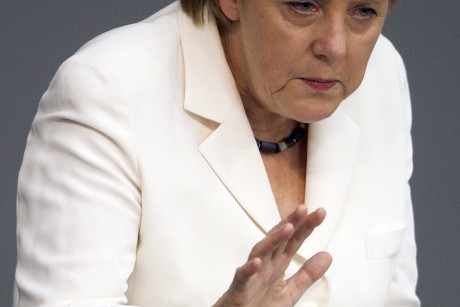
Germans export more to their European partners than they consume, benefiting from this asymmetrical situation even as they expect everyone else to be exporters and savers like them.
North, south. Inferiority, superiority. It’s all the same to me.
Germans export more to their European partners than they consume, benefiting from this asymmetrical situation even as they expect everyone else to be exporters and savers like them.
That’s the thing about a crisis: There’s always a winner, too. Take the euro crises, for instance. And the demand for German bonds these days.

Demand for German bonds, seen as the safest haven in the euro zone, has pushed Berlin’s borrowing costs so low that some investors are effectively paying Germany for the privilege of lending it money.
Damn. This gives German bondage a whole new meaning.
Low interest rates on German bonds are translating into billions in savings. Now economists have calculated that the country should be able to balance its budget by next year — something that is likely to increase criticism of Germany’s crisis management.
…The perception that Germany is benefiting financially from the crisis while imposing strict austerity measures on countries in southern Europe is unlikely to win many friends for Chancellor Angela Merkel, who is already highly unpopular in countries such as Greece.
The Economist writes: If the euro collapses, then Germany will suffer hugely.
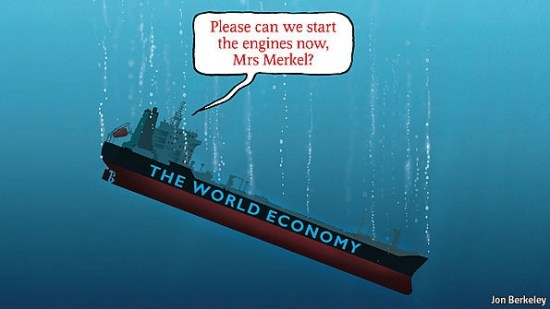
The downgrading of some of its banks this week was a portent of that. Moreover, the undoubted mistakes in Greece, Ireland, Portugal, Italy, Spain and the other debtor countries have been compounded over the past three years by errors in Europe’s creditor countries. The overwhelming focus on austerity; the succession of half-baked rescue plans; the refusal to lay out a clear path for the fiscal and banking integration that is needed for the single currency to survive: these too are reasons why the euro is so close to catastrophe. And since Germany has largely determined this response, most of the blame belongs in Berlin.
Throughout this crisis, Mrs Merkel has refused to come up with a plan bold enough to stun the markets into submission, in the same way that America’s TARP programme did. In short, even if her strategy has paid some dividends, its cost has been ruinous and it has run its course.
Europe Doesn’t Need the Euro? Another religious tract to study on Sundays.
All of this is kind of like religion, don’t you think? First you’ve got some prophets who come out of the wilderness (the political class preaching the virtues of the euro, come hell or high water), then what they say gets labeled as heresy by the faithful (by the “man on the street” who wants to keep his deutschmark), then the euro faith overcomes this persecution, establishes itself as the true universal teaching and becomes orthodoxy. Then the next voice out of the wilderness comes along and the game starts all over again, etcetera and so forth already.
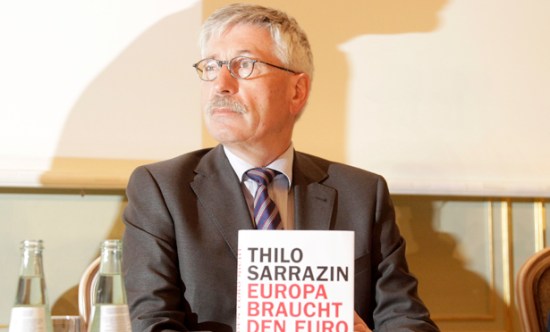
Don’t get me wrong, I don’t beleive that Thilo Sarrazin is a full-fledged prophet or anything (I just think he wants to make a buck, I mean euro). But he’s not a full-fledged heretic, either. And that’s something the euro high priests could never admit to.
The euro, in Sarrazin’s view, is just the old German deutschmark extended to a lot of countries with less robust currencies.
Germany, in other words, is being used as a guarantor of other countries’ debts.
“The German political class bet that the political union would follow shortly thereafter almost as a matter of natural law, because without that the common currency wouldn’t be stable. That bet has failed.”
Germans are hostage to their sense of not wanting to be responsible for Europe’s failure.
Germans are hostage to their sense of historical guilt.
“Pro-euro Germans are driven by that very German reflex, that we can only finally atone for the Holocaust and World War II when we have put all our interests and money into European hands.”
“Angela Merkel to like the friendly woman on the navigation system in my car.”
They never promised you a rose garden (actually, they did). It looks like Germany’s Energiewende (the energy turnaround = shutting down nuclear power and waiting for solar and wind energy to pick up slack) is going to have its price, too.
And it looks likes the first installment will by about a seven percent increase in energy costs for private housholds. But Germans pay these increases gladly, I think. At least for now (seven percent is just the start, of course). It’s back to the future. It’s for the common good. Or it’s for saving the planet or something.
Uh, like why don’t they just have “the state” pay for it. Oh, that’s right. They already are (the taxpayers are, that is).
Stromtrassen, Umschlagwerke oder intelligente Stromzähler kosten den Staat Milliarden. Draufzahlen muss am Ende oft der Verbraucher – offenbar bis zu sieben Prozent in den kommenden Jahren.
I call it Hurt Feelings Burnout Syndrome (HFBS). With an emphasis on the BS. Oh man, I had to laugh out loud while reading the latest on the poor, misunderstood German front.
It appears that many German intellectuals are very concerned about how their European neighbors think of them (Germany) these days. Needless to say, it isn’t very highly at all. And some have come to the stunning conclusion that they are so disliked at the moment because, now get this, they are so big and strong. Imagine that.
Germany is the USA of Europe – only with a different history.
You don’t need to puzzle for very long about the question of why so much Nazi name-calling is going on at the moment: For the first time since 1945, Germany has appeared in full strength again. Not because anybody wanted it, but because the European debt crisis has made the most economically powerful country the most politically powerful one, as well. Germany is now intervening in the internal affairs of others in a big way.
Slowly but surely, the country is taking over a role for Europe that the USA has played for the rest of the world for so long, as being the country that uses (and sometimes misuses) its power, the country that is to blame for everything, the country that is supposed to save everything and is reviled for the way it does it. What has America not been accused of? The CIA has always been behind everything and American imperialism has always been the motivation.
How moving. Or something. And the rest of the story? Now folks are calling Germans Nazis again (as if they had ever stopped). Boo-hoo-hoo already. Come on, Germany. Wake up and smell the coffee. You’re the big kid on the block. Run with it. Enjoy. It comes with the turf.
And in a related story (I find), it turns out that Germans are also now “burning out” like flies (it’s hard to carry on when nobody likes you, I guess). This imaginary disease (yet another American import – are we having irony yet?) is currently running rampant among Germany’s workforce, with nearly 1 out of 10 sick days in Germany in 2010 being attributed to it (tendency rising). Another connection to US-Amerika? Oh my God. No wonder so many Germans are getting sick. Please note: The high-brow daily Frankfurter Allgemeine Zeitung questioned why burnout was being written so much about in Germany, while in France, which is economically a lot worse off, “it’s hardly a preoccupation at all.”
Remember: HFBS is incurable, but there are many effective treatments. One of them is shutting the #!?#! up.
Man braucht wirklich nicht lange an der Frage rumzurätseln, warum die Nazi-Vergleiche im Moment so oft gezogen werden: Zum ersten Mal seit 1945 tritt Deutschland wieder mit voller Macht auf, nicht weil man das gewollt hätte, sondern weil die europäische Schuldenkrise das ökonomisch stärkste auch zum politisch mächtigsten Land gemacht hat. Deutschland greift nun tief ein in die inneren Angelegenheiten Dritter.
Allmählich bekommt das Land für Europa eine ähnliche Funktion, wie sie die USA lange Zeit für die ganze Welt hatten. Als jene Macht, die ihre Kraft gebrauchte, manchmal missbrauchte, die an allem schuld war, die alles retten sollte und sich dafür beschimpfen lassen musste, wie sie es tat. Was wurde den Amerikanern nicht alles Übles angedichtet, immer steckte die CIA hinter allem Bösen, stets wurden die Amerikaner des Imperialismus geziehen.
PS: I hate to admit it, Germany, but I guess we’ve got more in common than we would like to admit (thanks for the idea, Old Phat Stu).
And it’s November now, too. Ever spent a November in Germany?
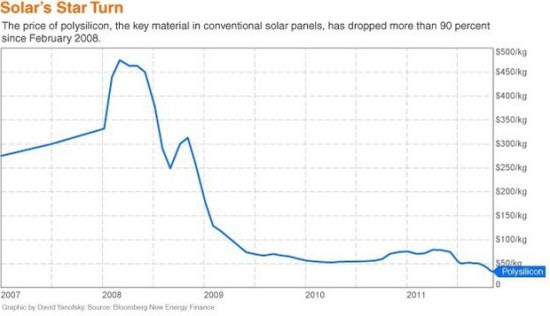
The once “model company” Roth & Rau is the latest victim of… Was eigentlich (of what)?
“Solar companies have relied on tax credits or other forms of subsidy for their customers to buy and install the product.” These subsidies are now drying up in Germany. Hmm. Might there be a connection here?
“The logic was that as the price of oil goes up it generally benefits the oil companies but also creates more perceived need for solar products. When oil prices went down it generally hurt oil companies but created less urgency for solar products.” Well, that dynamic doesn’t seem to apply anymore.
Maybe this will all change again once the sun comes out. And once most of the solar energy companies out there have gone the way of the dinosaur.
Die Solarbranche steckt in einer schweren Krise: Die Nachfrage ist nach Förderkürzungen in mehreren wichtigen Märkten wie Deutschland und Italien eingebrochen. Gleichzeitig steigt das Angebot, weil vor allem in Asien etliche neue Fabriken eröffnet wurden.
No short-term pain, no long-term gain.
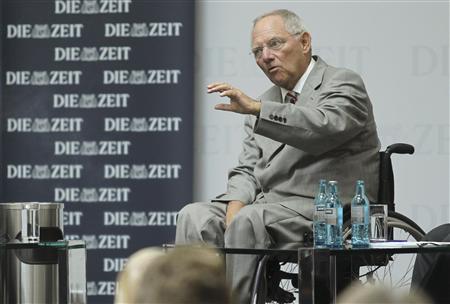
“There might well be seven lean years ahead for the world economy,” German Finance Minister Wolfgang Schaeuble said in a speech at a meeting of Nobel laureates at the University of St. Gallen in Switzerland.
What he really meant was seven years of fiscal consolidation (austerity measures) in Europe (and elsewhere?). This is the key to long-term growth, he says. My, how, uh, German or something.
Jiminy Crickets. As if the ten plagues of late hadn’t been bad enough already, now the Germans themselves (they own Europe, you see, and are recreating it in their own image) are going to inflict the Pharaohs of the EU with seven years of boils, hail, locusts and darkness. In the form of austerity measures, I mean. Or maybe they won’t. Hard to say for sure. Could be that monkeys will fly out of their butts instead.
Muddy Waters knew the deal:
On the seventh hour, of the seventh day,
on the seventh month, the seventh economic witch doctor say:
“He’s born for good luck, and I know you see;
Got seven hundred euros, and don’t you mess with me.
And let’s do so by cancelling a German freedom prize that was to be awarded to Russian Prime Minister Vladimir Putin just days before German Chancellor Angela Merkel is to meet with Russian President Dmitry Medvedev to discuss reinforcing their countries’ growing economic and trade ties.

Whatever. But he’ll be heartbroken for sure.
The Quadriga award annually honors people who are “role models for and from Germany” and is “dedicated to all those whose courage tears down walls and whose commitment builds bridges.”
Things have never been better here in Germany, we are told. And yet the German nation still can’t seem to get up off the collective couch (the psychiatrist’s kind).

This guy has an interesting take on Germany’s latest “season of angst” or why a prosperous nation has this obsessive need to turn on itself (and those around it).
His bewilderment is uncalled for however, I find. I can only wonder why he wonders. The Germans were, are and always will be collectively schizophrenic, in their own peculiar (cute?) little way. They are permanently krankgeschrieben (off sick) and that couch is, well, where they live.
Yet it is very hard to find anyone here who is happy about this state of affairs. Unlike the great Rhineland industrial booms of the 1950s and 1970s, this one is provoking Germans to turn against their government, against Europe, against technology and growth, against outsiders. It is an inward-looking, self-questioning moment in a country that the rest of Europe very badly needs to be involved in affairs outside its borders.
 Observing Hermann