Greeks Apologize And To Pay Back All Debts Tomorrow

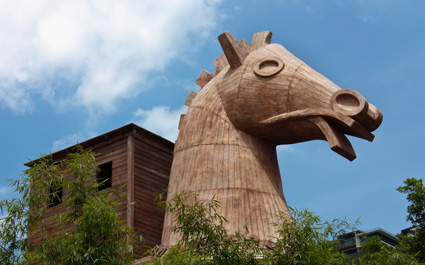
The nation of Greece said sorry to the European Union with a present of an enormous wooden horse.

Horse

Left outside the European Central Bank in the dead of night, the horse has now been moved into the ECB’s central lobby where it is proudly on display.

A gift tag attached to the horse, which is surprisingly light for its size and has small holes along the length of its body, suggested that it should be placed in the bank’s vaults overnight to avoid it being targeted by thieves…

Oddly, Greek representatives in Brussels have hinted that they may soon be in a position to settle their debts and have puzzled the French and German banks that hold their loans by asking if there is any discount for cash.

PS: Thanks for the link, A.K.

Germans So Shocked By Greek No They Decide To Go On Big Fat Greek Vacation

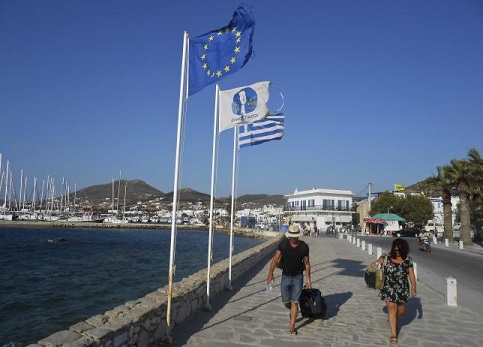
Stunned by the Greek no yesterday and the end of European civilization as they know it, millions and millions of German tourists have spontaneously decided to get their minds off it all by going on vacation to Greece again this year, just like the millions and millions of other Germans who did the same thing last year.

Tourists

Not that it matters anymore or anything, but tourism used to account for 18 percent of what used to be the Greek economy.

“We are still taking bookings for Greece and there is no change in the levels.”

German Of The Day: Schwitzkasten

That’s “sweat box” but actually means stranglehold. You know, like being stuck between a rock and a hard place?

Tsipras

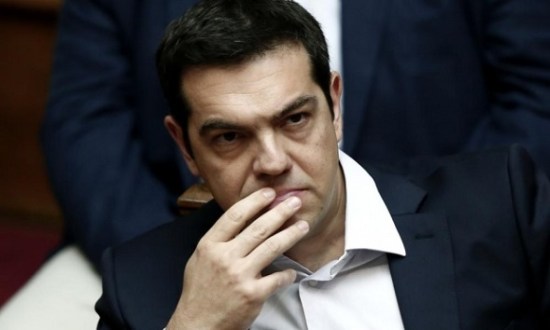
Is the current five-year Greek drama finally going to come to an end today? Hardly, it already ended quite a while ago, the real drama having actually begun long before that, of course, generations before. The name of the drama is “Living Beyond Our Means” and now the current government wants to give Greek voters the illusion that it gets the chance to turn back the clock with one final vote, a final vote that doesn’t actually mean anything, of course, because the money is long gone and nobody is going to give you any-more-anymore. Said current government has seen to that.

It took many, many years of concerted effort – on the Greek side – to get this far, but at least now we will all have an “official” result: However Greece votes today it has already voted to escape “financial asphyxiation” by committing financial suicide.

After all, debt and guilt – “Schuld” – are the same words in German.

German Of The Day: Hand Over The Money Or I’ll Shoot!

Greece

And here you thought that Germans didn’t have a sense of humor. Galgenhumor (gallows humor), OK, but humor all the same.

Public broadcaster ARD, in its Morgenmagazin breakfast show, lampooned the tit-for-tat battle that has ensued between German Finance Minister Wolfgang Schaeuble and Greek counterpart Yanis Varoufakis, 54, in a video clip based on the 2011 French film The Intouchables, depicting the unlikely friendship between a wealthy quadriplegic and his African carer. Schaeuble, 72, has been confined to a wheelchair since he was shot by a deranged man in 1990.

“The problem with socialism…”

is that you eventually run out of other people’s money.”

Socialism

Already on Saturday pictures of anxious savers queuing outside banks to withdraw money were circulating. A slow-motion bank run that had already drained €35 billion ($39 billion) of household and corporate deposits out of the Greek banking system between November 2014 and May 2015 threatens to get out of control. Greek banks have been able to cope with the haemorrhage of deposits only thanks to massive borrowing from the Bank of Greece, permitted by the European Central Bank (ECB) in Frankfurt. The ECB is now likely to call time on this and to prevent further increases in this “emergency liquidity assistance” (ELA). That will in turn force limits on cash withdrawals along with capital controls to prevent money leaving the country… Even if the ECB stays its hand this weekend, it will be forced to act early next week. Without a deal this weekend, the cash-strapped Greek government will be unable to repay the IMF €1.5 billion that is due at the end of this month.

The climax to 10 days of fraught bargaining in Brussels and Luxembourg was the decision by Alexis Tsipras, the Greek prime minister, to call a plebiscite on the terms of Greece’s bailout, stunning the other eurozone governments. “I am very negatively surprised,” said Jeroen Dijsselbloem, the Dutch chair of the committee of eurozone finance ministers. “The situation [in Greece] will deteriorate very rapidly … How the Greek government will survive, I do not know.”

Europe Must Think Hard About Automobile Control

“At some point we as a  politico-economic union will have to reckon with the fact that this type of violence doesn’t happen in other advanced  politico-economic unions or countries,” one leading European politician said, unnamed for the moment. “It doesn’t happen with this sort of frequency.”

Maniac

The comments came after a maniac driver in Graz, Austria mounted his vehicle on the pavement and aimed it at pedestrians – sending several crashing into the windscreen and flying over the car and killing at least three – before getting out and stabbing bystanders with a knife

“We will also need to think hard about stricter knife control, too,” the politician then added.

“I heard a little hissing sound as it went past at maybe 100kmh.”

Border Patrol German-Style

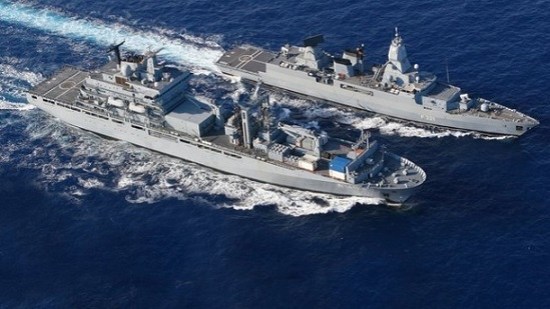
German marines have rescued 200 (now over 400) refugees shortly after launching two ships to scour waters between Africa and Europe.

Border Patrol

The ship “Hessen” evacuated the boat in distress about 250 kilometers south of the Italian island Lampedusa. The refugees were brought to an Italian port, the German army said after discussions with Italian marine rescue officials.

The “Hessen,” along with the “Berlin,” also a Bundeswehr ship, were warned of a refugee distress situation on Monday morning. The ships had begun their search mission on Tuesday, when they sailed from Crete towards the sea area between Libya and Italy.

Dial M For Merkel

And something tells me there was a lot of heavy breathing during this telephone conversation, too.

Tsipras

Greek Prime Minister Alexis Tsipras made an uncexpected telephone call to German Chancellor Angela Merkel that nobody wants to comment about officially.

Bild newspaper reported on Monday that Tsipras had called Merkel as well as Euro group head Jeroen Dijsselbloem to try to convince them of the need for more help for Greece and for the need for an emergency meeting of EU leaders this week.

Bild said the reason for the call is that the Greek government has run out of money

“It’s on fire and there’s no water there to put out the fire. The situation is more than dramatic.”

What Would Gazprom Gerd Do?

Or what will he do, I should ask. Duh. Talk about your no-brainer. You can say what you want about Gerd, but at least he’s consistent.

Gazprom

The European Union has accused Russian energy giant OAO Gazprom of hindering competition and charging unfair prices in the natural-gas markets of Central and Eastern Europe, in a move that risks deepening a rift with Moscow.

“Gazprom has been able to charge higher prices in some countries without fearing gas would flow in from resellers or where the prices were lower.”

Wer ein Staatsunternehmen straft, meint auch den Staat. Moskau versteht die Botschaft des Kartellverfahrens gegen den russischen Gas-Giganten sehr wohl – und wird antworten.

It’s TTIP, All Right

It’s TTIP of your normal-everyday-hysterical-German-anti-American iceberg.

TTIP

“All this enters the debate, but it surprises me a bit that the resistance is so strong in a country like Germany, where the benefits will be the greatest.”

The most controversial element of TTIP is a plan to let companies have legal disputes with governments heard by supra-national tribunals, which campaigners say would undermine national sovereignty and favour big business.

The so-called investor-state dispute settlement, or ISDS, allows firms to sue national governments if they feel that local rulings — such as health and safety regulations — violate the trade deal and threaten their investments.

The courts are a critical issue for US negotiators, who underline that these types of panels have existed for decades and are already included in thousands of trade deals worldwide, including about 400 in Europe.

„Dabei ist es geradezu bizarr, dass die Debatte in Deutschland so aufgeheizt ist: Schließlich profitiert kein Land so stark von TTIP wie Deutschland.”