It’s Not Easy Being Optimist-In-Chief

When it comes to dealing with Europe, I mean. Optimism is suspekt (makes suspicious) here. There is always an angle to everything, you see.
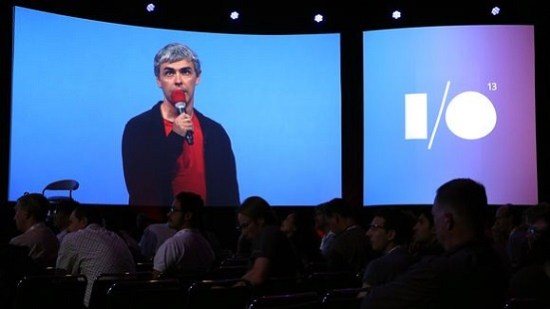
Larry Page

For him (Larry Page), the real danger is opposing technological progress and greater efficiency. Such dangers lurk particularly in the Old World: “Especially in Europe, it appears easy to ignore the fundamental physics of a question in order to claim everything is just fine when things here cost twice as much as elsewhere. This attitude worries me greatly, because it hinders the work of entrepreneurs.”

But should not a society also have the right to say “No” to a superior technology? Certainly, agrees Mr. Page. But that’s not particularly clever. “If you make everything twice as expensive, you reduce people’s quality of life.” And do you really want to keep local entrepreneurs from making their contribution to the global economy? Naturally it’s great when citizens have the feeling they can decide. “I’m merely saying that when they make decisions contrary to a global system of capital, then they have to do that consciously and seriously. And I don’t believe anyone is doing that.”

“If I were a young entrepreneur today and I had the choice of starting my Internet firm in Germany or Silicon Valley, it wouldn’t be a hard choice. And regulation will only get worse in Europe. It will be very hard to build a company of global import there.”

Gerade die Europäer neigen in den Augen von Larry Page offenbar zu falscher Nostalgie. “In Europa scheint es leicht, die grundlegende Physik einer Frage zu ignorieren und zu behaupten, es ist schon in Ordnung, wenn Dinge hier doppelt so viel kosten wie anderswo”.

What Conchita Wurst Tells Us About EU Identity?

Why everything, doesn’t she?

Wurst

Damn. This guy here sure hit the nail right on the head: “Europe has struggled for decades to forge a common identity — and now the Continent’s response to Putin, its battle against Google and the victory of drag queen Conchita Wurst at the Eurovision Song Contest all suggest that shared values are finally emerging.”

Well that certainly sums it up nicely for me.

PS: This doesn’t necessarily make Europeans all that happy, you must understand (Conchita doesn’t look all that happy up there, either). At least not the Germans. Germany came in 46th of the 138 countries examened for the “International Happiness Map.”

Germans Already Lining Up To Be Forgotten By Google

Europe’s top court ruling that Google and other Internet companies can now be made to remove “irrelevant or excessive personal information” from search engine results has triggered a virtual stampede of excited Germans demanding that their irrelevant and excessive personal information be removed from the Internet immediately.

Google

“Irrelevant and excessive personal information is the only kind of information I produce,” said one soon-to-be-forgotten Google skeptic. “Or consist of, if you will. So you can bet that I just can’t wait to be wiped out of virtual existence for good!”

“The ruling will help certain people hide their past, making it difficult to access certain information, but not when it concerns public figures, or people in whom there is a genuine public interest. This will result in added costs for Internet search providers who will have to add to their take-down policies the means for removing links to an individual’s data, and develop criteria for distinguishing public figures from private individuals.”

Google Street View Time Travel To Offer Germans Blurred Out Views Of The Past

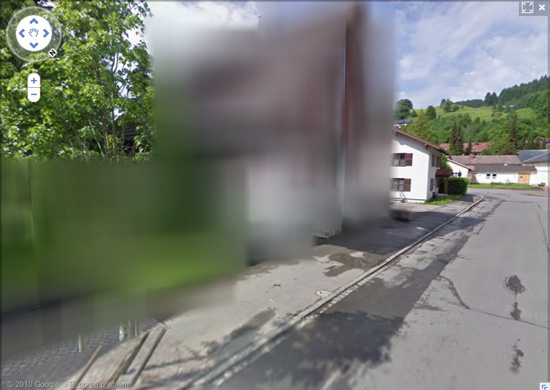
Google Maps Street View has released a revolutionary new “time travel” feature that will allow, among other things, German users the novel opportunity to “go back in time” and see how the blurred out images of their homes in the past compare to the blurred out images of their homes in the present.

Blur

Google spokesmen regret that time travel to blurred out images of homes in the future is not yet available but will certainly be introduced as soon as googly possible.

Aus Datenschutzgründen ist die neue Funktion in Deutschland nicht abrufbar.

This Time Google Really Has Gone Too Far

Google Maps has, I mean.

Hitler

Sure, Theodor-Heuss-Platz may not exactly roll right off the lips for some of us here but to rename the thing Adolf-Hitler-Platz simply does not solve the problem.

Der Berliner Theodor-Heuss-Platz ist beim Google Kartendienst Maps zeitweise auch als Adolf-Hitler-Platz bezeichnet worden. So hieß der Platz im Bezirk Charlottenburg-Wilmersdorf in der Nazizeit von 1933 bis 1945.

Real Germans Don’t Tweet

According to Semiocast, an analyst, Germany ranks 31st worldwide in terms of public tweets, with 59m per year. Germany’s 82m people have just 4m Twitter accounts. That puts it 22nd in the world, behind not only European neighbours like Britain (population 63m, 45m accounts) or Spain (population 47m, 16m accounts) but also Turkey (population 75m, 11m accounts) and the Philippines (population 98m, 8.6m accounts).

Junglecamp

But they do like to google, however. Although what they googled most in election year 2013 is another matter. The number one German search item was Wahl-O-Mat, an online election tool that tells you who to vote for.

And Amazon didn’t even make the short list. That’s because it’s “designed for world domination,” I assume.

“Innovation erfordert den Willen, über einen langen Zeitraum missverstanden zu werden.”

No Private Sphere Here

Fed up with having their personal privacy abused by Facebook, Google and the NSA all the time, many Germans have decided to give up their personal privacy altogether and now actively and gladly publish online practically ever damned freaking boring imaginable thing they do like ALL DAY/EVERY DAY/ALL LIFE LONG.

Internetz

Actually, I thought they were all doing that already.

And in a related story, the Deutsche Telekom is planning to introduce “a vast computer network linking smaller computer networks worldwide,” or at least German-wide. They are then going to call this innovative and highly original new invention of theirs the Internetz. Or they sure ought to.

Or how about the Inner-Netz?

“My philosophy is that information is more useful when it’s out in the open.”

Three Bad Reasons Why German Newspaper Publishers Simply Won’t Trust Google News…

And vigorously push for any and all legislation aimed at making life for Google & Co. as difficult as newsworthyly possible. They seem to have three main bad reasons, as far as I can tell, like I said, but if you can come up with any others, please don’t hesitate to let me know:

Google

1) The Google News aggregate makes money off said German newspaper publishers by displaying snippets of said German newspaper publishers’ stories, only… Google doesn’t make any money with Google News by virtue of the simple fact that Google doesn’t place any advertising on Google News pages so, well, there is no German newspaper publisher money here to be made off with.

2) Google shamefully steals readers away from said newspaper publishers’ publications because, uh… Google News is actually one of the major sources of traffic to these German newspaper sites so, well, it’s the publishers who are getting the readers and making the money off of Google.

3) Google needs to be controlled ever more closely with ever stricter regulation and be restricted from including any of these said news articles without a publisher’s expressed written permission to “opt in” because, well… These newspapers can already “opt out” any old time they like simply by having their webmasters do so (a simple change to the robots.txt file will suffice).

And now that all of these outraged German publishers have decided to opt in to Google News anyway – now that they have been given the choice to do so – well, that makes all of this yet another typically complex German news story all in its own write and one which of course nobody else who is not German will be able to understand just right yet.

German Newspaper Publishers Seem Not To Understand Google News

If You Want To Watch YouTube Videos in Germany, Go To South Sudan Instead

Over 60 percent of the world’s most popular YouTube videos are blocked in Germany – South Sudan only manages to block about 15 percent.

GEMA

GEMA, which represents recording artists as well as publishers, wants YouTube to pay a fee for each and every video viewed on the site that contains music of one of the artists represented by GEMA (which include every major label artist, as well as most indies). YouTube has rejected that approach, and instead wants to pay a percentage of the ad revenue it makes with those videos.

Negotiations have, well, broken down. Feelings have been hurt. Lawsuits have been filed.

“Dieses Video ist in Deutschland nicht verfügbar, weil es möglicherweise Musik enthält, für die die erforderlichen Musikrechte von der Gema nicht eingeräumt wurden.”

Google Now Evil Panic Mongering And Cheap Propaganda Machine Or Something

German lawmakers were clearly shocked upon learning that Google would not be warmly welcoming their proposed legislation to let publishers charge search engines for displaying newspaper articles.

The search engine giant has reacted instead by initiating a campaign to mobilise public opinion against the proposed bill and calling for the public to “defend your web,” a company spokesman noting: “An ancillary copyright means less information for consumers and higher costs for companies.”

German Justice Minister Sabine Leutheusser-Schnarrenberger said that she for one was astonished that Google was trying to monopolise opinion-making. “Why, that’s our job,” she might have said.

“The campaign initiated by Google is cheap propaganda.”

———-

Warum das Leistungsschutzrecht keine gute Idee ist:

Generell sehen die Forscher die Gefahr, dass auf deutsche Presseprodukte gar nicht mehr verlinkt werde, „jedenfalls nicht unter Verwendung von Snippets, die für effiziente Internetrecherchen jedoch elementar sind“. Sie warnen in ihrem Schreiben, das namhafte Urheberrechts- und Medienrechtsexperten unterstützen, vor negativen Folgen für die deutsche Volkswirtschaft. Ihre Schlussfolgerung: „Gesamthaft betrachtet scheint der Regierungsentwurf nicht durchdacht. Er lässt sich auch durch kein sachliches Argument rechtfertigen.“