German Of The Day: Lieber ein Ende mit Schrecken als ein Schrecken ohne Ende

That means “better a terrifying end than unending terror.” In other words, it’s time for Greece to get those drachma machines running again.

Greece

But the Greeks already know this themselves. That’s what they just voted for. Sure, we’ll get to watch how Greece and the EU (Germany) play around with each other for a few weeks as if both sides are tying to find a new solution for a solution that has already long been in place but in the end Greece will leave the EU. This new Greek government is the undertaker man (don’t shake that guy’s hand!). They will point their fingers at Germany on the way out telling Greek voters “we tried everything we could, but…” and then, well, it’s back to the real world again. And this will be a good thing for Greece – in the long run.

Hey, this reminds me of another German saying: Geh mit Gott, aber geh! Go with God, but go!

Entgegen allen Warnungen aus Deutschland und Europa lehnt die griechische Regierung Gespräche mit den internationalen Geldgebern ab. Sie seien in Athen nicht willkommen.
15 Cool German Illnesses You Can Only Get Here

Mostly because 1) you probably can’t pronounce them and 2) they don’t really exist.

Zivilizationskrankheit

Germans aren’t hypochondriacs, by the way. They’re Hypochonder.

14. ZIVILISATIONSKRANKHEIT

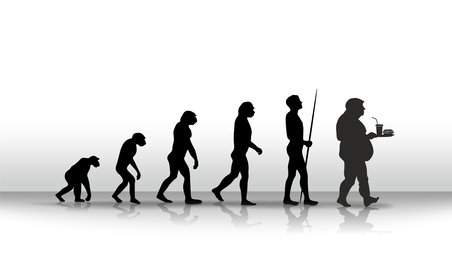
Zivilisationskrankheit, or “civilization sickness” is a problem caused by living in the modern world. Stress, obesity, eating disorders, carpal tunnel syndrome and diseases like type 2 diabetes are all examples.

German Of The Day: 5 Billionen

That means 5 trillion (don’t ask, but it really does). And that’s how many euros German savers have set aside for a rainy day.

Trillion

That’s going to be one rainy day.

Zwar investierten die privaten Haushalte ihr Geld trotz niedriger Zinsen vor allem in kurzfristige und vermeintlich sichere Bankeinlagen. Trotzdem wuchs ihr Geldvermögen von Juli bis September 2014 um 28 Milliarden Euro oder 0,6 Prozent auf 5,01 Billionen Euro, wie die Deutsche Bundesbank mitteilte.

German Of The Day: Die Initiative Ergreifen

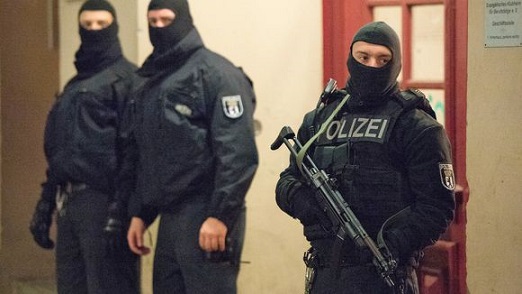
That means taking the initiative. You know, as in arresting two Salafists in Berlin Wedding on suspicion of recruiting fighters for Isis in Syria?

Salafists

And it’s about freaking time, people. And congratulations to Belgium on their fine catch, too.

Following the recent attacks in Paris and the thwarting on Thursday of a terrorist plot in Belgium, 250 officers simultaneously raided 11 addresses across the German capital.

And Speaking Of Free Speech…

The latest German Un-Word of the Year is Lügenpresse or “the lying press.” The year is still pretty young though, if you ask me. But still.

Lügenpresse

Of ill repute as it is a term that was gladly used way back when during World War I and then later by the Nazis themselves, it’s been in the news a lot these days because that EVIL Pegida is using the term, as well. If you accuse the press of lying you’re a Nazi here, I guess. So watch it.

I mean, it’s not like the media here in Germany would ever manipulate or mislead us or spin or hype or ignore things or anything like that there, right?

Der Ausdruck “Lügenpresse” ist als Parole der Pegida-Bewegung erst seit wenigen Wochen in aller Munde. Die Bezeichnung blickt allerdings auf eine lange wie auch traurige Geschichte zurück – als Devise von Demokratiegegnern jeglicher Couleur.

Germans Not Overdoing It Again

Honest. With their anti-Islamization bzw. (and) anti-Pegida hysteria, I mean.

Legida

Not with Bagida.
Not with Bärgida.
Not with Hagida.
Not with Legida.
Not with Muegida.
Not with Mvgida.
Not with Öz-Gida.
Not with Schwegida.
Not even with Merkel-Ida herself, for crying out loud.

Maybe it’s time to like gida life already, people.

German Of The Day: Denkverbot

That means a ban on thinking. And that’s what this latest anti-Pegida or anti-anti-Islamization hysteria is all about.

PEGIDA

This is so German it hurts. This anti-anti-Islamization movement isn’t primarily a protest against the Pegida anti-Islamization movement in my view (although of course it is that, too), it is going through that classic German ritual of protesting against the German Nazi past by trying to compensate for the anti-Nazi movement that never took place when it could have made a difference. It’s never “anti-” enough when and where it needs to be here in Germany, in other words.

Are these 18,000+ Pegida protesters in Dresden all Nazis and racists? Of course not, although some of them undoubtedly will be. So why call them that? Especially when a recent study indicates that over 18 percent of the German population is hostile to Islam in the first place (is that all?). Do the political parties and media on the left – and elsewhere – profit from calling them Nazis? You tell me.

If they are all such idiots then why the hysteria? Do they possibly have something to say then after all? I’m slowly starting to wonder now.

One thing really does worry me about all these Pegida people, however. It is one of their slogans I heard about the other day: “Potatoes instead of Döner Kebab!” Now that’s scary. Maybe these folks do need to be stopped after all…

Um als Gesellschaft eine sinnvollere Reaktion zu finden, braucht es etwas Gelassenheit.

World Pain In The Butt

Why do Germans always have to pick out these fancy-dad-gum-new-fangled German words of the year like Lichtgrenze (light border or boundary) when they’ve already got a perfectly wunderbar selection of traditional German words of the year or at least I think they ought to be for crying out loud?

Weltschmerz

Weltschmerz (world pain), for instance, has to be one of my all time favorites because, well, it’s just about as moany, whiney, lamenty and Germany as you can possibly get.

Now available in the U. S. of Amerika for a limited time only! I hope.

Disillusioned? Has your initial idealism been ground into cynicism? Dismayed by discovering how things really work? There’s a term for what you’re suffering: Weltschmerz.

GedächtnisEsser?

You say ‘tomato’, I say ‘tomato’… You say ‘Wesen‘, I say ‘vessen’…

The stupid creature names are fine. What isn’t, however, is that for the entire duration of the show, every single actor on it has mispronounced the very easy German word for creature…

I kept hearing “vessen” this and “vessen” that, and I had no idea what the characters were talking about, until I saw an episode summary on Hulu with what I surmised was that word written out: Wesen, which literally translates to being or creature (from gewesen, of one of the past-tense forms of the verb to be, sein)…

Trouble is, any German 5-year-old will tell you that word is pronounced VAY-zen, with a V sound (which Grimm gets right), a long E (in the German sense—pronounced like in dreidel), and a soft S (that approximates the English Z).