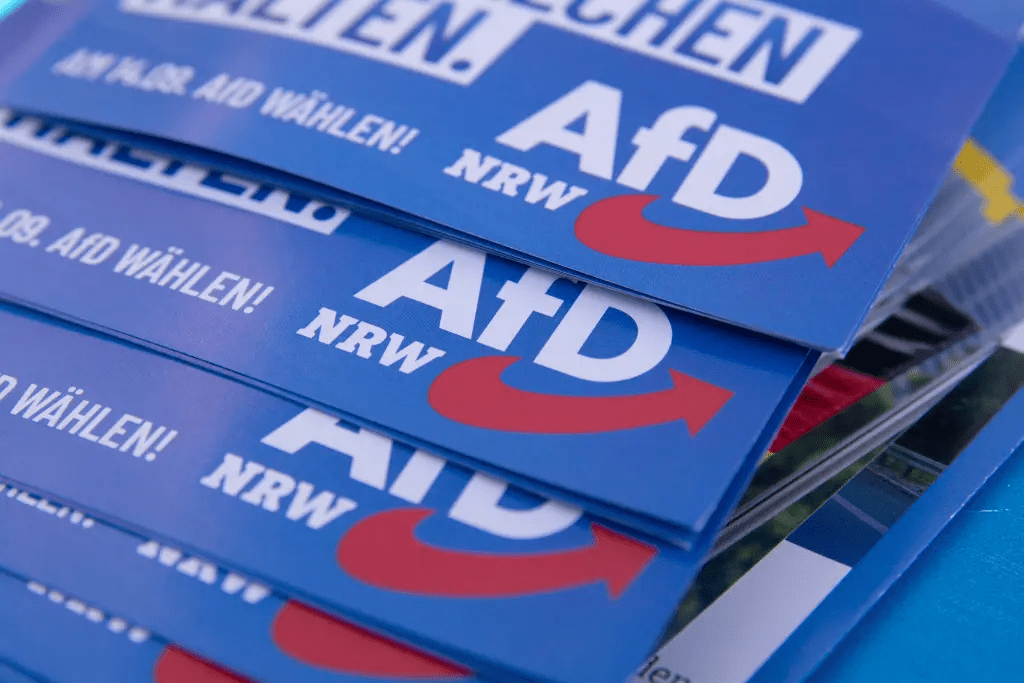
Six candidates from Germany’s rightwing AfD party die 13 days apart in lead up to local elections: reports – Four candidates and two reserves from the right-wing AfD political party in Germany have dropped dead within 13 days of each other — just before elections, according to reports.
The Alternative for Deutschland candidates were set to appear on ballots in North Rhine-Westphalia on September 14.
Officials said no foul play is currently suspected in any of their deaths, the BBC reported.
German top politicians’ cars exceed CO2 targets: study – If EU emissions targets for the car industry were applied to top German politicians’ official vehicles, the fleet would fail, according to a climate body’s new study, saying it was “emblematic” of German carmakers.
If only he had used a little more imagination and drawn one of these instead.
He’d be in the clear.
German politician steps down over swastika on ballot – The German state of Baden-Württemberg’s deputy speaker stepped down after admitting he drew a swastika on a ballot beside an AfD lawmaker’s name. Daniel Born said he had made a “serious mistake” during a vote.
If you were catastrophically inept at your last job, it’s time for you to get a promotion.
Everybody’s doing it. See Ursula von der Leyen who got promoted to President of the European Union after bungling her job as German Defense Minister – and two or three other jobs before that.
Germany’s Baerbock elected as UN General Assembly head – Former Foreign Minister Annalena Baerbock was voted in as president of the UN General Assembly. Meanwhile, Germany’s tough migration policy has been dealt a setback in court.
This is why we are going to create a new ‘super–high-tech ministry’ for research, technology, and aerospace.
Germany to create ‘super–high-tech ministry’ for research, technology, and aerospace – New governing coalition also plans to woo scientists from abroad and make it easier for universities to collaborate with the military on defense research.
The announcement is one of several nods to science in the 144-page agreement, unveiled on 9 April following weeks of negotiations between the center-right Christian Democrats (CDU) and its sister party, the Christian Social Union in Bavaria (CSU)—who together won the most seats in February’s federal elections—and the center-left Social Democrats. The agreement is expected to be formally approved by the three parties by early May, paving the way for CDU leader Friedrich Merz to be elected chancellor.
“Blessed are the young for they shall inherit the national debt.”
German parliament approves Merz’s historic spending surge – Germany’s parliament approved plans for a massive spending surge on Tuesday, throwing off decades of fiscal conservatism in hopes of reviving economic growth and scaling up military spending for a new era of European collective defence.
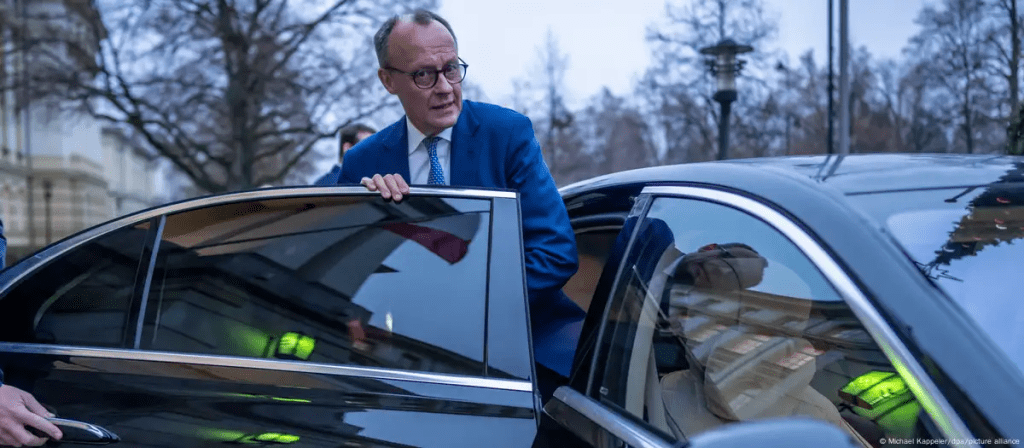
The approval in the Bundestag hands conservative leader Friedrich Merz a huge boost, giving the chancellor-in-waiting a windfall of hundreds of billions of euros to ramp up investment after two years of contraction in Europe’s largest economy…
“The politician’s greatest asset is credibility. With these embarrassing actions, Mr Merz, you have already completely squandered yours. The voters feel betrayed by you, and rightly so.”
Germany’s loveless coalition teeters on brink of break-up – Chancellor Olaf Scholz snubs partners, fuelling speculation of early elections in spring.
Chancellor Olaf Scholz held a much-vaunted “industrial summit” on Tuesday, sitting down with business leaders and union bosses to figure out how to pull Germany out its current malaise. Pointedly left off the guest list: his own finance and economy ministers.
Robert Habeck, the economy minister, responded by unveiling plans for a multibillion-euro, debt-financed investment fund — an idea not previously discussed with cabinet colleagues — while finance minister Christian Lindner simply scheduled his own, rival business summit on the same day…
Speculation is growing in Berlin that the alliance could soon collapse, pulled apart by its own internal contradictions. Several German media outlets have even named a possible date for snap elections — March 9, more than six months ahead of schedule.
And nothing, absolutely nothing will have changed.
The people who say it know it. The people who hear it know it. The people who commit these crimes know it.
Germany’s Scholz vows to step up deportations after killing of police officer – The stabbing of an officer by a suspect from Afghanistan has put the chancellor under pressure to take a tougher stance on migration ahead of the EU election.
The gruesome killing of a police officer by a 25-year-old Afghan suspect has put German Chancellor Olaf Scholz under renewed pressure to take a tougher stance on migration days ahead of a European election in which the far right is expected to make sizeable gains.
There seems to be some misunderstanding here. The Berlin Film Festival has never not gotten off to a political start.
It moves on from there to a politcal midway point and then to a political end, for some political end, politically. It’s never been any different. That’s why the films they show here are always so crappy.
Berlin Film Festival Off to a Political Start as Three Protests Precede Opening Ceremony – After kicking off with a feisty press conference, the Berlin Film Festival got even more political as three groups of protesters descended on Potsdamer Platz before the start of opening night festivities.
They reflect the widespread nervousness caused by the somewhat older new measures created to increase this widespread nervousness, a widespread nervousness that was increased by other new measures before them that much, much older new measures created in the first place.
You know the routine. Ritual, actually. “Right-wing extremism” is on the rise in Germany. It’s always been on the rise, of course. It’s been on the rise for decades and decades yet it never seems to rise quite high enough to satisfy those worrying about its rising. These are, at the moment, those politicians in the established parties being threatened by the AfD, a party that actually claims to be interested in addressing the migrant madness German voters want them to address, something these established parties refuse to do. They’re plotting to ban the AfD, in other words, because they are incapable of addressing the problems the electorate wants them to address.
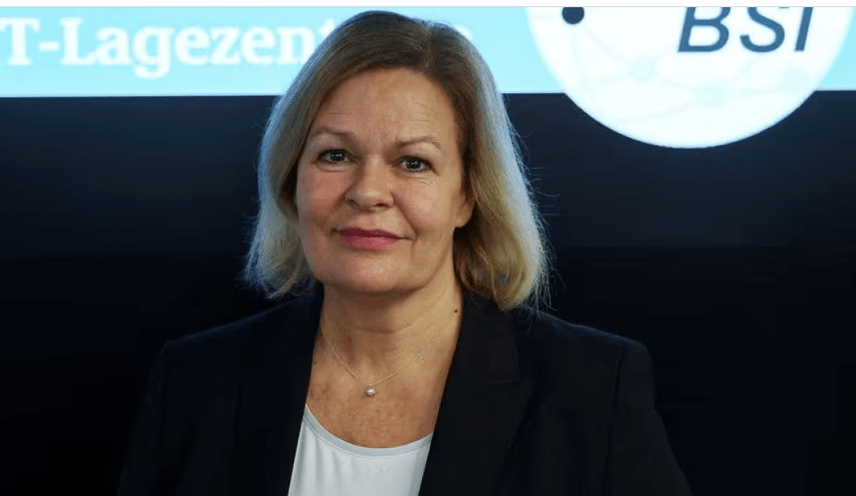
Germany bolsters gun curbs, financial policing to rein in far right – German Interior Minister Nancy Faeser on Tuesday unveiled measures ranging from stronger financial policing and earlier detection of so-called botnets to tightened firearms controls to tackle a far-right surge that has spooked the country.
The measures reflect widespread nervousness that the far-right Alternative for Germany party could end up the largest party in several state parliaments later this year, propelled by a gloomy economy and overburdened public services.


 Observing Hermann