These Blackouts Happened All The Time Before The Energy Turnaround Too

Didn’t they?

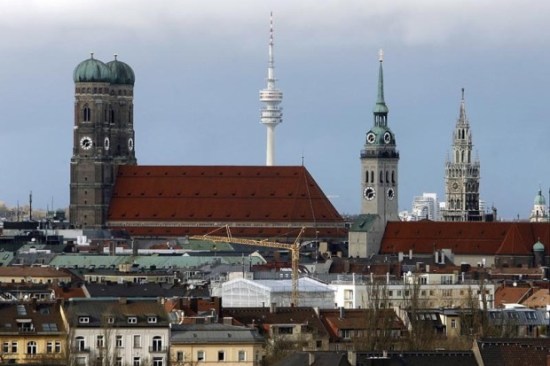
Munich was the next big German city that suddenly and inexplicably lost power in a big way. But there is absolutely nothing to worry about here, people, because/and I quote: “We do not know what caused the technical problem but it has nothing to do with the energy turnaround or all this talk about unstable power grids.”

Many Munich residents took to social networking site Twitter to voice fears that such power cuts could become more frequent as Germany implements a wide-ranging program to switch from fossil and nuclear fuels to renewable energy.

Stromversorgung in Deutschland laut Netzagentur trotzdem sehr zuverlässig.

Speaking Of Sinking Ships

EnbW Energie Baden-Wuerttemberg AG (EBK), Germany’s third-largest power supplier, postponed a decision to invest more than 1.5 billion euros ($1.9 billion) in a wind farm in the North Sea.

“We need legislative clarity and reliable conditions before we make an investment decision of considerably above 1.5 billion euros.”

“Where Is the Tax Money?”

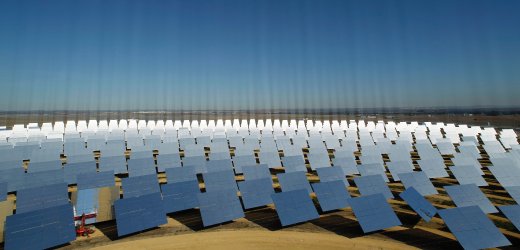
Here are some recent Desertec headlines – with the stress here on desert (as in to desert a sinking ship):

Bosch quits Desertec

Spain Delays Signing Onto Desertec Sahara Solar Project

Siemens to pull out of Desertec initiative

Algeria puts off decision on Desertec solar project

Desertec’s Promise of Solar Power for Europe Fades

As recently as three years ago, many thought that it was only a matter of time before solar thermal plants in North Africa supplied a significant portion of Europe’s energy needs. But Desertec has hit a road block. Industrial backers are jumping ship, political will is tepid and a key pilot project has suddenly stalled.

…The reasons for the political hesitance are clear. Renewable energy projects remain more expensive than traditional fossil fuel plants and tend to require government subsidies.

“Everybody is staring at each other and nobody moves. In this deadly, sometimes embarrassing silence, everybody is praising the project. And then silence again.”

Who Needs Sandy?

Thanks to this dad gern new-fangled Energiewende (energy turnaround), the power goes out in Germany “mit ohne” (without) a damned hurricane these days.

Es ist 16:32 Uhr, für die meisten ist der Feierabend nicht mehr weit. Da zuckt in den Büros kurz das Licht. Im Stadtteil Griesheim gehen die Lampen sogar ganz aus. Zeitumstellung. Es ist dunkel. Rund um die Innenstadt bricht mitten in der Rush Hour der Verkehr zusammen. Die Ampeln tun – zumindest nördlich des Mains – ihren Dienst nicht mehr. S- und Straßenbahnen bleiben auf offener Strecke stehen. In den U-Bahnen geht die Notbeleuchtung an.

Big Sister Assures Germans That 47-Percent Price Hike Actually Not Such A Bad Thing If You Think About It

Not.

Worried about grassroots unrest after Germany’s electrical grid operators announced they were nearly doubling the charge consumers will pay to finance subsidies for renewable energy as Germany phases out nuclear power, Big Sister herself has reacted boldly and decisively by going into hiding and pretending as if none of this were really happening.

Long used to this tactic, worried German consumers were assured, sort of, as they will now be paying an additional 60 euros per year, “taking overall add-on power taxes up to about 185 euros.” But that’s just the start, of course.

Sheesh. Why do Germans see everthing energy turnaround-related so negatively these days? You know, like as in black? Or like as in blackouts, I should say?

“The costs for consumers and industry of the electricity price charge for renewable energy has risen to an unbearable degree.”

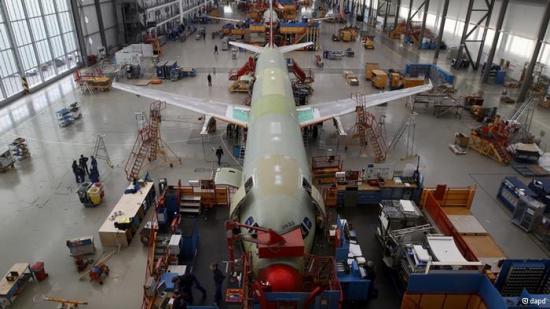
BEA-EADS-RIP

Massive political resistance or pure economic theory? Or both?

“From an economic perspective, this should of course be avoided. Pure economic theory would say that the state should stay out of it and leave the market alone.”

“The massive political resistance was ultimately too great to overcome.”

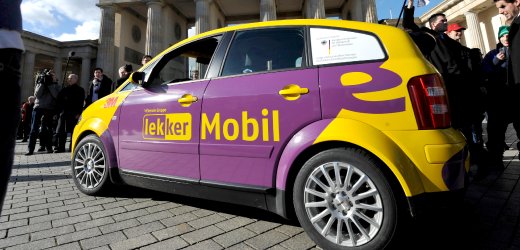
Electric Cars Have Already Reached A Whopping 0.01 Percent Of All Registered Cars In Germany

That’s some, uh, 4,600 vehicles. At this rate, the German government’s plan to have 1 million electric cars on the road by 2020 will be reached easily.

Or maybe not. Because those pesky German consumers still haven’t got the message and think that these babies are too expensive and don’t have a long enough range to make them attractive as, you know, as cars.

So that’s why the German government, flexible as it is, has now said that their goal of 1 million electric cars by 2020 (set last year) has now become a goal of 600,000 electric cars by 2020. I can’t wait to see what next year’s goal for 2020 will be like.

Damn. I’m impressed. This German Energiewende (energy turnaround) is getting easier and easier to reach all the time.

“If we don’t create incentives, then the whole thing is going to fail,” the Green party said in a statement.

Make Embargo Not War

And make a killing with illegal nuclear technology exports to Iran in the process.

Here’s German pacifism at its finest: Nuclear technology for Germany? Have you gone mad!? German nuclear technology exports for Iran? Let’s talk.

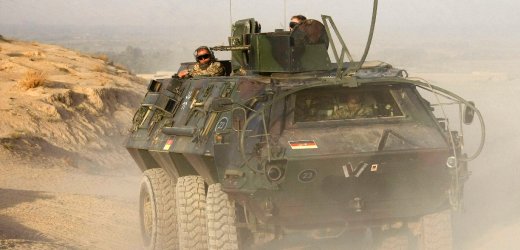
Recent arrests suggest that Germany remains a hub for sales of prohibited supplies to Iran that are being used in Iran’s nuclear program. Illegal exports are undermining Chancellor Angela Merkel, who has pursued an embargo policy in order to prevent a possible war in the Middle East.

“Germany will do everything that it can to ensure that trade with Iran will not simply seek out new routes.”