High Five Claudia

Or high, anyway.

Claudia

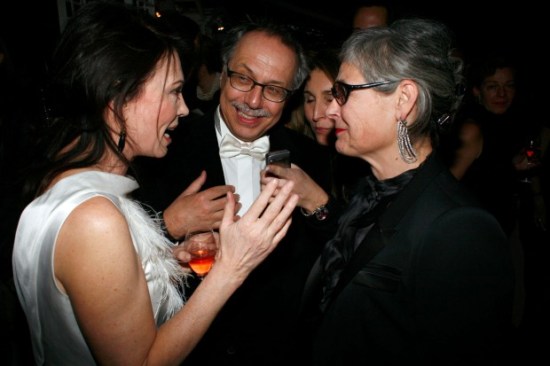
How did the high five and theocratic rule in Iran come to cross paths recently? Well, this past weekend at the Munich Security Conference, Claudia Roth, who heads the German Green Party, which represents 11% of the country, was photographed engaged in an enthusiastic high five with the Iranian Ambassador to Germany Ali Reza Sheikh Attar.

The story is beginning to make waves in Germany because Iran’s leaders routinely deny that the Holocaust ever happened, which is a crime in Germany. An example came soon after at a forum with the German Council on Foreign Relations on Monday when Iran’s Foreign Minister Ali Akbar Selehi was invited to visit the Holocaust Memorial in Berlin. Selehi ignored the invitation and then passed on answering a question about Holocaust denial in his country by simply saying “Any holocaust is a human tragedy.” When asked if there has been more than one Holocaust, Selehi told the packed audience that it was up to them to find out.  

Claudia Roth’s Green Party arose from the German student movement of the 1960s, recalcitrant in thumbing their noses at the previous generation who had pro-Nazi tendencies. They championed human rights and cast themselves as the enlightened and progressive leaders of Germany’s bright future.

So why is the head of the Green Party so cozy with someone whose country’s fascism represents the complete opposite of the Green Party pillars? Roth has issued a statement downplaying the encounter, but unfortunately, not even German has a word for how this incident makes any sense.

Attar werde vorgeworfen, dass er in den “80ern als Gouverneur im Iran Oppositionelle aufhängen ließ”. Attar war nach der islamischen Revolution von 1979 Gouverneur der Provinzen Kurdistan und West-Aserbaidschan gewesen. Seit 2008 ist er Botschafter in Deutschland und nicht zuletzt damit beschäftigt, Kritik an Menschenrechtsverletzungen des Regimes in Teheran zurückzuweisen.

Lots Of Serious Crappy Films To Premiere At This Year’s Berlin Film Festival Starting Tomorrow

Or seriously crappy films, if you prefer.

Film snobs

The subjects will range from serious themes like obesity to the lack of health insurance, with a few gay priests and a little nuclear contamination thrown in here and there just to spice things down.

And in case you didn’t know, the Berlinale is known to be the most political (and therefore the most serious) of the three biggest European film festivals (Cannes, Venice and Berlin) and is also famous for including the sort of movies that aren’t necessarily considered, well, mainstream or easy to market.

You know, self-indulgent and arrogant cinematic art snob crap and art for art’s sake rubbish like that. So there we have it. Lights, camera… What’s the opposite of action again?

Wie schwer ist ein Goldener Bär? Wer ist der wahre Held der Berlinale? Wo steigt die beste Party? Alles, was Besucher des Filmfestivals wissen müssen – von A wie Ankunft bis Z wie Zoo-Palast.

Klaus Wowereit Unpopular In Berlin For Some Reason These Days

According to the latest Forsa poll taken here in Berlin, only a small number of Berlin voters hold Berlin mayor Klaus Wowereit to be trustworthy, straightforward, competent, able to take criticism and work in a team.

Klaus

So like what’s the problem, right? He’s the perfect political animal.

No, but seriously folks… He’s so disliked at the moment that only two Pirate party politicians are less popular than he is. Party Klaus, I take my Hut off to you!

Nur eine Minderheit der Bürger hält Wowereit für glaubwürdig, gradlinig, kompetent, kritik- und teamfähig. Der einzige Wert, bei dem er im Vergleich zu früheren Umfragen zulegte, ist das Machtbewusstsein.

Poor But Sexy But Inter-State Fiscally Adjusted

Berlin is.

Waste

Here’s a new German word for you: Länderfinanzausgleich. In a nutshell, this means that wealthy German states like Bavaria and Hesse (so-called donor states) are obligated to subsidize poor but sometimes sexy German states like Berlin and Bremen (so-called recipient states) because, well, hell if I know why.

This is also known as “inter-state fiscal adjustment” here. You know, good old fashioned Umverteilung (redistribution of somebody else’s money) or subsidies, if you prefer.

Anyways, Bavaria and Hesse, for one (or two), are mad as hell and aren’t going to take it (or give it) anymore and are bringing an action before the German Verfassungsgericht (Supreme Court) claiming that this type of thing is constitutionally imbalanced and needs to be done away with – at least when it comes to Berlin because the Berlin city/state government consists of a worthless bunch of lazy and wasteful bums who are completely out of control when it comes to spending and would never think of stopping their spending if they aren’t forced to, which is, well, a pretty accurate analysis of the situation here.

This will probably go nowhere, however, because Germans are big fans of something they like to call Solidarität (no English equivalent that I can find other than maybe “supporting lazy and wasteful and sometimes sexy bums”).

“Das Gesamtsystem leidet unter einer zu weitgehenden Nivellierung der Länderfinanzkraft, die den politisch Verantwortlichen eines Landes das Eigeninteresse nimmt, Maßnahmen zur Stärkung der originären Steuerkraft zu ergreifen.”

Is This Any Way For A World President To Act?

I mean lead.

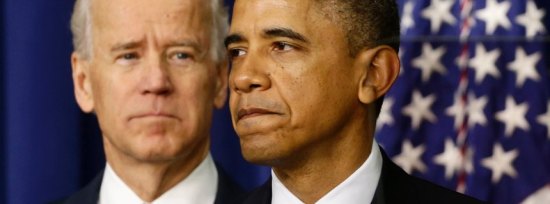
Obama, the Nobel Peace Prize laureate, didn’t focus on creating a better world in his speech. Instead, he talked about a better America, one with more opportunities for immigrants, more rights for homosexuals and less social inequality. Today’s America is deeply divided, but all sides agree on one point: America’s well-being is more important than the world’s.

Barack Obama

Hey, leading from behind ain’t what it used to be. Wait a second. Yes it is.

Europe isn’t in a position to provide decisive leadership. And the US doesn’t want to anymore.

Me No Steal Golden Cookie

And me no negotiate with cookie terrorists, either, if I were you.

Cookie

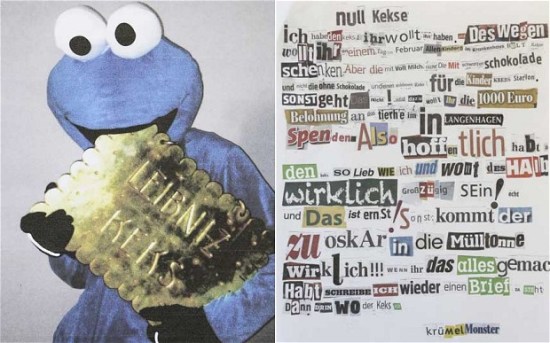
Das Unternehmen stellte in Aussicht, 52 000 Packungen Leibniz Kekse an 52 soziale Einrichtungen zu spenden, sollte das von der Fassade des Stammhauses gestohlene Wahrzeichen wieder auftauchen.

If You Want To Watch YouTube Videos in Germany, Go To South Sudan Instead

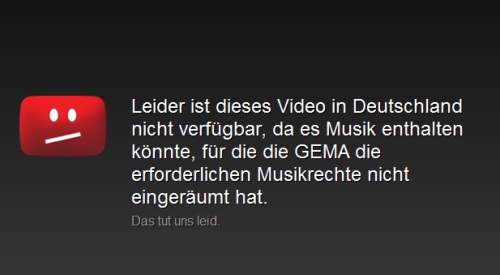
Over 60 percent of the world’s most popular YouTube videos are blocked in Germany – South Sudan only manages to block about 15 percent.

GEMA

GEMA, which represents recording artists as well as publishers, wants YouTube to pay a fee for each and every video viewed on the site that contains music of one of the artists represented by GEMA (which include every major label artist, as well as most indies). YouTube has rejected that approach, and instead wants to pay a percentage of the ad revenue it makes with those videos.

Negotiations have, well, broken down. Feelings have been hurt. Lawsuits have been filed.

“Dieses Video ist in Deutschland nicht verfügbar, weil es möglicherweise Musik enthält, für die die erforderlichen Musikrechte von der Gema nicht eingeräumt wurden.”

More Green Energy Jobs

More jobs lost to green energy, I mean.

Offshore

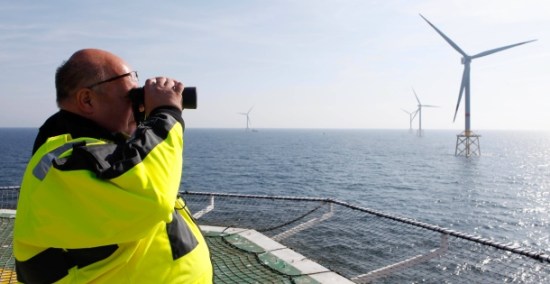
Worlee-Chemie GmbH, a family-owned company that has produced resins in the city of Hamburg for almost a century, is trying to escape the spiraling cost of Germany’s shift to renewable energy.

A 47 percent increase on Jan. 1 in the fees grid operators set to fund wind and solar investments is driving the maker of paint ingredients to Turkey, where next month it will start making a new type of hardening agent at a factory near Istanbul.

The levy will cost Worlee 465,000 euros ($620,000) this year, the equivalent of 10 full-time salaries, or one-third of the company’s tax bill. As German labor costs rise at the fastest pace in a decade, the price of weaning the country off nuclear energy by 2022 is crushing the so-called Mittelstand, the three million small and medium-sized businesses like Worlee that account for about half of gross domestic product.

Wow. Now that’s what I call government intervention in action. This German energy turnaround thing is working out practically as well as the European cap-and-trade system itself.

“It could be the proverbial straw that breaks the camel’s back. It comes on top of tax, general production costs, raw-material availability and bureaucracy, which have led to a deterioration of the investment climate in Germany.”