HFBS

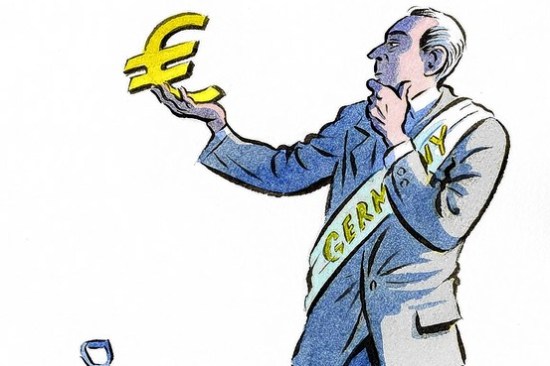
I call it Hurt Feelings Burnout Syndrome (HFBS). With an emphasis on the BS. Oh man, I had to laugh out loud while reading the latest on the poor, misunderstood German front.

It appears that many German intellectuals are very concerned about how their European neighbors think of them (Germany) these days. Needless to say, it isn’t very highly at all. And some have come to the stunning conclusion that they are so disliked at the moment because, now get this, they are so big and strong. Imagine that.

Germany is the USA of Europe – only with a different history.

You don’t need to puzzle for very long about the question of why so much Nazi name-calling is going on at the moment: For the first time since 1945, Germany has appeared in full strength again. Not because anybody wanted it, but because the European debt crisis has made the most economically powerful country the most politically powerful one, as well. Germany is now intervening in the internal affairs of others in a big way.

Slowly but surely, the country is taking over a role for Europe that the USA has played for the rest of the world for so long, as being the country that uses (and sometimes misuses) its power, the country that is to blame for everything, the country that is supposed to save everything and is reviled for the way it does it. What has America not been accused of? The CIA has always been behind everything and American imperialism has always been the motivation.

How moving. Or something. And the rest of the story? Now folks are calling Germans Nazis again (as if they had ever stopped). Boo-hoo-hoo already. Come on, Germany. Wake up and smell the coffee. You’re the big kid on the block. Run with it. Enjoy. It comes with the turf.

And in a related story (I find), it turns out that Germans are also now “burning out” like flies (it’s hard to carry on when nobody likes you, I guess). This imaginary disease (yet another American import – are we having irony yet?) is currently running rampant among Germany’s workforce, with nearly 1 out of 10 sick days in Germany in 2010 being attributed to it (tendency rising). Another connection to US-Amerika? Oh my God. No wonder so many Germans are getting sick. Please note: The high-brow daily Frankfurter Allgemeine Zeitung questioned why burnout was being written so much about in Germany, while in France, which is economically a lot worse off, “it’s hardly a preoccupation at all.”

Remember: HFBS is incurable, but there are many effective treatments. One of them is shutting the #!?#! up.

Man braucht wirklich nicht lange an der Frage rumzurätseln, warum die Nazi-Vergleiche im Moment so oft gezogen werden: Zum ersten Mal seit 1945 tritt Deutschland wieder mit voller Macht auf, nicht weil man das gewollt hätte, sondern weil die europäische Schuldenkrise das ökonomisch stärkste auch zum politisch mächtigsten Land gemacht hat. Deutschland greift nun tief ein in die inneren Angelegenheiten Dritter.

Allmählich bekommt das Land für Europa eine ähnliche Funktion, wie sie die USA lange Zeit für die ganze Welt hatten. Als jene Macht, die ihre Kraft gebrauchte, manchmal missbrauchte, die an allem schuld war, die alles retten sollte und sich dafür beschimpfen lassen musste, wie sie es tat. Was wurde den Amerikanern nicht alles Übles angedichtet, immer steckte die CIA hinter allem Bösen, stets wurden die Amerikaner des Imperialismus geziehen.

PS: I hate to admit it, Germany, but I guess we’ve got more in common than we would like to admit (thanks for the idea, Old Phat Stu).

Thriving, Struggling, Suffering

Although not necessarily in that order.

Germans are notorious pessimists, as you know. And they’re always bitching and moaning, especially when they don’t have anything to bitch and moan about. Take this latest Gallup survey, for instance:

“The 4 in 10 Germans who rated their lives highly enough to be considered “thriving” throughout 2011 was lower than in 2010.”

That could have been a whole lot worse, though. I’ve been living here so long that the first time I read that sentence I swear I was sure it read

“The 4 in 10 Germans who rated their lives highly enough to be considered “LIVING” throughout 2011 was lower than in 2010.”

Come on Germany, you’re giving me a complex. Go out there and live a little already!

In addition, the percentage of Germans who are “suffering” ticked up slightly in the fourth quarter of 2011, amid escalating economic turmoil in the eurozone.

Crisis, Doomsday And The End Of The World As We Know It

I don’t usually tend to panic when reading newspapers, but when German journalists start writing articles critical of the media’s “eternal ramblings about doomsday,” I get very nervous indeed. This is news, in other words, primarily because this isn’t news to me.

Evelyn Finger’s main concern here is the German obsession with “the” Krise (crisis) in general (crises plural) and the latest so-called Krise der Demokratie (crisis of Democracy) in particular.

“In the meantime (it started out long ago with “the oil crisis,” she believes) we have become all too accustomed to terms like education crisis, energy crisis, climate crisis and, most recently, financial crisis, debt crisis and euro crisis. We have all hoped that these crises would not prove to become any more threatening than they already are, especially since our linguistic capacity to express more crisis seems to have been exhausted: World financial crisis! But a new threatening term has been spooking the debates as of late: A crisis of Democracy. Is there really such a crisis or is the chatter about it the real problem?”

We all know the answer to that question, of course. She rightly finds this obsessive German Angslust (passion for fear) ridiculous and has no trouble exposing it for what it is; mindless, self-indulgent, neurotic nonsense. But I do wish she would have had the decency to have warned me first. I don’t like stumbling accross articles like this in German newspapers, articles that make sense by expressing something we used to call “common sense.” If I had wanted to read articles like that I wouldn’t have bought a German newspaper in the first place.

But thanks anyway, Evelyn. You may have shaken me up a bit, but I really do hope you have a pleasant week.

Das Wort Krise hatte seinen Schrecken schon fast verloren. Es klang in den letzten Monaten auch bei dramatischer Nachrichtenlage etwas schwach und durch häufigen Gebrauch abgenutzt.

It’s Us Against Them

Us as in US, I mean.

German authorities are trying to limit what the American tech companies can do, but the Silicon Valley giants are fighting back (the key word is American here, folks).

Give the Germans what they want, I say. But what DO they want, anyway (this is one of my favorite German schizophrenia thangs).

It’s worth noting that Facebook and Google are actually quite popular in the country — the BBC reported in September that “a quarter of the German population are active Facebook users and Google has 95% of the country’s search market.”

Like Get Out Of My Gesicht Already

Are we having another Street View yet? German faces on Facebook? Niemals (never)!

When it comes to Facebook’s biometric facial recognition technology “Tag Suggestions”, or just about any other kind of dad-gern-new-fangled sinister and EVIL US-Amerikanische Internet technology out there for that matter, Germans verstehen kein spaß (just can’t take a joke). And when you mix up a little “out of principle” in the fixins’, this latest tasty data protection Skandal is ready-to-serve.

To opt-in or opt-out, that is the question (German paranoiacs prefer the opt-in opt) and Hamburg’s data protection commissioner is now preparing legal action against Facebook and will soon fine the company over its use of said technology because, well, he can.

“Facebook has repeatedly come under fire in Germany, where privacy is a particularly sensitive issue for historical reasons.” Historical reasons? Nonsense. This is clearly a mental health issue.

“We believe that any legal action is completely unnecessary as the tag suggest feature on Facebook is fully compliant with EU data protection laws.”

Germany Will Lead!

But only from behind. It’s another one of those German schizoid personality disorder things.

When history dictates humility, and modesty proves so profitable, reticence endures.

Germans tell the pollsters they fear for their money—and then add that they like both Europe and the euro. They sense that it is cheaper to throw up firewalls than to pay for the devastation of the blaze. They bridle at rewarding the vices of the “Club Med” countries. But their real horror is to be left alone in Europe once more.

The Scam That Keeps On Giving

Word has clearly gotten out now. What used to be a Geheimtipp (insiders’ tip) has now become a full-fledged and nationally recognized Volkssport (national sport): Early retirement due to mental illness.

Up some 6,000 from the previous year, more and more Germans (71,000) are now being “forced” to retire early each and every year because they suffer from things like anxiety disorder, generalized anxiety disorder, multiple generalized anxiety disorder, mega ultra super mulitple generalized really really bad anxiety disorder and other such imaginary diseases.

In fact, being mental is now the number one main excuse used to have to go into “involuntary retirement” in Germany, with the average age of these hapless victims being 48, by the way.

Fear industry profiteers, I mean experts, are happy to report that the increased number of diagnosed cases is due to a greater willingness of sufferers to openly admit their problems, although none of these experts are able or willing to explain where this sudden willingness comes from.

Über das Thema werde jetzt “offener geredet und deshalb diagnostizieren Ärzte jetzt eher psychische Ursachen von Leiden.”

German Soldiers Burning Out Like Flies

And here you thought American soldiers had it bad. Put yourselves in a German soldier’s boots for once already.

It seems that the many Bundeswehr reforms taking place these days (they’re basically cutting the German army down to the size of a large police force which will never be used either) strain German soldiers way too awful much. Particularly “overtime and anxiety about the future” afflict them grievously, I read.

“It is an unprecedented test of severity” for these soldiers and their families, causing frustration, turmoil and exhaustion and… Burn-out! You know, another one of those imaginary disease imports custom-made for German society, or the lack thereof (Burn-out is very fashionable here these days. Just the other day a Bundesliga soccer coach threw in his towel quite publicly. A freakin’ soccer coach?).

And the punch line of this article (which I originally assumed to be of a satirical nature)? Not a word was mentioned about Afghanistan or any possible stress that a German soldier might be experiencing there. I guess that means that it’s less stressful to be a German soldier in Afghanistan than it is to be one back home in Germany.

Although it must be kind of stressful, or at least confusing, being a combat soldier in an army that never takes part in any combat operations even when it is in a war that isn’t really a war because this is Germany and being in wars, although having an army, is no longer provided for. Damn. Just thinking about that has me burning out already.

“Es darf keine Reformverlierer geben.”

Always Look On The Bright Side Of Life

First the good news: Germans are no more depressive than they used to be.

The bad news is that they are now no longer expected to keep their depressions to themselves and are being asked to come out of their closets to tell everybody about it.

The numbers are shocking or something. Fear industry experts at the Foundation for German Depression Assistance say that there are four million depressed people in Germany, two-thirds of them being women. Just like the rest of us, their lives are filled with angst, emptiness and desperation. But unlike others, these folks are much easier to manipulate (by organizations like the Foundation of German Depression Assistance, for instance) and can and will be made to come public with their ailments, real or imaginary, thus “breaking a taboo” and further increasing their number and the throng of psychotherapeutically challenged pilgrims to organizations like, well, take a guess.

The development is in fact so dramatic that comedian Harald Schmidt has been asked to get involved as a sponsor. And anybody who wasn’t depressed before attending a conference moderated by this guy will be by the time he leaves.

Gee. All of this gives German depression assistance a whole new meaning or something.

Vier Millionen Depressive in Deutschland – das kann nicht nur am Fernsehprogramm liegen.

I Can’t Look Away

Nor blink anymore. Remember the old days when addiction had to do with actual addiction? I mean, with an actual substance? No, I guess you don’t.

Anyways, a new fear industry report tells us that some 560,000 Germans are now “addicted” to the Internet. How shocking or something.

Addiction here means that these poor lamentable victims can no longer stop surfing on their own (that’s why they – and we – need the fear industry, see?). Like the helpless zombies that they are, these addicts live day and night (mostly night) in a so-called “virtual world” because it is there and only there that they can find fulfillment and recognition (albeit virtual fulfillment and virtual recognition).

And their addiction is in fact so way bad out of control that many of these victims (and I really want to stress the word victims here) no longer go to school, university or, gulp, even work (even when they have work, which most probably don’t, and which can also be very addictive, by the way, the work, I mean).

Doesn’t anybody out there care? Other than me (not)?

And doesn’t anybody out there other than me break out in loud laughter when reading ridiculous nonsense like this? Hello? Does anybody read me? Or am I lost in my “virtual world” again? Uh oh. The sun’s coming up.

Das seien etwa ein Prozent der 14- bis 64-Jährigen, sagte die Drogenbeauftragte der Bundesregierung.