So order your Swiss made emergency food parcels today!

Shipped within 24 hours.
“Ich spüre eine große Unsicherheit. Viele wollen auf das Unvorhersehbare vorbereitet sein.”
So order your Swiss made emergency food parcels today!
Shipped within 24 hours.
“Ich spüre eine große Unsicherheit. Viele wollen auf das Unvorhersehbare vorbereitet sein.”
When “good guys” like the Deutsche Bank get raided after being suspected of incorrectly claiming some €211 million in tax rebates from the trade in carbon tax certificates, then it’s time to also suspect that the days of this nonsensical European emissions trading have finally reached their end.

In case your were wondering: Emissions trading or cap-and-trade is a market-based approach used to control pollution by providing economic incentives for achieving reductions in the emissions of pollutants. A central authority (usually a governmental body) sets a limit or cap on the amount of a pollutant that may be emitted. The limit or cap is allocated or sold to firms in the form of emissions permits which represent the right to emit or discharge a specific volume of the specified pollutant. Firms are required to hold a number of permits (or allowances or carbon credits) equivalent to their emissions. The total number of permits cannot exceed the cap, limiting total emissions to that level. Firms that need to increase their volume of emissions must buy permits from those who require fewer permits.
Well, it turns out that the European “carbon market” is now flooded and recent EU efforts to fix the system have only served to highlight how lame it is, yada, yada, yada, thus further eroding the price of a ton of carbon dioxide emissions permitted. Government intervention at its best again, in other words.
You know how that old saying goes: “The nine most terrifying words in the English language are ‘I’m from the government and I’m here to help.’
EU-Klimakommissarin Connie Hedegaard will den Preisverfall der CO2-Zertifikate stoppen, der nach ihrer Meinung ein System unterminiert, das einst als Meisterlösung für die weltweite Klimaverschmutzung gepriesen wurde.
After the German city of Bonn narrowly escaped a deadly bombing last week – and unable to locate the suspected radical Islamist perpetrators due to a lack of recorded surveillance images – German authorities are now ready to consider intensifying the use of CCTV surveillance in Germany by dramatically increasing the number of McDonald’s restaurants allowed to open for business here.

“Violent criminals could be deterred and crimes and planned attacks more quickly cleared up with increased McDonald’s video technology in public spaces,” one Interior Ministry spokesman said. “I mean, like we’ve got to do something now, don’t we?”
The only surveillance images that could help the police in the hunt for the Bonn perpetrators come from the McDonald’s fast food chain. Unlike Deutsche Bahn, the McDonald’s restaurant on Platform 1 did record activity with its surveillance cameras.
You can run, suspected terrorist types, but you can’t hide from the Golden Arches.

After discovering and destroying a “highly dangerous” explosive device at Bonn’s central train station, German police are now patting themselves on the back for having already made their first arrest in the case, all thanks to the dreaded (in Germany) security camera footage in use there.
No, not the footage from the security cameras aimed at the platform where the device was found – there was no coverage there – this footage came from the security cameras used at the central station’s US-Amerikan McDonald’s restaurant.
You know, die totale Überwachung (the total surveillance) state and all that? Germans don’t like that kind of stuff for some reason (that terrorist suspect dude doesn’t like it much either, I bet). It has to do with data privacy or Google Street View or something. I forget.
Would you like fries with that?
Zwar appellieren Datenschützer, bei der Überwachung öffentlichen Raumes die Verhältnismäßigkeit zu wahren. Doch etwa in Ballungszentren Großbritanniens hat man sich an flächendeckende Kamerapräsenz längst gewöhnt – und davon kann die Polizei häufig profitieren.
And here you always figured that your lousy Chirstmas spirit had to do with the dreaded Verwandtenbesuch (visiting relatives). Well, it does. But recent research indicates that Christmas smells in abundance (and they always are this time of year) can also make Germans irritable and depressed.

That’s right. Aromatic candles, incense, advent wreaths with cinnamon and cloves, vanilla, anise, coriander, you name it. All these wonderfully smelly yule tide substances now pose a health threat to us (I mean you) and should be enjoyed in moderation only. I mean not be enjoyed in moderation only, of course.
Bah! Humbug already!
“Zuerst empfindet man den Duft noch als angenehm, aber bald schon kippt die Stimmung, man fühlt sich unwohl, leer oder gereizt.”
What is this bizarre weather phenomenon?
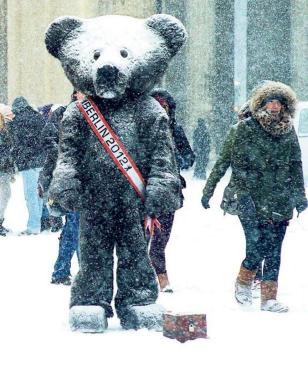
Concerned Germans and climate activists everywhere are puzzled by a strange form of precipitation in the form of crystalline water ice that has suddenly begun falling from the clouds all over Germany.
“Although we have only just begun our studies now,” everyone said in unison. “This is clearly another indication of the direct relationship between Global Warming and the gases (particularly CO2) we have emitted into the atmosphere. Brrr! Is this one cold puppy or what?”
60 Zentimeter Schnee auf der Zugspitze in Bayern. Bis zu einem halben Meter in den Mittelgebirgen. Selbst in Schleswig-Holstein liegen 20 Zentimeter Schnee.
Mad as hell about the latest failed United Nations climate talks held at Doha (that’s number 18 now, I believe), climate activists and environmentalists everywhere have begun emitting huge amounts of angry hot air in a desperate attempt to vent their frantic frustration at this latest “betrayal” to, uh, reality.
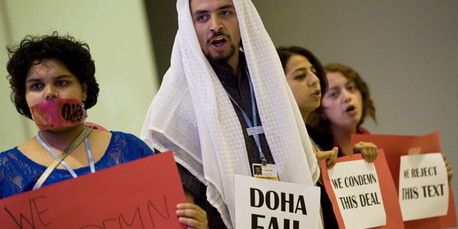
Cursing, wailing, spitting and hissing sounds have been registered all over our globally warmed up globe, punctuated by regular reports of urgent pouting and stomping noises.
One group of activists is open to reason, however, having pledged instead to collectively hold their breaths until turning blue in the face together.
“It has long been evident that the United Nations talks were at best a partial solution to the planetary climate change problem, and at worst an expensive sideshow.”
PS: Thanks for the way cool CO2 gas mask link, A.K.
What would you do if hords of uninvited strangers suddenly started pouring into your city for temporary visits in order to pump boatloads of money into your local economy? What would you do if affluent and upwardly mobile young expats moved into your neighborhood(s) and started opening businesses, buying homes and increasing the property values there?
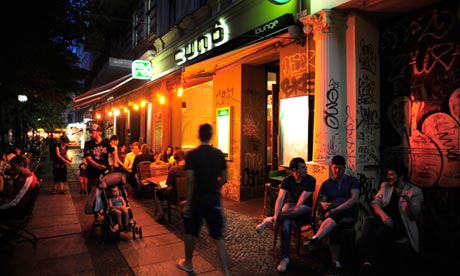
Why you’d freak the hell out and demand that they get the freak out of Dodge by sundown, wouldn’t you? Oh, you wouldn’t? Then you’re not German. Worse still: You don’t live in Berlin and you’re not a Berliner, either.
Viva the Hipster Antifa Neukölln or something.
“The anti-foreigner thing started as a bit of a joke but now it is much more serious. This is critical, it is sneaking into mainstream thinking – it’s almost being perceived as normal to dislike tourists.”
Remember that story about the nymphomaniac lady and that DJ whimp?

Well I guess she finally had one sexual adventure too many. After yet another night of wild Ausschweifung (debauchery), the guy who woke up next to her this time couldn’t get her to do the same (next to him).
Hey, at least she died with her boots on, so-to-speak.
Antje C. (47) zog häufig durch die Kneipen, immer auf der Suche nach dem nächsten Erotik-Kick.
German lawmakers were clearly shocked upon learning that Google would not be warmly welcoming their proposed legislation to let publishers charge search engines for displaying newspaper articles.

The search engine giant has reacted instead by initiating a campaign to mobilise public opinion against the proposed bill and calling for the public to “defend your web,” a company spokesman noting: “An ancillary copyright means less information for consumers and higher costs for companies.”
German Justice Minister Sabine Leutheusser-Schnarrenberger said that she for one was astonished that Google was trying to monopolise opinion-making. “Why, that’s our job,” she might have said.
“The campaign initiated by Google is cheap propaganda.”
———-
Warum das Leistungsschutzrecht keine gute Idee ist:
Generell sehen die Forscher die Gefahr, dass auf deutsche Presseprodukte gar nicht mehr verlinkt werde, „jedenfalls nicht unter Verwendung von Snippets, die für effiziente Internetrecherchen jedoch elementar sind“. Sie warnen in ihrem Schreiben, das namhafte Urheberrechts- und Medienrechtsexperten unterstützen, vor negativen Folgen für die deutsche Volkswirtschaft. Ihre Schlussfolgerung: „Gesamthaft betrachtet scheint der Regierungsentwurf nicht durchdacht. Er lässt sich auch durch kein sachliches Argument rechtfertigen.“
 Observing Hermann