More Angst Underway

In a shocking new study or something, psychologist expert types have just discovered that up to 17 percent of German young people between the ages of 14 and 20 are currently suffering from the what is now to become the dreaded mass illness ailment sickness known as “social phobia” (formarly known as adolescence). No one has bothered to tell them about it yet, either.

These chronic sufferers, especially the girl ones, regularly avoid situations in which they must meet people they don’t know and do things that they don’t want to do. But there is good news, researchers say. This scourge of mankind (teenkind?) can be treated successfully. By finally growing up already.

“Die gute Nachricht ist, dass soziale Phobien erfolgreich behandelt werden können.”

Phase-Out Gentrification Now!

Other cities would love to have a problem like this. Berlin takes in 20 million tourist overnight stays a year, and the number keeps rising. Investors and property owners keep rolling into the Stadt like, well, investors and property owners.

But for many Berliners, this is a crisis or something. This means that their city is in the process of becoming something called bürgerlich (a German cuss word meaning middle-class or bourgeois). Berlin is becoming gentrified (meaning upgraded, by the way), which is absolutely unacceptable because, well, many Berliners don’t want to upgraded, thank you.

You see, bourgeois gentrification ist deshalb (is on these grounds) unacceptable because it is a sign of economic dynamism in a city that has long been thought not to have any. Gentrification means that money is coming into town, that Berlin is becoming more attractive for that tasteless middle-class ambience so dreaded here, that the self-contained and highly subsidized island of Berlin is suddenly becoming a place of social mobility where middle-class lifestyle visions (which none of you out there share) are now apparently easier to realize here than elsewhere in the country.

German Gentrification is bad for Berlin, in other words. It has to be phased-out, just like German nuclear energy was. And don’t get them wrong or anything, it’s not because these Berliners are being intolerant here or anything. It’s just that they are being intolerant here – and acting more bourgeois than the bourgeoisie they despise.

Wer hätte sich träumen lassen, dass ausgerechnet das arme Berlin einmal ein Gentrifizierungsproblem haben würde? Es könnte schlimmere Nachrichten geben.

Throw that first stone!

And kick him when he’s down, Germany. Our Guido. I mean, your Guido.

He really screwed up with Libya, didn’t he? But Josef Joffe from Die Zeit makes a few points y’all seem to have forgotten about:

“Those who are kicking away at Guido W. now have forgotten three things. First of all, that he exercised the will of the government in the Security Counsel (with the abstention), also that of the Chancellor. Secondly, he articulated the will of the people as reflected in the polls taken. According to a Stern survey taken on March 16, practically the entire German population – 88 percent! – was against a German military operation; a third did not even want a flying ban. So whoever appreciated the government’s ‘preemptive obedience’ regarding the nuclear phase-out ought not to judge so harshly when it comes to populism in foreign policy.

After two lost world wars the German loves the thought of getting involved in another one about as much as the twice-burned child. That explains, thirdly, why SPD caucus leader Steinmeier saw the Security Councel vote as ‘understandible and reasonable.’ That’s why SPD party leader Gabriel could ‘understand’ Westerwelle (Green Trittin could too, but that isn’t mentioned here). Of course politicians can, must, change their minds, but this damned Internet never forgets anything.”

I guess 88 percent of the Germans who were behind Westerwelle a month ago have suffered 100 percent memory loss now. But believe me folks, Germans are always 88 percent behind/against everything (and the memory loss always plays an important role here). That’s just what they do. And in the US? I don’t think you could get 88 percent of the population to agree on getting free beer for life.

Valide waren auch Westerwelles Argumente. Er hat aber trotzdem gesündigt, indem er so geredet hat, wie Regierung und Opposition dachten und das Volk fühlte. Das verzeihen wir ihm nicht.

How Miraculous

Hidden behind the so-called German economic miracle is an underclass of low-paid employees whose incomes have benefited little from the country’s stability and in fact have shrunk in real terms over the last decade.

Despite Germany’s renowned inflation-fighting efforts, which kept consumer price increases at an average of 1.7 percent a year from 2000 to 2010, more and more low-income Germans report that they cannot make ends meet despite having a job and that they must rely upon state aid to supplement their income.

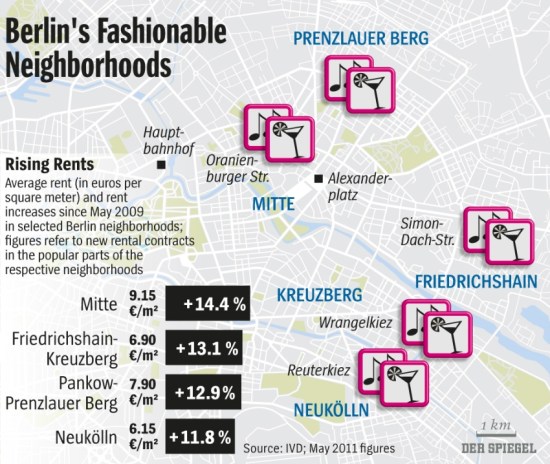
Nowhere is this deepening chasm more visible than in Berlin-Mitte, the prosperous center of the capital, full of handsome government buildings and fine restaurants that cater to officials and lobbyists.

On a rainy summer morning here, only a 10-minute walk from the glamorous Unter Den Linden boulevard, hundreds of poorly dressed men and women lined up inside the district employment office. Some of them had come to look for work, some were applying for state help and some just wanted to accompany a friend.

“They cannot live off their income. Their wages are just too low. They have no choice but to receive help from the state.”

Child Poverty

That’s what the Germans call their lack of children here. And with children comprising only 16.5 percent of the total population Germany now has the fewest number of children in all of zee Europe.

And the same report gives child poverty a whole new meaning here, too. It shows that one out of six of these rare creatures is threatened with real poverty.

I don’t know what any of this means. I suppose that Germans just prefer to spend more time with themselves and need to concentrate more on self-discovery and individual fulfillment. And to take themselves more seriously. Than they already are doing, I mean. And that is no laughing matter, believe me. So that makes this place certainly not the kind of place where you would want to raise your kids.

Vor zehn Jahren lag der Kinderanteil bei 18,8 Prozent, jetzt bei 16,5 Prozent, 2030 werden es voraussichtlich nur noch 15 Prozent sein.

Everything Is So Wunderbar Here

When it comes to the German economy and the jobs here, right?

Right. Sort of. Think again. Granted, Germans love nothing better than to bitch and moan about anything and everything they can, their jobs included, but the latest phase of a study done by the Universität Duisburg-Essen has shown that based on a scale from 1 (awful) to 10 (great) German on-the-job satisfaction has dropped from 7.6 to 6.8 during the past 25 years.

In an international comparison, German is even way down at the bottom of the list, the only workers being less satisfied coming from ex-East Block nations like Slowakia, Ukraine, Bulgaria and Russia. But at least now the West Germans are just as miserable as the East Germans are, the study says. So that’s progress, I guess.

Hmmm. I guess nothing ever is as it seems.

Im internationalen Vergleich rangiert Deutschland in der Studie weit hinten auf Rang 18 – nur in den ehemaligen Ostblock-Staaten Slowakei, Ukraine, Bulgarien und Russland seien die Arbeitnehmer demnach noch unzufriedener.


Greeks Don’t Work Enough

Talk about your vacation nation. No, not Greece. Germany.

This isn’t really news, of course. “Germans may accuse spendthrift euro zone southerners of too much play and not enough work, but they enjoy the most generous annual holiday time in the European Union, a study released on Wednesday showed.”

Hey, it’s nice to be the king.

Keine anderen Europäer haben mehr freie Tage im Jahr – insgesamt sind es jeweils 40.

Too Much Sunshine Here

Too much sunshine here? You know how everybody always likes to bitch and moan about the weather all the time? Well they do over here (when not bitching and moaning about the climate).

And they do so with good reason, too. The summers in Germany are often, like this summer, “suboptimal.”

But that doesn’t mean you don’t have to shoot for a little variety now and then when it comes to the weather bitches and moans (bitches and moaners?). The latest spin is that the first half of this year was the sunniest yet on record. And this too is a bad thing, I think.

This means, uh, I don’t know what it means (does the weather ever mean anything?). Or is this climate again already we’re talking about here (climate is meaningful, I think, right?)?

No, this just means that you can bitch and moan all the more about the current crappy weather because you’re being reminded about how much sunnier it was just a few weeks/months ago.

Seit 120 Jahren hat es nur ein heißeres erstes Halbjahr gegeben, so der Deutsche Wetterdienst. Er warnt zugleich vor künftigen Wetterextremen durch den Klimawandel.

Naked Germans Put On Endangered Species List, Finally

It’s not as easy being a German naturalist as it used to be. Due to weight issues, more and more clothing has to be taken off or something and that’s become a real pain in the sunburned behind.

And then there are the demographics. Immigrants from Turkey and Arabic countries aren’t interested in “social nudity,” for some strange reason.

Nude sunbathing has a long tradition in Germany. The Free Body Culture (FKK) movement was founded in the early 20th century and succeeded in taking much of the smut and embarrassment out of nudity.