German Offshore Wind Farms More Deadly Than Fukushima

Nobody promised the Germans a rose garden when the so-called “energy turnaround” turned around the corner here last year.

So that’s why the three deaths and 80 serious accidents that have taken place so far while building Germany’s so badly needed offshore wind farms are being registered here with such stoic equanimity (or are being ignored altogether). Progress must march on or something. Keine Widerrede (no talking back)!

Do me a favor and wake me once this energy turnaround nonsense has finally turned around (as in over) and died itself.

Der Leiter des Havariekommandos in Cuxhaven, Hans-Werner Monsees, forderte gegenüber FOCUS ein „besseres und dichteres Rettungssystem“. Sonst drohe die Zahl der Toten und Schwerverletzten weiter zu steigen – in den nächsten Jahren werden bis zu 7000 Windräder vor der deutschen Küste installiert.

1 Percent?

That’s right. E-books only account for 1 percent of all book sales in Germany.

Why is this? Let us count the ways…

Germans believe they cannot read as well on digital reading devices. This is because they have never held a digital reading device in their hands, much less tried to read from one, but still.

Germans are convinced that they are “better” at reading from paper (I don’t make this stuff up, people).

Like savages who believe that a camera captures your soul, Germans believe that an e-book reader captures the souls of the books it, uh, holds captive (OK, that part I did make up).

But the biggest reason of all Germans don’t like e-books and e-book readers is that Germans don’t like technology. Technology that isn’t German, I mean.

“In Germany we’re still at 1 percent, but that’s already an increase of 77 percent from the previous year.”

PS: Of course low e-book sales in Germany might also have to do with the fact that German book prices are set by the German culture mafia (by the publishers!? = you pay the same artificially high price everywhere) so they get to set the e-book prices, too (you can pay up to $25 for one). And although printed books are exempt from Germany’s 19 percent value added tax, e-books aren’t. Not that the system is rigged or anything. I’m just saying.

Hallo, ist da jemand?

Is there anybody out there?

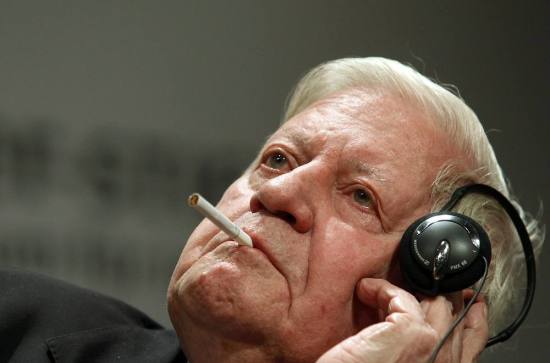
I like old Helmut Schmidt, and we’re talking old (93). I like that he goes out of his way to smoke in front of everybody, especially there where you’re not supposed to. I also think it’s cool that he doesn’t have a cell phone and prefers writing something called “letters” with something called “paper and ink.”  And I don’t even mind that he thinks the Internet is “menacing.” I mean, why should he be the only one in Germany who doesn’t think that way?

I do wish, however, that he would take that big leap and finally leave the SPD while he still has the time to do so. I don’t think he ever belonged there in the first place. But maybe that’s just me.

„Ich telefoniere überhaupt nur noch selten. Wahrscheinlich habe ich das auch früher nie wirklich gern getan. Ich habe immer die Schriftform bevorzugt, und zwar die briefliche Schriftform.“

State Subsidies In Action

This would be funny if wasn’t so funny. Where do we want to go broke today? Q-Cells is now the fourth major bankruptcy in the German solar industry sector of late and although they are sure to have made a lot of dumb mistakes themselves, they certainly couldn’t have gone bankrupt “this well” without the German government’s relentless and merciless help.
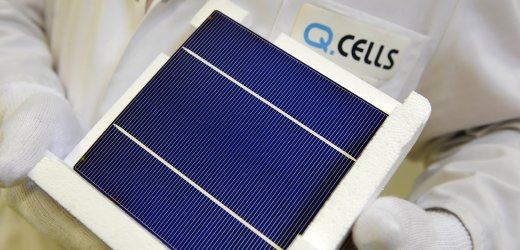
It’s all about drugs, subsidy drugs. And once these subsidy drugs had been administered – in this case promoting wonderful and environmentally friendly solar technology for the good of all German-kind (in a country where sunshine is still a news item) – most of these companies failed to wean themselves from their reliance upon them and made some bad business decisions as a result (decisions they wouldn’t have made if they had been clean).

In the meantime, Asian competitors in the real world learned to produce the solar technology cheaper (as usual) and, just to add a little insult to injury here, it turns out that the German government helped the Chinese solar industry with financial aid , too. Only they did this better than they did in Germany.

Then Berlin finally got tired of shelling out all this money back home and started reducing the dosage faster than the addicts could adapt to and, well,  the rest is history, or Geschichte, if you prefer.

So what’s the moral of the story? Remember those nine most terrifying words in the English language: “We’re from the government and we’re here to help.”

Somehow the German government must have lost sight of the fact that its policy in fact encourages the demise of Germany’s own solar industry. The development bank of the government-owned KfW group of banks supports China’s green industry with low-interest loans. Ironically, the German Investment and Development Company (DEG), also a subsidiary of KfW, is one of the financial backers of Chinese industry giant Yingli Solar.


Bust Them, Switzerland

And throw away the key. Those no good criminals. Those German tax collectors who have been trading in stolen Swiss goods.

Switzerland has issued arrest warrants for industrial espionage for three German tax collectors who bought (with German government approval) the bank details of German tax evaders in Switzerland.

“For Germany, the issue is one of tax fraud, leading the country to authorize three tax inspectors to buy leaked stolen data on tax evaders in 2010. This legally dubious approach wasn’t an issue domestically because of the common belief that the state was collecting its alleged due and it effects only ‘the rich.’ But in reality, because Switzerland has different laws, the officials acquired stolen property to use as evidence, and paid the thieves €2.5 million for it. Anyone who dismisses this as a trifle needs legal tutoring.”

“Just imagine how Germany would react were the Chinese government to buy automobile designs from German car company employees to speed up industrial development — with the argument that patent laws are too strong in the West.”

Another Shocking New Revelation

“Germany is a nation of grumblers.”

Wow. And this guy should know. He’s a German himself.

I mean, I knew that they were a nation of moaners and whiners and that they liked to complain and gripe and lament a lot and that they regularly deplore things and eat their hearts out bemoaning matters while greiving and bitching and moaning (as opposed to just moaning without the bitching part), but I honesly had no idea that they were grumblers, too. Hey, live and learn.

“Anyone who follows all the daily debates in Germany that are critical of capitalism and growth could come to the conclusion that we Germans don’t want to be successful anymore.”

Just Say No

As usual, I mean. Berliners in Kreuzberg (or at least that active, left-wing kind) aren’t interested in finding new solutions for urban living, thank you. And they’ll even threaten you with violence if you try to establish “temporary cultural space” to attempt to do so (go ask BMW Guggenheim Lab). Kreuzbergers don’t do culture. Temporary or otherwise.

And speaking of resistence… The rest of the country is pretty much Kreuzberg all over again (only on a much larger scale) when it comes to saying no to the Internet (some call it the Internetz).

This isn’t really a news item or anything, but now certain German businessmen types are actually starting to get worried about their country “sleeping through the Internet” age like it does.

They have come to discover that their fellow Germans provide “too few qualified professionals, suffer way too much from risk aversion and are caught up in a tightly structured regulation frenzy.” Like I said, this isn’t anything new. But the real question is: What are you going to be able to do about that? Not a damned thing, of course.

Das Internet ist ein globaler Treiber für die Wirtschaft. Doch in Deutschland bremsen Fachkräftemangel und hohe Anforderungen an den Datenschutz die Firmen aus.

Germany In Grave Danger Again

It’s all over but the crying now. Or whining, if you prefer. German Wetter (weather) just keeps getting wetter!

A new study tells us that the number of “devastating” storms, heavy rains and other weather-related “natural catastrophes” has tripled in Germany since the 70s! Wow. Have there actually been three already?

Scarier still is that the climate model for the next thirty years (this in a country that can’t get the weather forecast for tomorrow right, mind you) calls for even more “heavy precipitation” that will most likely lead to – oh my God we’re all going to die – flooding! That’s right, the f-word. Oh the horror or something. And you thought it couldn’t happen here.

„Für die nächsten 30 Jahre rechnen Klimamodelle in Deutschland vor allem mit einer Zunahme der Sturmintensität und mit mehr Starkniederschlägen, die zu Überschwemmungen führen.“

Germany’s Energy Turnaround Rocks

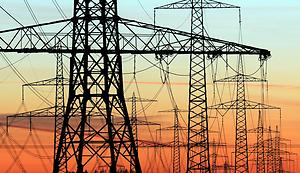
They never promised you a rose garden (actually, they did). It looks like Germany’s Energiewende (the energy turnaround = shutting down nuclear power and waiting for solar and wind energy to pick up slack) is going to have its price, too.

And it looks likes the first installment will by about a seven percent increase in energy costs for private housholds. But Germans pay these increases gladly, I think. At least for now (seven percent is just the start, of course). It’s back to the future. It’s for the common good. Or it’s for saving the planet or something.

Uh, like why don’t they just have “the state” pay for it. Oh, that’s right. They already are (the taxpayers are, that is).

Stromtrassen, Umschlagwerke oder intelligente Stromzähler kosten den Staat Milliarden. Draufzahlen muss am Ende oft der Verbraucher – offenbar bis zu sieben Prozent in den kommenden Jahren.

Remember The Ozone Hole?

We were just kidding.

No, seriously. Something called the Montreal Protocol just saved the world as we know it from most certain destruction, bringing about a “healing of the ozone layer” and thus reducing our exposure to harmful UV rays from the sun which was being caused by, well, refrigerators and aerosol spray cans. Just like that. Almost as if by magic or something.

A German research institute has even confirmed this wonderful news, so you can bet that it’s for real (Germans are very thorough, you know). And said German research institute, like all those other research institutes out there, is being completely objective here and has in no way profited from the research funds given it to research said ozone hole phenomena and only böse Zungen (malicious tongues) would suggest otherwise.

The underlying message here: To rid the world of all manner of unpleasantness and harmful gas, both hot and cold, all we need are more protocols (like Montreal or Kyoto, say), and not less. Or fewer, I mean. And more funding, of course.

“The results are encouraging. The fact that the ozone layer in the regions researched has become thicker is a result of the successful Montreal Protocol.”