How Shocking

Or something. 30 protesters stormed the grounds of the Iranian mission in Berlin Dahlem and pelted the building with stones and paint and stuff.

Uebergriff auf Iranische Botschaft in Berlin

Uh, so what’s the problem with that, Guido? It’s not like they’re going to be taking hostages are anything.

“Just as we expect other states to provide adequate protection for our embassies, so we must ensure German authorities are doing everything possible to protect diplomatic missions.”


The N-Word

You know, it starts with an n and ends with an r*? Do not even think about using it over here in Germany these days, people. Not that you would even want to or anything, even if you could. I’m just sayin’.

Why is this the case? I’ll tell you why. Because everybody’s all touchy these days. German power grids are less stable than they ought to be and nobody wants to address the reason why that is. Folks have gotten all sensitive and defensive because, well, because of that “power networks more unstable since n-word drop-out” thing.  And no, I didn’t think up that subtitle. I’m just quoting it, sort of. Civilized folks don’t use the n-word. And I ain’t a-gonna use it either.

Kritisch werden könnte es nach Auffassung von Fachleuten generell vor allem in Süddeutschland, wo der Strom der abgeschalteten Atomkraftwerke fehlt.

* “Nuclear”

We Ain’t No Fools

It’s either all or nothing when you’re the SPD and it comes to German tax evaders with Swiss bank accounts. So, uh, we’ll take nothing.

It has to do with principle or something. Rejecting the deal that would have allowed Germans with “undeclared assets in Switzerland to avoid punishment by making a one-off payment” was absolutely essential for Germany’s opposition Social Democrats. Because, well, because why was that again? Oh yeah, now I remember. Because by passing the Swiss tax deal, the Genossen (comrades) explain, this would have made “honest taxpayers feel like fools.”

So now the honest taxpayers the SPD is so concerned about lose out on roughly 180-200bn euros that they will have come up with themselves (because the SPD would never in their wildest dreams ever even consider cutting spending – reducing taxes – on the other side of the equation). But at least they won’t have to feel like they’re fools while doing so.

“The German upper house has missed a major opportunity to reach a fair, optimum and sustainable solution for all parties to definitively settle the bilateral tax issues.”

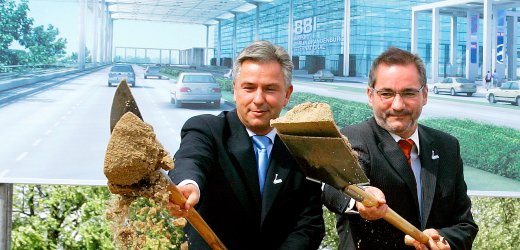
“We’re going to prove that three public-sector owners can build a project like this,”

Wowereit said.

The investigation into the massive delays in opening Berlin’s new BER international airport have begun. Managers have been fired and architects have been sued — but what about the capital’s mayor, who has led the prestige project since 2001?

…Hochtief executives quickly learned that the project had changed since Wowereit had been put in charge. Now the walls were to be covered with expensive walnut veneer paneling. The roof was to be built in a futuristic, free-floating design. And the granite used for the floors at other major airports, like Hamburg and Düsseldorf, was no longer good enough. Berlin’s new terminal had to have expensive Jura limestone floors instead.

…Wowereit, a member of the center-left Social Democratic Party (SPD), also recognized early on that the one person who doesn’t hold any share of the blame is Wowereit himself.

“I don’t see what concrete accusations should be leveled against the supervisory board,” says Wowereit.

You Can’t Even Count On German Hypochondria Anymore

One can only muster up just so much angst, I guess. Even if you’re a German. There’s just never going to be enough of it to go around to make everybody happy. I mean unhappy.


That’s right. Current German Angstzustände (states of anxiety) just ain’t what they used to be. German angst being the complex, ever-changing and unstable condition that it is, a new Forsa study has indicated that, for the moment at least, Germans are actually more frightened of the ongoing European debt crisis than they are of the worries they make about their own health, or lack of it.

How it could come to this unexpected result is very puzzling for many, myself included, but one researcher has come up with a startling new theory that might explain this sudden and eerie angst turnaround. He believes that the permanent media reports about sicknesses and health risks stir up people’s worries and fears (duh), but with all the media attention being focused on the debt crisis these days, common disease mongering has simply been coming up too short on the angst Skala (scale).

Boy I sure hope that they finally get this Eurpean debt crisis crap over with soon so we can get back to business.

“Es scheint, als ob permanente Medienberichte über Krankheiten und Gesundheitsrisiken auch die Ängste der Menschen schüren.”

This Four-Year German Highway Shooting Series Is So Mysterious

It’s the first time anybody over here has ever even heard of it.

But I tell you what. Once this guy gets around to registering his gun with Germany’s new national weapons registry, his ass is grass.

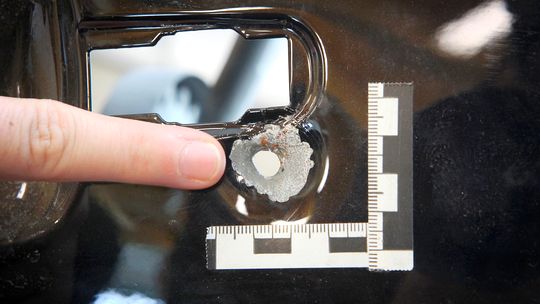
Seit dem Jahr 2008 wurde in mehreren Bundesländern über 700 Mal auf Lastwagen geschossen.

National Weapons Registry Planned For Nation In Which Practically Nobody Owns A Weapon

Except criminals, of course (but they won’t have to get theirs registered).

Germany is introducing a national firearms registry that will be operational next year, implementing a European Union directive two years ahead of its due date.

The register will pool nearly 550 local-level databases of gun owners, the Interior Ministry said in an e-mailed statement today. The EU weapons directive requires every member state to put in place a national registry by December 31, 2014.

…In a second step, the registry will also track producers, traders and importers of legally bought weapons in Germany.

“The national weapons registry contributes significantly to the security in Germany.”

German Blue Cards Going Like Hotcakes

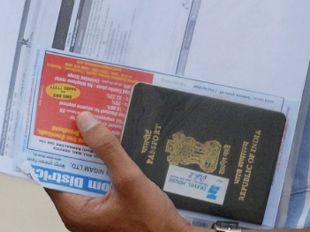
A mass influx of skilled foreign laborers with “blue cards” to Germany is causing unexpected bureaucratic headaches and unsettling the already unsettled German xenophobic population at large.

So far, a grand total of 139 (that’s 1-3-9) foreign professionals have received the coveted card, camparable to the US-Amerikan “green card,” since its introduction in August.

“Wow. We had no idea just how bad people wanted to come here,” said one suprised immigration official. “This was way too easy. But how are we going to find jobs for all these folks now?”

Skilled employees from outside the European Union have apparantly been lining up everywhere and eating their achy breaky yearning little hearts out in earnest for this envied piece of blue plastic for quite some time now, partly due, it seems, to Germany’s celebrated image of being an overly bureaucratic and unwelcoming place for foreigners of all non-German kinds.

“German immigration law is still complicated and not very transparent for foreign skilled employees.”

These Blackouts Happened All The Time Before The Energy Turnaround Too

Didn’t they?

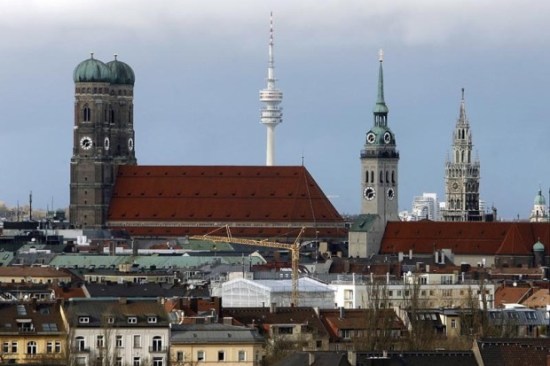
Munich was the next big German city that suddenly and inexplicably lost power in a big way. But there is absolutely nothing to worry about here, people, because/and I quote: “We do not know what caused the technical problem but it has nothing to do with the energy turnaround or all this talk about unstable power grids.”

Many Munich residents took to social networking site Twitter to voice fears that such power cuts could become more frequent as Germany implements a wide-ranging program to switch from fossil and nuclear fuels to renewable energy.

Stromversorgung in Deutschland laut Netzagentur trotzdem sehr zuverlässig.

“Where Is the Tax Money?”

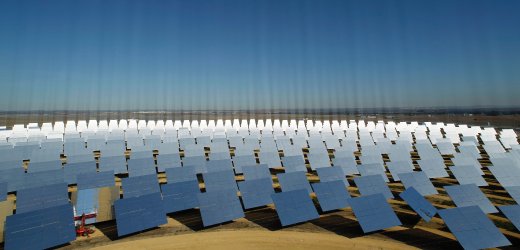
Here are some recent Desertec headlines – with the stress here on desert (as in to desert a sinking ship):

Bosch quits Desertec

Spain Delays Signing Onto Desertec Sahara Solar Project

Siemens to pull out of Desertec initiative

Algeria puts off decision on Desertec solar project

Desertec’s Promise of Solar Power for Europe Fades

As recently as three years ago, many thought that it was only a matter of time before solar thermal plants in North Africa supplied a significant portion of Europe’s energy needs. But Desertec has hit a road block. Industrial backers are jumping ship, political will is tepid and a key pilot project has suddenly stalled.

…The reasons for the political hesitance are clear. Renewable energy projects remain more expensive than traditional fossil fuel plants and tend to require government subsidies.

“Everybody is staring at each other and nobody moves. In this deadly, sometimes embarrassing silence, everybody is praising the project. And then silence again.”