German Of The Day: Tempolimit

That means speed limit.

Speed Limit

Odd, yesterday we dealt with getting caught in traffic jams in a country that doesn’t have any speed limits (on parts of the Autobahn) and now it’s time to introduce such speed limits in the same country? At least that’s what the commission National Platform for the Future of Mobility is proposing, whatever that is. Look, these drivers aren’t going anywhere now as it is. How will reducing their speed get them nowhere any safer? Oh, it’s about CO2 again. I should have known.

Limit the maximum speed on the German Autobahn to 130 km/h? This could lead to another revolution, folks. And it probably won’t be a bloodless one this time.

Kommission ist sich der Brisanz bewusst – Noch ist es nur ein Entwurf, doch die Ideen der Kommission “Nationale Plattform Zukunft der Mobilität” haben es in sich. Sie sollen den CO2-Ausstoß bis 2030 um die Hälfte senken.
German Of The Day: Stau

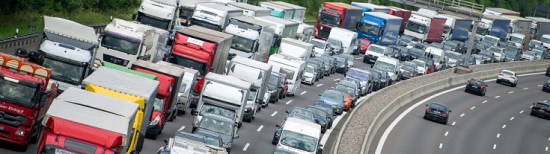
That means traffic jam. And there were 745,000 thousand of them last year on Germany’s highways, folks. A new German record.

Stau

Experts have calculated that if you were to place all these traffic jammed automobiles bumper to bumper it would give you a stretch of automobiles having a total length of 1.5 million kilometers. That wouldn’t do you any good, though. You’d still be in a Stau.

So please remember this the next time someone raves about being able to drive as fast as you want on parts of the German Autobahn. That’s true, of course, but it will invariably be on the parts of the German Autobahn with traffic jams on them..

Die Fahrzeuge standen auf einer Gesamtlänge von rund 1,5 Millionen Kilometern.

German Of The Day: Verharmlosung

That means to play something down, to make it harmless.

Verharmlosung

You know, like the ideology pursued by the murdered “revolutionary socialists” (communists) Rosa Luxemburg and Karl Liebknecht that gets played down, made harmless? They are worshiped as cult figures by the German left. They might even beat Che Guevara in the pantheon of mythical, romantic demigods of the revolutionary left. They may not have been the monster that guy was but that’s only because they didn’t have the time to get there.

On Sunday morning, some 10,000 people braved the rain and cold to march through eastern Berlin and place red carnations at the graves of Rosa Luxemburg and her comrade, Karl Liebknecht.

The march was commemorating 100 years since the brutal execution of the two revolutionary socialists on January 15, 1919…

In November 1918, a revolt by sailors and soldiers led to the overthrow of the Hohenzollern monarchy and the end of the war. In December, the Spartacist League renamed itself the German Communist Party (KPD) and Luxemburg asserted that they would not try to seize power without the support of the majority of Germans. Yet when a second revolt broke out on January 5, 1919, she and Liebknecht gave the movement their full support. The uprising quickly faltered and the SPD leadership ordered the army and right-wing paramilitaries, the Freikorps, to crush it.

On the night of January 15, Luxemburg and Liebknecht were abducted, tortured in the luxury Hotel Eden, and then driven separately to the nearby Tiergarten Park and murdered. Liebknecht was delivered to the city morgue while Luxemburg was dumped into a canal.

“Those who do not move, do not notice their chains.”

German Of The Day: Schneechaos

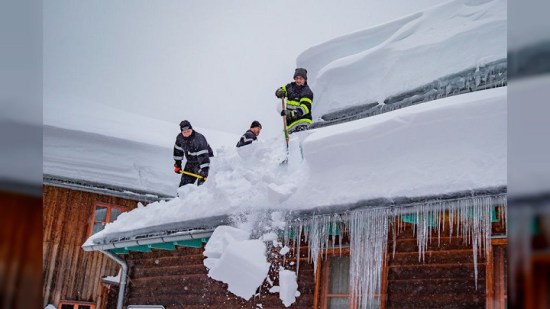
That means snow chaos. And that’s what Bavaria and Austria are experiencing these days. Right in the middle of winter, of all seasons.

Schneechaos

Lots of snow used to be lots of snow but today we prefer to call it “an extreme weather phenomenon.” And that’s what makes things so chaotic, I guess. And it all has to do with global warming, I’m told. And this is caused by humans. As the globe warms, you see, it produces more snow in the winter, or something like that. Counter-intuitive, granted, but I’m no global warming scientist – not like my bus driver and everybody else out there on the street these days. I’m going to read up on it one of these days, though. I promise. Maybe in the Spring once everything has thawed out again.

Das seit Tagen andauernde Schneechaos in den bayerischen Alpen ist noch lange nicht vorbei.

German Of The Day: Auftragsschwund

That means a decrease in orders.

Auftragsschwund

Did the boom just go boom?

Orders slid 1 percent from October, and posted a year-on-year decline of 4.3 percent, the biggest in more than six years. The monthly decline was partly due to aircraft orders, which had jumped in October, as well as weakness in the euro area.

While there are questions over the outlook for the German economy, the euro area’s biggest, the Bundesbank has long expressed confidence that it will overcome the slump seen in mid-2018. Responding to the factory data on Monday, Commerzbank said the decline “should not be over interpreted.”

“Wir blicken abwärts.”

German Of The Day: Pessimistisch

That means pessimistic. As in pessimism. German pessimism, to be exact.

Optimism

German optimism is already pretty pessimistic so you can imagine what German pessimism must be like. And the Germans going through another pessimistic pessimism phase again these days.

A new survey indicates that a mere 17 percent of the population see the coming year with any kind of confidence or optimism. This is the largest drop in confidence in five years, the polling institute Ipsos says, and the turning point was the Flüchtlingsdebatte (refugee debate) that began in 2015.

2015 hatte die Flüchtlingsdebatte zu einem Stimmungseinbruch geführt. Die Sorgen im Hinblick auf die Integration der Zuwanderer sind noch immer da: 50 Prozent der Befragten befürchten, dass eine wachsende Fremdenfeindlichkeit den sozialen Frieden gefährdet. Das sind vier Prozentpunkte mehr als vor einem Jahr.

German Of The Day: Weihnachten

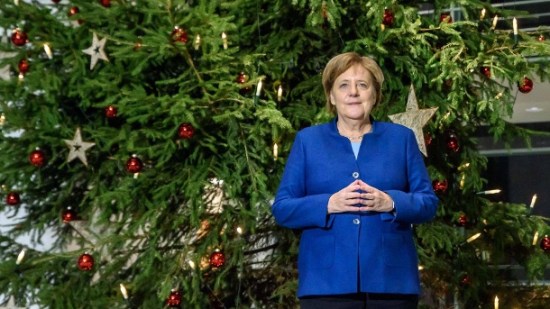
That means Christmas. You know, like the word for Christmas that the German Integrationsbeauftragte (Integration Commissioner) purposely left off of her official Christmas card greeting this year?

Weihnachten

“No matter what you believe in…” She writes, “We wish you a peaceful holiday season and a good start in the coming year.” But no mention of the word Christmas. You know, for like, I dunno, Christians?

You certainly couldn’t call Weihnachten a dirty four-letter word. It’s way bigger than that. But it’s sure dirty enough because in the Germany of 2018 it’s the kind of word you do not to want to put into your mouth, much less into writing, during the Christmas, I mean holiday season. At least not when you’re the Integration Commissioner here.

But wait. Shouldn’t that be one of the first words somebody interested in integration in Germany would want to use?

“Es ist bedauerlich, dass falsch verstandene Toleranz augenscheinlich dazu führt, dass Weihnachten, das Fest der Liebe, unsichtbar wird.”

German Of The Day: Moschee

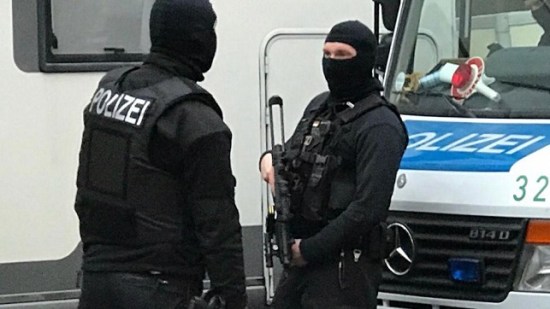
That means mosque. You know, like the one in Berlin Wedding that got raided today for suspected terror financing?

Mosque

Ask Thilo Sarrazin. He’ll tell you why this type of thing comes about.

Police raided a mosque and several other buildings in Berlin on Tuesday morning in an operation into suspected terrorism financing, prosecutors said…

State criminal police, intelligence officers as well as special police forces took part in the raids, which included the As-Sahaba mosque in the Berlin neighborhood of Wedding.

The As-Sahaba mosque is under surveillance by Germany’s domestic intelligence agency and is considered an important meeting point for members of Germany’s radical Salafist scene, according to the Berliner Morgenpost newspaper.

The mosque was founded in 2010 by the German-Egyptian Islamist Reda Seyam, who is accused of taking part in a terror attack in Bali, according to the paper. He later left Germany to travel to Syria to become the “education minister” for the militant “Islamic State” (IS) group.

German Of The Day: Nichts klappt

That means nothing works. Or how about “failed State?” That means failed state. You know, like the failed city-state of Berlin?

Palmer

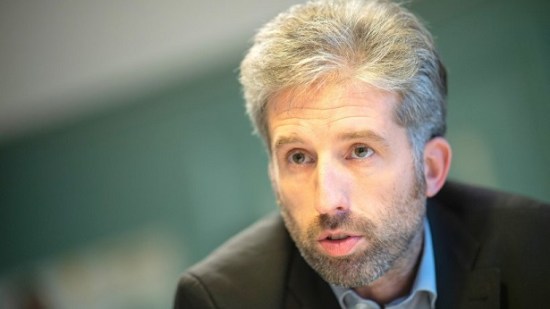
When the prominent Mayor of Tübingen Boris Palmer (Greens) has to come to Berlin for business he says to himself “Watch out, you are now leaving the functioning part of Germany.” He just can’t deal with the mix of crime, drug dealing and bitter poverty confronting him here on the street. “I don’t want to have these conditions in Tübingen,” he says.

Don’t worry. You never will. And you’re right, of course. Nothing works here in Berlin. But isn’t that the point? Oddly, for whatever the reason (decades of SPD-Green-Left Party mismanagement at city hall? Half the population being on welfare?) nobody in Berlin seems to care. And sheesh. In all fairness, this guy has clearly never been to an American city.

Berlin, ein „failed State“? Irgendwie schon, so Tübingens Oberbürgermeister Boris Palmer. Die Mischung aus Kriminalität, Drogenhandel und bitterer Armut auf der Straße verunsichere ihn als Baden-Württemberger nachhaltig.

German Is A Tough Language To Learn

Even if you’re, well, a German cop-to-be in Berlin.

Police

And the English language is at fault. Sort of.

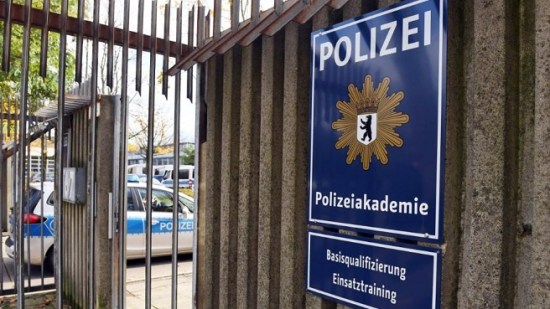
Germany’s cops are bombarded with countless criticisms today, but this one definitely stands out – it emerged that police cadets in Berlin, many of whom have immigrant backgrounds (some 40 percent), have difficulty using… the German language.

Many cadets attending Berlin’s police academy have “fundamental difficulties” writing in German without spelling or punctuation errors, revealed Tanja Knapp, the newly appointed head of the institution. She said it was really disappointing to learn that these cadets are unable to produce written texts. And since after every stakeout or chase you have to write a report, that’s discouraging news.

Part of the problem is that too much emphasis is placed on learning English, Knapp said. Over the years, Berlin has evolved into a truly international city where English is sometimes spoken more frequently than German.

“Of course, it makes sense to be able to speak English to the capital’s many tourists,” Knapp said. “But if the basic required level of German is too low, then the focus should be on German.”

Berlins Polizeischüler sollen künftig weniger Englisch- und dafür mehr Deutschunterricht erhalten. Es gebe bei vielen Polizei-Azubis „grundsätzliche Schwierigkeiten“ mit der Sprache.