Black Workers Are Everywhere These Days

No, not Afro-American workers. You know, Schwarzarbeiter (illegal workers).

Black

And they’re everywhere all over Europe these days, although Germany is the champion here again too, as usual.

Eight million Germans are working on the black market as we speak, so-to-speak, generating about 13 percent of the country’s economic output. And loving it, I hope for them, because many of them just don’t seem to have any choice in the matter. Nobody will hire them otherwise:

Punitive tax regimes, increased labor market regulation and a growing lack of trust in governments are causing many Europeans to abandon formal employment and enter into the murky, illicit world of shadow economies worth billions of dollars.

Unternehmen und Arbeitnehmer setzen auf Schwarzarbeit, dadurch entstehen zwei Drittel des Schadens. Für das weitere Drittel ist verantwortlich, dass viele zu geringe Einkommen und Erträge ausweisen.
Tugendterror

Or “virtue/politically correct terror,” if you prefer. Even some Germans now (in this case Thea Dorn for Die Zeit – “Deutsche Sitten” – no link yet) have come to realize that those who might still prefer to have the right to choose for themselves are losing Lebensraum (their habitat) fast.

Tutelage

A German Opera house decides to cancel a production from their repertoire because several spectators needed medical attention (they were traumatized) after the premiere. A leading SPD politician openly discusses the possibility of limiting the speed limit to 120 kmh on German autobahns. The Greens specify in their party program to do away with the reduced value added tax rate currently granted for fast-food and to forbid the use of wild animals in circuses.

The German (or European) citizen who still expects to be able to decide for him- or herself on matters of this nature  (whether to attend the opera performance or not, drive the speed he/she wishes on certain stretches of the autobahn, eat fast-food, etc.)  is frowned upon ever more these days because, well, there are others out/up there more enlightened than him/her to make these decisions for them. This is the essence of socialist and/or Green thinking. This makes everything safe. And predictable. And correct sowieso (at the very least).

Autonomy means being able to assess what I can expect of myself and of my environment to put up with. Living means not letting myself be knocked down by injuries or setbacks. But how can I learn either of these things if our society becomes an omnipresent governess keenly taking care that her wards never get carried away?

How indeed. They don’t want you to get carried away. Or get away at all, for that matter, ever. That’s the point. Just curb your enthusiasm already and keep on voting for more tutelage.

Man kann sein Leben zu Tode verschwenden, andere zu Tode schinden. Wir sind dabei, uns zu Tode zu schonen.

Alternative Reality Expensive As Hell

As part of Germany’s switch to renewables, industry has been exempt from paying higher prices associated with solar and wind energy. The European Commission, however, believes the practice distorts competition on the Continent. Huge penalties could be in store.

Bill

The costs of start-up financing for green energy and the compensation for expansion of the power grid are added to customers’ electricity bills in the form of a special tax. The entire subsidy system is supposed to come to an end when green energy becomes competitive. That, at least, is the theory.

But the reality is different. No longer can one simply describe the tax as a way to get renewable energies off the ground. Indeed, following Berlin’s decision two years ago to shelve nuclear energy and accelerate the expansion of renewables, the EEG (Renewable Energies Act) has become a giant redistribution machine.

“The fact that German electricity prices are among the highest in Europe despite relatively low wholesale prices must serve as a warning signal.”

Someone Needs To Finally Have The Decency To Tell The German Greens Which Country They Live In

When it comes to money matters, I mean.

Greens

Like I mentioned earlier, only in Germany can a political party go for (and actually get) votes by promising to raise taxes.

But I now stand corrected: (actually hope to get) is what I should have written. It turns out that not even do-gooder mainstream green-like German green people like the idea of increased taxes all that terrible much. At least not when the cameras have finally been turned off and they can answer a survey in peace and quite when the Green Shirt party watchdogs aren’t breathing down their necks.

Ever since the announcement of that wacky plan of theirs to raise the top rate of income tax to 49 percent for those earning 80,000 euros ($104,000) a year or more (and to 45 percent from 42 percent above 60,000 euros), voter support for them has dropped steadily.

I guess there’s GREEN in theory and GREEN in practice after all. And practice makes perfect, you know.

Die Grünen erreichen im Politbarometer nur noch 13 Prozent. Dass die Steuerpläne der Partei schaden, glauben 53 Prozent.

Vote For Us And We’ll Raise Your Taxes (As In Their Taxes)

Ever feel like you fell down the rabbit hole? Spend some time in Germany and then you’ll know what I’m talking about.

Equality

Only in Germany can a political party go for (and actually get) votes by promising to raise taxes.

Delegates at a Greens party convention in Berlin yesterday voted through plans to raise the top rate of income tax to 49 percent for those earning 80,000 euros ($104,000) a year or more, and to 45 percent from 42 percent above 60,000 euros. They also backed a “wealth levy” on the richest to pay down 100 billion euros of Germany’s state debt over 10 years.

And a whole lot of German voters actually get excited about this kind of nonsense. It’s often a zero-sum mentality game over here, you see. You know, the way of thinking that hinges on the notion that there must be one winner and one loser and for every gain there is a loss? Take from the rich and give to the poor, in other words. Or Umverteilung (redistribution), if you prefer.

Of course what the Green Shirts are actually doing is selling “equality” where there is a huge demand and buying Neid (envy) where there is an even bigger supply.

“Nirgendwo in der OECD ist die Ungleichheit so schnell gestiegen wie in Deutschland.”

Where’s The Enlightenment When You Need It?

This is German regulation madness at its best. Or, to be fair, Berliner Green Shirt regulation madness at its best.

Mendelssohn

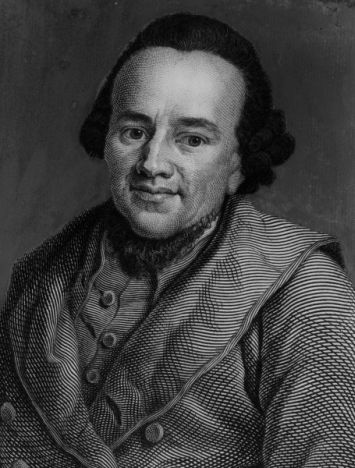
The city district council of Friedrichshain-Kreuzberg (the Greens) is currently causing not just a little bewilderment by refusing to name the square in front of Berlin’s Jewish Museum after Moses Mendelssohn, the German Jewish Enlightenment philosopher. No, not because they’re anti-Semites (at least not openly). It’s because Mendelssohn was not a woman.

You see, the district parliament decided back in 2005 (Greens and SPD) that 50 percent of the district’s streets and squares had to be named after women. Until that goal is reached, no new streets or squares will be allowed to be named after men, except in exceptional cases. Which this one isn’t, I guess.

This is about as small-minded as you can get, of course, and it fits perfectly with mainstream Green ideology, I find, in that nothing the Greens ever do or say can ever be allowed to be labelled as being small-minded or petit bourgeois in any way. But of course practically everything they do, well, is.

Die kleingeistige Posse spielt vor der Tür des weltweit bekannten Jüdischen Museums. Die Hauptakteure hocken in der mit Abstand stärksten Fraktion des Bezirks: Es sind die Grünen. Sie schämen sich nicht, „das leider falsche Geschlecht“ Mendelssohns in einem Satz mit dem „Projekt Unisextoiletten“ abzuhandeln.

PS: Speaking of Berlin city government in action: Oh boy! The new tourist tax is here! The new tourist tax is here!

Poor But Sexy But Inter-State Fiscally Adjusted

Berlin is.

Waste

Here’s a new German word for you: Länderfinanzausgleich. In a nutshell, this means that wealthy German states like Bavaria and Hesse (so-called donor states) are obligated to subsidize poor but sometimes sexy German states like Berlin and Bremen (so-called recipient states) because, well, hell if I know why.

This is also known as “inter-state fiscal adjustment” here. You know, good old fashioned Umverteilung (redistribution of somebody else’s money) or subsidies, if you prefer.

Anyways, Bavaria and Hesse, for one (or two), are mad as hell and aren’t going to take it (or give it) anymore and are bringing an action before the German Verfassungsgericht (Supreme Court) claiming that this type of thing is constitutionally imbalanced and needs to be done away with – at least when it comes to Berlin because the Berlin city/state government consists of a worthless bunch of lazy and wasteful bums who are completely out of control when it comes to spending and would never think of stopping their spending if they aren’t forced to, which is, well, a pretty accurate analysis of the situation here.

This will probably go nowhere, however, because Germans are big fans of something they like to call Solidarität (no English equivalent that I can find other than maybe “supporting lazy and wasteful and sometimes sexy bums”).

“Das Gesamtsystem leidet unter einer zu weitgehenden Nivellierung der Länderfinanzkraft, die den politisch Verantwortlichen eines Landes das Eigeninteresse nimmt, Maßnahmen zur Stärkung der originären Steuerkraft zu ergreifen.”

Brilliant “Master Solution” Falling Apart

When “good guys” like the Deutsche Bank get raided after being suspected of incorrectly claiming some €211 million in tax rebates from the trade in carbon tax certificates, then it’s time to also suspect that the days of this nonsensical European emissions trading have finally reached their end.

Cap-and-trade

In case your were wondering: Emissions trading or cap-and-trade is a market-based approach used to control pollution by providing economic incentives for achieving reductions in the emissions of pollutants.  A central authority (usually a governmental body) sets a limit or cap on the amount of a pollutant that may be emitted. The limit or cap is allocated or sold to firms in the form of emissions permits which represent the right to emit or discharge a specific volume of the specified pollutant. Firms are required to hold a number of permits (or allowances or carbon credits) equivalent to their emissions. The total number of permits cannot exceed the cap, limiting total emissions to that level. Firms that need to increase their volume of emissions must buy permits from those who require fewer permits.

Well, it turns out that the European “carbon market” is now flooded and recent EU efforts to fix the system have only served to highlight how lame it is, yada, yada, yada, thus further eroding the price of a ton of carbon dioxide emissions permitted. Government intervention at its best again, in other words.

You know how that old saying goes: “The nine most terrifying words in the English language are ‘I’m from the government and I’m here to help.’

EU-Klimakommissarin Connie Hedegaard will den Preisverfall der CO2-Zertifikate stoppen, der nach ihrer Meinung ein System unterminiert, das einst als Meisterlösung für die weltweite Klimaverschmutzung gepriesen wurde.

The Latest Radical New Concept

After years of deliberation, the German Justice Department has finally decided to take a bold leap into uncharted legal waters and official declare that theft should be punishible. OK, in this case it’s “data theft.”

Wow. Talk about a great leap forward for German Gerechtigkeit (justice) or something. The background: Like junkies in need of their next fix, German tax officials (usually from SPD led state governments) have been regularly purchasing stolen goods in recent months; data CDs containing lists of German tax evaders with Swiss bank accounts. Needless to say, the SPD & Co. are unhappy about this rather belated juristic revelation.

Is this the beginning of the end of the means justifying the end? Or was it vice versa?

“Datendiebstahl soll strafbar sein.”

Clean Power Cleaning Us Out

The German textile industry, among others, is mad as hell and isn’t going to take it anymore. Not when it comes to having to pay billions into the governments way cool Ökoenergie-Förderung (clean energy surcharge = tax).

That is why three companies now plan to challenge this surcharge subsidizing renewable energy in court.

More good government in action again, I guess. Energy companies have to pay the price for electricity generated through renewable technologies, and transfer the extra cost on to their customers. While energy-intensive industries like aluminum or steel are free from the surcharge, most of the textile industry has to pay.

“You cannot get an energy turnaround for free.”