“Dramatically Poor”

German exports fell in September at the fastest pace since late last year, official figures show, adding to evidence that the eurozone crisis has infected the continent’s economic powerhouse.

September imports fell 1.6% and exports declined 2.5% month-on-month, seasonally adjusted data from the Federal Statistics Office showed. Overall exports were down 3.4% from a year earlier but orders from eurozone countries plunged 9.1%.

“The trade figures are a normal consequence of the dramatically poor industrial orders, which have fallen at their sharpest rate in a year.”
Take Your Pick

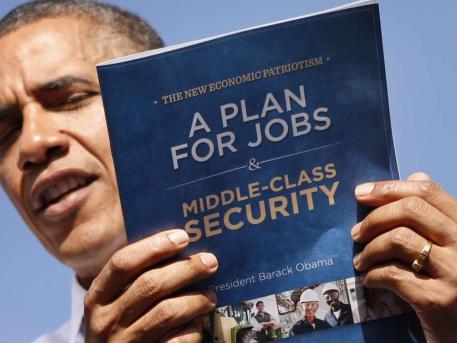
You can have the German headline Zahl der Jobs seit Obamas Amtsantritt gestiegen (the number of jobs has increased during Obama’s term of office)…

Or you can have the German headline Arbeitslosenquote steigt vor US-Wahl leicht (the jobless rate climbs slightly before the US election – with the emphasis on slightly here, people).

The main thing is that they both remain misleading. I guess this psychological prepping now will be needed later to explain how dumb and ungrateful Americans are (if Obama loses) or how truly deserving his magnificent victory really was (if he wins).

Man of man. You can almost cut the nervous German nervousness here with a knife right now.

Arbeitslosenzahlen lassen Obama aufatmen.

Is Possession Really Nine-Tenths Of The Law?

Strange. Stored abroad since the Cold War in case of a Soviet invasion, nearly half of Germany’s gold reserves are stored in the United States.

Stranger still: The Bundesbank or other independent auditors have never actually physically checked the gold’s authenticity or weight but have relied on “written confirmations by the storage sites” instead.

Now folks are starting to, you know, wonder (paranoia runs deep)? Hey, central banking at its best is all I can say. It’s not that we don’t trust you, it’s just that we don’t trust you.

“Ein Teil der Diskussion in Deutschland ist schon einigermaßen grotesk.”

Merkozy This Is Not

How about Hollmerk?

The two capitals (Berlin and Paris) always begin from very different positions, whether there is a socialist or conservative administration in Paris.

The concern in Berlin is over what is seen as the absence of a clear strategy on eurozone reform from the new French government. There is a deep suspicion that France is happy to have a weaker euro, higher inflation, and a looser monetary policy than Germany.

Mr Hollande’s refusal to incorporate the recent “fiscal compact” into the French constitution is one reason that Germany is now pushing for every country to sign a bilateral budget “contract” with the European Commission, that can be enforced by a powerful budget commissar… But Paris regards Ms Merkel as being overly focused on building deeper European political integration in a way that ignores deep-seated reticence in France reflected in the 2005 referendum defeat of the then-planned EU constitution. 

Get A Job 101

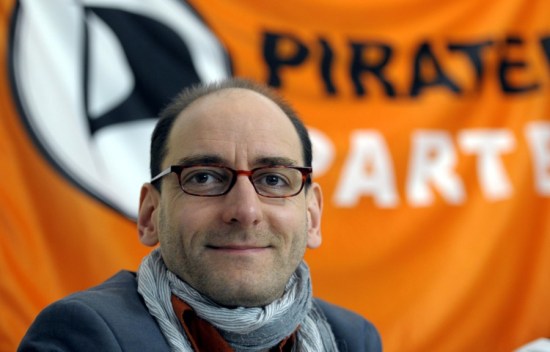
You couldn’t make this stuff up if you had to, people. Not that anybody cares about Germany’s Pirate Party anymore, but I do have to admit that these guys still keep coming up with real zingers.

The latest coup: The party’s general manager in Berlin, Johannes Ponader, up until now a proud and long-term welfare recipient, is now celebrating his closing with this stage of his life (for now, anyway) by openly calling for public donations to help him finance his hard-pressed, well, livelihood (or lack of it).

Strangely, this actually seems to have upset some of the other pirates out there (they seem a bit touchy these days for some reason) who think that maybe this might cause some kind of a Glaubwürdigkeitsdilemma (credibility dilemma) or something. As if.

Like I said, not that anybody cares anymore or anything.

“Hier entsteht der Eindruck, dass jemand politische Ideen mit persönlichen Vorteilen verknüpft.” 

Big Sister Assures Germans That 47-Percent Price Hike Actually Not Such A Bad Thing If You Think About It

Not.

Worried about grassroots unrest after Germany’s electrical grid operators announced they were nearly doubling the charge consumers will pay to finance subsidies for renewable energy as Germany phases out nuclear power, Big Sister herself has reacted boldly and decisively by going into hiding and pretending as if none of this were really happening.

Long used to this tactic, worried German consumers were assured, sort of, as they will now be paying an additional 60 euros per year, “taking overall add-on power taxes up to about 185 euros.” But that’s just the start, of course.

Sheesh. Why do Germans see everthing energy turnaround-related so negatively these days? You know, like as in black? Or like as in blackouts, I should say?

“The costs for consumers and industry of the electricity price charge for renewable energy has risen to an unbearable degree.”

Phase-Out Fizzling Out

Support for Germany’s Atomausstieg (nuclear phase-out) ain’t what it used to be, it seems. And it seems to have something to do with Geld (money), or something. With reality, in other words.

According to an Emnid survey, 77 percent of German voters asked say it is very important that energy costs remain affordable while only 53 percent care if the nuclear phase-out succeeds or not.

Welcome back to the real world, volks, I mean folks. Hey, you are here in Germany after all. And there is a clearly discernable pattern here. Once the first wave of hysteria is over, it always goes back to es darf eben nichts kosten (OK, but only as long as it doesn’t cost anything).

Für sie ermittelte Emnid auch, dass zwei Drittel der Bürger maximal 50 Euro pro Jahr mehr für Strom zahlen wollen.

BEA-EADS-RIP

Massive political resistance or pure economic theory? Or both?

“From an economic perspective, this should of course be avoided. Pure economic theory would say that the state should stay out of it and leave the market alone.”

“The massive political resistance was ultimately too great to overcome.”

Romney Still Bad

Germans weren’t fooled one minute by Mitt Romney’s impressive performance during the first presidential debate (just see photo below).

And now they are being reassured by German Presseorgane (press organs) that the sudden, completely unexpected and, well, near miraculous drop in the American unemployment rate to 7.8% will ensure that the right guy (as in left guy) will get re-elected after all.

Alles wird gut (everything will fall into place). Alles wird gut… Oder?

Noch nie wurde ein US-Präsident bei einer Arbeitslosenquote über acht Prozent wiedergewählt.

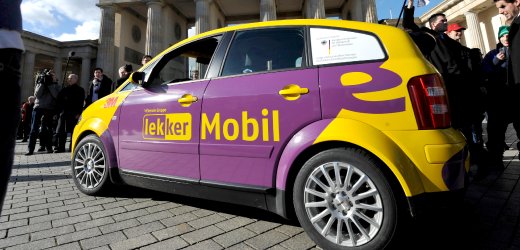
Electric Cars Have Already Reached A Whopping 0.01 Percent Of All Registered Cars In Germany

That’s some, uh, 4,600 vehicles. At this rate, the German government’s plan to have 1 million electric cars on the road by 2020 will be reached easily.

Or maybe not. Because those pesky German consumers still haven’t got the message and think that these babies are too expensive and don’t have a long enough range to make them attractive as, you know, as cars.

So that’s why the German government, flexible as it is, has now said that their goal of 1 million electric cars by 2020 (set last year) has now become a goal of 600,000 electric cars by 2020. I can’t wait to see what next year’s goal for 2020 will be like.

Damn. I’m impressed. This German Energiewende (energy turnaround) is getting easier and easier to reach all the time.

“If we don’t create incentives, then the whole thing is going to fail,” the Green party said in a statement.