SPD In Coalition Government = Gender Quota Legislation

Thank goodness this gender quota nonsense is finally about to be settled so a new coalition government can be formed in Germany.

Quota

Word has it that the CDU has agreed to let the SPD in if the proposed legislation stipulates only that each gender will be represented by at least one gender each.

German companies listed on the stock exchange will need at least 30% of supervisory board members to be female from 2016, according to proposed legislation.

If It Works, Fix It

This is another one of those “only in Germany” numbers. Or maybe it isn’t (I’m slowly losing track of what’s going on out there in “the real world”).

Graffiti

The Deutsche Bahn’s program to use small drones to patrol railyards by night in a bid to fight graffiti spraying graffiti terrorists has suffered a setback. Although the test flights worked out just wunderbar, the German Luftsicherheitsbehörden (air security authority) has stopped the program for now as no night flight permits have been permitted – for drones designed to patrol railyards by night. Ordnung muss sein already.

This is actually a bit of a relief for me, to tell you the truth. Before reading the article I was convinced that the flights had been cancelled due to Fluglärm issues. Fluglärm (aircraft noise) is a big honking major awesome all-important obsession for all Germans at all times in all regions and all locations all over the country (and tomorrow the world) and I was sure that I was about to read how these mini-drones were simply too loud for the Anwohner (local residents), whoever or wherever they were.

Whew! That wasn’t the case, like I said. At least not this time. But let’s just wait and see what happens when/if these things are ever actually allowed to fly.

“Die Tests sind exzellent gelaufen, ein hervorragendes Einsatzmittel. Jedoch erteilen die Luftsicherheitsbehörden der Länder derzeit keine Fluggenehmigung für die Nachtstunden.”

Hysteria Is A Good Thing

NSA hysteria, I mean. If you are a German IT service provider looking to cash in on it, that is.

Hysteria

“Hosted in Germany” is big marketing medicine in Germany these days, or at least that’s what many German IT companies are hoping. The question is just how long the hysteria can be kept going at a fevered pitch in order to get the bigger bucks, I mean euros, these German data centers will now be demanding.

Then, of course, there are still those plans for the coming of the dawn of the birth of the age of the German Internetz, sort of. What will they think of next?

Das IT-Unternehmen Bechtle sieht seine Chance in sicheren Plattformen für Daten und in Software „made in Germany.“

A Scrooge Issue?

Or is it more of a squanderer one?

Scrooge

I don’t know what troubles me more here; a Germany that spends too little for Christmas or the weakest European economies that spend too much.

With almost 28 percent unemployment and a lingering recession that’s wiped out one-fourth of their country’s economic output, it makes sense that Greek consumers plan to trim their Christmas spending by 12.8 percent this year. What’s more surprising is that the average Greek budget for holiday gifts, food, and drink is €451 ($608)—more than the €399 average in Germany, the country that has borne much of the cost of a Greek bailout.

Residents of Ireland, another bailed-out economy, plan to outspend the Germans more than two to one this Christmas, with an average €894 budget. In Spain, where unemployment is at 26 percent, consumers expect to spend an average €567. In recession-hobbled Italy, meanwhile, the figure is €477.

“Differences between countries’ spending habits are linked to the culture of the countries.”

CO2 Is Bad, Right?

Germany has produced 2 percent more CO2 than it did the previous year, 20 million tons more. Oh yeah, and there had been an increase in CO2 production the year before that, too.

CO2

Uh, I thought that this Energiewende (energy turnaround) thing was supposed to reduce these emissions. I mean, after turning off all of the German nuclear power plants and all, CO2 emissions just had to have dropped, right? I was never very good at science, though, much less at rocket science. This Scheiße is clearly way too complicated for me.

“Nach ersten überschlägigen Schätzungen dürften sich die energiebedingten CO2-Emissionen in Deutschland um etwa 20 Millionen Tonnen oder um reichlich zwei Prozent erhöhen.”

PS: Speaking of Scheiße, it turns out, to my amazement, that there actually are Germans who don’t like dogs. There seems to be a new anti-dog movement in the making that is being spearheaded by a magazine called Kot und Köter (Crap and Muts). I guess this had to happen sooner or later. And Kot causes CO2 emissions too, right?

Kot

Bottle In Front Of Me Better Than Frontal Lobotomy

Or better than psychotherapy, for that matter. Or at least that’s what one German health official has said. A bottle of warm beer can be more effective.

Beer

But the Brain Police are now vigorously reminding us (as in you) that one is not permitted to say stuff like that so now this guy’s in real hot water. Or warm beer, I guess.

“A psychotherapist is not needed next to every citizen. Sometimes a beer is enough.”

Debacle, Disaster, Fiasco…

Just a reminder here again: “There is no free lunch.” Honest.

Lunch

Government intervention at its best (again). Germany’s deliberate attempt to make its energy greener using price guarantees and mandatory quotas for green energy IS NOT WORKING.

Try and remember: The whole idea was to make renewable energy more competitive and, therefore, in the end, cheaper. Well this attempt is so not working right now that German consumers pay higher prices now than ever before and German industry is soon to follow. And this, even though there is actually an oversupply of power. In essence, an energy bubble has been created because Germany’s renewable energy producers get a guaranteed minimum price for what they produce (this now includes farmers and communities and anybody else who can still get into the ponzi scheme).

Imagine you have various consumers going to a grocery store. Some of them want to buy a bottle of beer for 1 USD. Others would like to buy a bottle of champagne for 30 USD. In normal life people would just pay 1 USD for the beer and bubble-lovers would pay 30 USD for champagne. The German energy market is different. People who want the champagne pay 2 USD for it and those who want beer have to pay 2 USD. It’s a good deal for the champagne drinkers, getting subsidized by the beer buyers.

…Perhaps the least fair part of the whole scheme is how these prices disproportionately impact low-income households, who are forced to subsidize green energy for richer families to support politicians’ green energy visions.

Time To Say Goodbye

To “clean power rebates” for German industry, that is.

Germany collects surcharges from power users to help fund operators of solar and wind power installations. Heavy electricity users such as cement, steel and some chemical plants are exempt to keep them from being priced out of the global market.

Industry

The EU now wants to change this. And that should make almost everybody happy. Now many of these German industries will get priced out of the market or maybe moving their production facilities to other countries altogether.

MEHR ALS DIE HÄLFTE DES INDUSTRIESTROMS VON UMLAGE BEFREIT

PS: Grid nationalisation in Berlin? Close but no cigar. Nice try but now you’ll just have to grid and bear it.

“Rethinking German Pacifism”

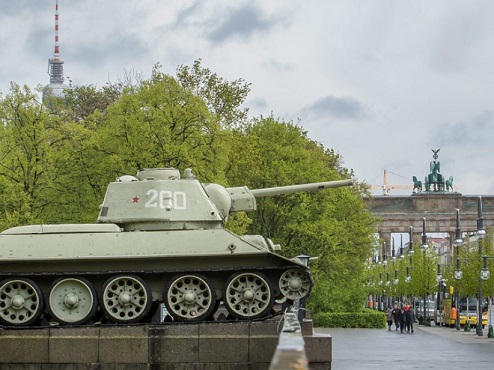
Would the Germany of today help liberate the Germany of 1944? You don’t need to tap Angela Merkel’s phone to find the answer: It’s no.

Peace

Defense-minded politicians in Berlin rail against this picture, arguing that postwar Germany has participated in major military operations. Take Kosovo! Take Afghanistan! Big missions! Don’t be fooled. It is perfectly clear by now that these interventions hardly represent the rule; rather, they are two exceptions from a convenient and holier-than-thou foreign policy attitude, one the Germans have cultivated over the past 70 years.

Jochen Bittner is a political editor for the weekly newspaper Die Zeit.