Irresistible Filth?

I guess that’s one thing you could call it.

Filth

As previously reported, the Germans are having big problems meeting their ambitious CO2 emissions targets these days. One of the reasons for this dirty little secret – after having turned off most of their nuclear power plants due to a tsunami in Japan (don’t ask) – is their burning need to burn dirty, filthy, dreckig brown coal, aka lignite.

It is mined in vast, open pits that devour landscapes and villages, leaving Martian vistas of desolation roamed by gigantic excavators straight out of “Mad Max”.

Brown coal made up about 23% of the country’s energy supply last year, and black coal another 14%, according to the Economy Ministry. Renewable energy sources made up 33%—up from 6% in 2000.

Hey, whatever gets you through the dark as black coal night.

“The image of Germany as a country leading on the renewable energy transition is very, very wrong,”

Reality Can Be Like That

Germany’s green dreams run into climate change reality – Berlin’s commitment to stay nuclear free complicates Europe’s push to lower emissions.

Green

The contradictions in Germany’s energy policy are coming home to roost.

It’s struggling to balance efforts to combat climate change while at the same time shutting down its nuclear power plants.

Don’t sweat it, Germany. If you need any advice on how to improve things in the CO2 department just contact the folks in Washington.

“The rushed and improvised exit from nuclear power that some support is not our policy. Recent events prove that pretending otherwise is a pure illusion.”

Der Spiegel Analyzes The “Kavanaugh Disaster”

As only Der Spiegel can. And oddly, they almost got it right.

Kavanaugh

For one thing, they were honest enough to admit that it was a disaster – for them, of course – because “the President and the Republicans achieved a great victory.” And then they continue  on with their five-point explanation of why this is such an awful, terrible and unspeakably bad thing.

1. Trumpism reigns. They got that right, too.

2. The Kavanaugh nomination was a farce. They almost got that right. The nomination itself wasn’t a farce, of course, but the freak show that accompanied it most certainly was.

3. Consensus culture is a foreign word. Absolutely correct. Take Germany, for instance, where they call it Konsenskultur. Every German knows that there is no consensus when it comes to Angela Merkel’s migrant madness meltdown, for example, but the difference between Germany and US-Amerika here is that the Germans behave as if there is. Germans normally being the all too direct ones, it is the Americans this time who make no qualms about how divided they are in Trump America.

4. There are no clear rules for dealing with accusations. Not true. Making false accusations, like the ones made against Kavanaugh here, is against the law. American laws allow those falsely accused of a crime to pursue a course of action in court, generally based on defamation of character. And this, I believe, needs to be done here.

5. The Supreme Court is now in a real mess. Well, they got the mess part right, I guess. But the Supreme Court mess is now in the process of being cleaned up, although there is certainly still quite a bit of work yet to do.

All in all, a solid job, Spiegel journalists. I’ll give you a seven for your five points this time. Keep the change.

Mit der Wahl von Donald Trumps Kandidaten Brett Kavanaugh zum Richter auf Lebenszeit am Supreme Court haben der US-Präsident und die Republikaner einen großen Erfolg errungen.

Germans Threaten Americans With Non-Negotiable Friendship

In a sly move calculated to add more leverage to the German position in the on-going trade war troubles with Washington, German Foreign Minister Heiko Maas is now headed there for talks in which he will openly threaten US-Amerikans with “non-negotiable” friendship should they not budge on their demands.

Friendship

Officially there to open the Year of German American Friendship, Maas made no secret about Germany’s intentions. He warned, “Our goal is not to just maintain the relationship we have with the United States but rather improve it.” Adding, “It (the Year of German American Friendship) is designed so that people learn more about Germany than any normal American person could ever possibly want to learn and, what is more, this will be done in an annoyingly friendly and courteous manner for, like, well, a whole year or something. Unless, of course, you lighten up with this tariff bullshit already. Here, let me shake your hand again.”

“Things that used to be taken for granted are no longer that way, they must be worked on.”

There’s Nowhere Else To Go

Thanks again, Angie. They couldn’t have done it without you.

Sway

Populist attitudes are on the rise in Germany, particularly from within the political center. One in three voters now sympathizes with populist policies, according to a new study by the Bertelsmann Foundation.

The latest “Populism Barometer” found that almost every third German voter sympathizes to some degree with populist anti-establishment policies, whether on the left- or right-wing of the political spectrum.

At the same time, the number of sampled voters who identify as politically centrist has decreased by four percentage points, to just 32.8 percent.

“Right-wing voters support the AfD because the party is right wing. But voters in the middle will also vote AfD because the party speaks to their populist sympathies.”

Mysterious

Puzzling. Enigmatic. Inexplicable.

AfD

The latest poll indicates that the AfD has now surpassed the SPD in popularity and is now number two among the political parties in Germany. None of the other parties will work with them, of course. Not yet, anyway. Of course, none of the other parties will ever need to work with them if they get an absolute majority of the vote in the next election.

As for the causes of this continued surge in popularity, none of the smart folks in government, academia or media can figure out why this is happening. I think it’s time to call even more experts, don’t you?

Die Polizei teilte am Samstag mit, der afghanische Asylbewerber leide nach der Einschätzung eines Gutachters an einer tiefgreifenden psychiatrischen Erkrankung.

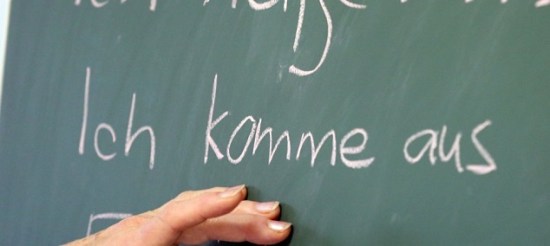
German Of The Day: Beschönigen

That means to whitewash.

Merkel

And as Angela Merkel herself says, there is nothing to whitewash about her party’s decision to refuse reelecting her man Volker Kauder as CDU party whip. They elected the Merkel critical Ralph Brinkhaus instead.

The natives are getting restless. The AfD keeps growing in popularity. Her coalition partner SPD is still dead and getting deader by the minute. Now her own party members are trying their hand at open rebellion. Other than that, though, everyhing is looking just fine.

“Das ist eine Stunde der Demokratie, in der gibt es auch Niederlagen, und da gibt es auch nichts zu beschönigen.”

It’s Not Supposed To Grow

The AfD’s popularity. But it keeps on growing. How can that be?

AfD

Anyone “good German” you ask will explain to you that the AfD is “bad” and “racist” and “Nazi” and “completely unacceptable.” The friendly people from the German media will explain that to you, too. How could such an awful group of people keep on growing in popularity? Something must be wrong somewhere. What on earth could it be?

The AFD is benefiting from being the official opposition to Chancellor Merkel’s grand coalition government. Polls rate it Germany’s second most popular party, dropping the Social Democrats to third.

They Used To Call It Inner Emigration

Now Germans do their inner emigration openly.

Exile

Peter Fitzek rules over a kingdom, and he has the passport to prove it. 

Bound in white, the passport gives Mr Fitzek’s name only as Peter I. His title is boldly stated: “King of Germany”. The issuing authority is the Kingdom of Germany, a pseudo-state founded by Mr Fitzek in 2012 that claims to have more than 250 citizens.

The kingdom is near the eastern German city of Wittenberg, and covers only a hectare. Mr Fitzek insists it meets all the criteria of an independent country, and that neither Germany’s law nor government hold sway within its borders. The kingdom has a flag and crest, a constitution and bank, a separate health insurance and pension system, and even a currency: the E-Mark…

Political analysts argue that the movement, whose members are usually referred to as Reichsbürger (citizens of the Reich) or Selbstverwalter (self-administrators), is a symptom of the same political malaise that has fuelled the rise of the Alternative for Germany (AfD), the far-right party that won 13 per cent of the vote at last year’s general election.

“What you see is a deeply-rooted dissatisfaction that becomes so radical that people want to drop out of the federal republic altogether.”

German Of The Day: Fremdschämen

That means feeling shame on someone else’s behalf. You know, like for the SPD? The party you just left because you can’t take it anymore?

Fremdschämen

The SPD mayor of Freiberg just tossed in the towel and left the SPD. He had tried to get the party leadership to consider a four-year immigration stop for any new refugees in the hopes of stopping what he saw to be a shift in the public’s mood. He was ignored, of course.

Tired of them refusing to listen to what his constituents on the street in the real world have to say, he announced his departure from the party with a post on Facebook, noting that “if you look at what’s going on in Berlin these days the word “Fremdschämen” doesn’t even come close to how I feel about it.”

“Schaut man diese Tage nach Berlin, drückt das Wort ‚Fremdschämen‘ nicht einmal ansatzweise aus, was ich derzeit empfinde.“