Electricity Prices Rising Dramatically For Some Reason

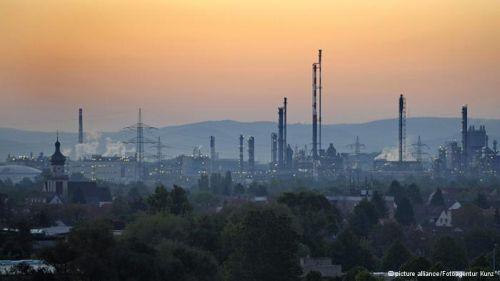
In a puzzling move that absolutely no one can explain, more than 200 German power suppliers have announced that they will be making big price hikes in the coming year. Consumers will then pay about 11 percent more on average.

Some experts speculate that the unexpected price increases could have to do with the costs associated with the increased efficiency and service currently being witnessed throughout the industry (see yesterday’s post). Others have surmised that these increased costs will be needed by the industry in the winter months to help fight global warming, or cooling in this case. Another group of experts believes that this dramatic move was prompted because Germans, already long used to paying some of the highest energy bills in Europe, just won’t notice and/or care.

Die Preissteigerungen begründen die Konzerne mit den gestiegenen Kosten für die erneuerbaren Energien.

Germans Have Psychological Issues With Regards To Amerika?

Like, dude. I honestly had no idea.

German schadenfreude knows no bounds, particularly when it comes to the United States. The country loves to feel superior to a superpower like America. Yet Germany also harbors a childish infatuation with Obama — one which has little political grounding. The reasons are psychological.

…The criticism of America has always been a bit infantile. One is familiar with the theory from psychoanalysis, when people talk about transference, or when suppressed feelings or emotions are overcome by projecting them onto others. It may work for a while, improving one’s feeling of self-worth by devaluing an imagined adversary. But it always falls short. Which is why the ritual must be constantly carried out anew.

“Dramatically Poor”

German exports fell in September at the fastest pace since late last year, official figures show, adding to evidence that the eurozone crisis has infected the continent’s economic powerhouse.

September imports fell 1.6% and exports declined 2.5% month-on-month, seasonally adjusted data from the Federal Statistics Office showed. Overall exports were down 3.4% from a year earlier but orders from eurozone countries plunged 9.1%.

“The trade figures are a normal consequence of the dramatically poor industrial orders, which have fallen at their sharpest rate in a year.”

Expats Pouting?

He may be the World President, but is he still ours?

“There’s a high interest (in voting) among expats in Germany, but I sense those on the Democrat side aren’t as fervent today as they were in 2008. There’s intense disappointment in President Obama’s leadership.”

Meanwhile… An opinion poll by the Emnid polling institute found 87 percent of German nationals would vote for Obama and only 5 percent for Romney if they had the chance to cast ballots.

Enthusiasm for Obama wanes among U.S. voters in Europe

Now It’s Getting Surreal

You know, as in having that disorienting, hallucinatory quality of a dream and being all like, well, unreal or fantastic?

I just stumbled across a German commentary in German published by a German in Germany entitled: Vielleicht ist Mitt Romney die bessere Wahl für die USA (Maybe Mitt Romney is the better choice for the USA).

Toto, you bullshitter, I don’t think we’re in Kansas anymore.

Der republikanische Präsidentschaftsbewerber hat als Gouverneur bewiesen, dass er pragmatisch regieren kann. Obama blieb unter den Erwartungen.

This Just In: Germans Drive Too Fast

During something they’re now calling a Blitz-Marathon (speed trap marathon), some 4000 German police caught some 30,000 German speeders during a large-scale 24-hour, well, speed trap marathon.

338 of these speed freaks were driving so fast that they are now facing a driving ban.

Germans everywhere are nevertheless empört (indignant) about this sneaky police campaign, however, because… Because, uh… Well, because Germans everywhere drive too fast. That’s just what they do.

Der schnellste Raser sei auf der Autobahn bei Düsseldorf mit 176 statt der erlaubten 60 Stundenkilometer erwischt worden.

Draw This

How can you (Germany) have a 4-0 lead in the 60th minute (in Berlin) and then end up with a 4-4 draw against Sweden at the end of the match (a World Cup qualifier)?

Beats the hell out of me. But nobody else here seems to know what happened, either. I guess this was just one of those thrill-of-victory-and-agony-of-defeat moments or something. Only it was a tie. Which makes it, I dunno, worse?

Looking on, their manager, Joachim Löw, was in a “state of shock,” unable to comprehend how his players had managed to throw away a 4-0 lead on home soil to a Sweden side that days earlier had scrambled to victory over Faroe Islands. Germany had drawn but it felt like a defeat.

Phase-Out Fizzling Out

Support for Germany’s Atomausstieg (nuclear phase-out) ain’t what it used to be, it seems. And it seems to have something to do with Geld (money), or something. With reality, in other words.

According to an Emnid survey, 77 percent of German voters asked say it is very important that energy costs remain affordable while only 53 percent care if the nuclear phase-out succeeds or not.

Welcome back to the real world, volks, I mean folks. Hey, you are here in Germany after all. And there is a clearly discernable pattern here. Once the first wave of hysteria is over, it always goes back to es darf eben nichts kosten (OK, but only as long as it doesn’t cost anything).

Für sie ermittelte Emnid auch, dass zwei Drittel der Bürger maximal 50 Euro pro Jahr mehr für Strom zahlen wollen.

Back Then When The World Was Still In Order

This is just what we need these days: Uplifting communist photography. More specifically, a nostalgic retrospective of art photography produced in communist East Germany.

They just don’t make German democratic republics like they used to.

German “Critical Thinking” vs. American Debate Culture

Here is another interesting German commentary by American Eric T. Hansen in Die Zeit.

I’d like to translate it all, but I can’t, so I won’t (no time). Here are a few highlights, though:

Critical thinking does not allow for self-criticism. Where would we be then?

Critical thinking is not debating, it’s finding concensus, or, as I call it, harmony nagging (Harmonienörgeln): Two people criticize a third person so long until the two become friends.

If I want to hear a new or even a different perspective on something, I have to turn to the Anglo-American press. Regarding certain questions – for instance whether nuclear energy, genetically modified corn or having Mitt Romney as president might also have certain advantages – many of my German friends are not even aware that two sides to these arguments even exist.

I too understand Mitt Romney’s positions quite well and suspect that he would make just as good (or bad) a president as Obama. In America that makes me an intellectual. In Germany that makes me a right-winger.

Everything is so serious for the Germans, and they need to know immediately: “Who is my friend, who is my enemy?” For Americans and their debate clubs, however, there is always an element of playfulness involved.

Auch ich verstehe die Positionen eines Mitt Romney gut und ahne, dass er ein ebenso guter (oder schlechter) Präsident wie Obama wäre. In Amerika macht mich das zu einem Intellektuellen. In Deutschland macht mich das zu einem Rechten.