Inequality For All

That seems to be what most Germans think their country provides them with these days. They are forever moaning and groaning about how the German “social divide” keeps widening.

Germans can be pretty innumerate, you see, believe it or not (when the media hype wants them to be). Nobody ever stops to consider the numbers here, either (just like everywhere else). You have to go to professional-like people on the outside (like at The Economist) for that.

DIW, an economic think-tank in Berlin, says that inequality rose significantly after German reunification; but that it has fallen a bit since 2005 (see chart). Awkwardly for the left, that is when Angela Merkel became chancellor, in coalition first with the SPD, then with the FDP.

Numbers

This is the opposite of what the public believes. According to a study by Allensbach, a polling institute, 69% of Germans think wealth and income are unfairly distributed, and almost two-thirds believe inequality has risen in the past few years. That is good for the left.

Germany remains a huge social and economic success, something that it often seems unGerman to savour.

“Dramatically Poor”

German exports fell in September at the fastest pace since late last year, official figures show, adding to evidence that the eurozone crisis has infected the continent’s economic powerhouse.

September imports fell 1.6% and exports declined 2.5% month-on-month, seasonally adjusted data from the Federal Statistics Office showed. Overall exports were down 3.4% from a year earlier but orders from eurozone countries plunged 9.1%.

“The trade figures are a normal consequence of the dramatically poor industrial orders, which have fallen at their sharpest rate in a year.”

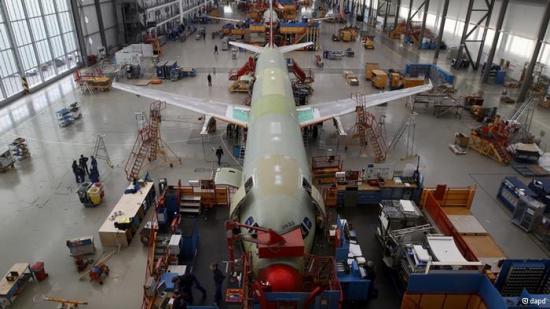
BEA-EADS-RIP

Massive political resistance or pure economic theory? Or both?

“From an economic perspective, this should of course be avoided. Pure economic theory would say that the state should stay out of it and leave the market alone.”

“The massive political resistance was ultimately too great to overcome.”

Angela Tea Party Merkel

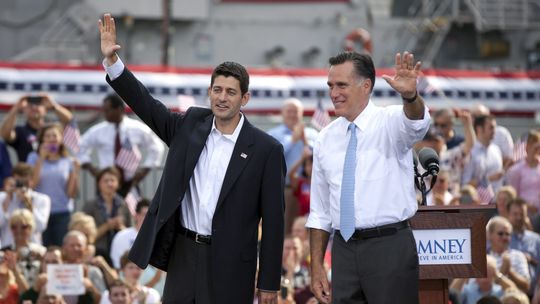
“Wait a minute… This seems familiar to me. Romney and Ryan stole all this from Angela Merkel! That which the Tea Party wants to do is already being done by Merkel here, and for quite some time now: She wants to force other European states to save instead of just continuing to throw money at them.”

“With Ryan as vice-presidential candidate, the presidential election now has two clear and easily understandable alternatives: Obama wants to save the economy by going further into debt (financed through taxes) and pumping this into the economy. Romney and Ryan want to save the economy by lowering taxes (which should lead to more private investment) and forcing the state to save.”

Ich habe jedenfalls nie verstanden, warum die Deutschen die Tea Party nicht mögen. Logisch ist das nicht: Einerseits sind die meisten Deutschen erschrocken und verängstigt ob des schwindelerregenden amerikanischen Haushaltsdefizits und fest überzeugt, dass Amerika die Staatsschulden abbauen muss. Sonst würde es doch irgendwann zusammenbrechen oder von China aufgekauft. Gleichzeitig aber hassen sie die einzige politische Bewegung, die genau dafür kämpft – die Tea Party.

And now here’s some economist rap.

172 Economists Can’t Be Wrong

Right? Right.

We have to approach this differently, folks. Pick an economist. Pick five. Find one that has ever been right. When it comes to dire warnings about the future, I mean.

Sure, I don’t like the idea of Angela Merkel deciding “to agree to allow eurozone bail-out funds to support sinner states” either, but if 172 economists are all hot and bothered about it, then maybe it wasn’t such a bad decision after all.

“First of all, this is about better banking supervision, and one can only say that that is urgently necessary.”

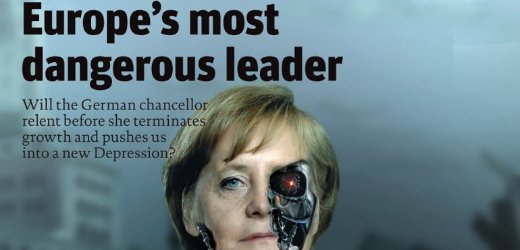
I Need Your Clothes, Your Boots And Your Motorcycle

Is it termination time yet? For the booming German economy, I mean?

The Spiegel says: German manufacturing activity has hit a three-year low and export orders have also seen a big drop. This data suggests that the crisis is starting to hit the previously robust German economy.

Hasta la vista, baby? Maybe.

Bonds, German Bonds

That’s the thing about a crisis: There’s always a winner, too. Take the euro crises, for instance. And the demand for German bonds these days.

Demand for German bonds, seen as the safest haven in the euro zone, has pushed Berlin’s borrowing costs so low that some investors are effectively paying Germany for the privilege of lending it money.

Damn. This gives German bondage a whole new meaning.

Low interest rates on German bonds are translating into billions in savings. Now economists have calculated that the country should be able to balance its budget by next year — something that is likely to increase criticism of Germany’s crisis management.

…The perception that Germany is benefiting financially from the crisis while imposing strict austerity measures on countries in southern Europe is unlikely to win many friends for Chancellor Angela Merkel, who is already highly unpopular in countries such as Greece.

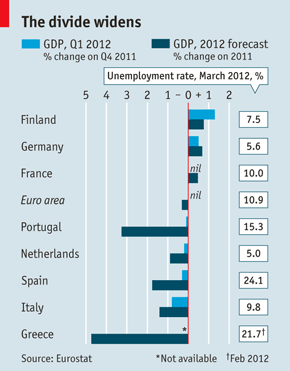
The Great European Divide

There’s Germany, it seems. And then there’s (practically) everybody else in Europe.

The Economist notes: The hope is that Germany, which produces over a quarter of euro-zone output, can pull along the rest. But the worry is that the latest bout of euro sickness may sap confidence even in Germany, aborting a broader recovery.

With unemployment at 6% compared with a 15-year high of 11% across the euro zone and over 20% in Spain and Greece, Germans feel less pressure to save in case they lose their jobs. And a more confident Germany helps everyone by spending more on imports. German inflation at 2.2% is now below average.

German resilience reflects several strengths. Although growth in the first quarter was helped by exports, the usual mainstay, it has increasingly been backed by domestic demand, which accounted for three-quarters of GDP growth in 2011. This reorientation has happened because Germany avoided the debt excesses (? hmmm, relatively speaking perhaps, but I’ve seen some other numbers here), both private and public, that inhibit growth elsewhere. With relatively low debt, German households and firms can borrow more. What is more, they can do it at rock-bottom rates. Paradoxically, Germany is benefiting from the euro crisis, as investors seek a haven. Yields on ten-year German government bonds have fallen below 1.5%.

Paradoxically, Germany is benefiting from the euro crisis, as investors seek a haven. Yields on ten-year German government bonds have fallen below 1.5%.

And yet, after having read all these impressive figures up there, there’s another German paradox I keep running into here all the time: Germans on the street aren’t nearly as confident as this article wants to imply, at least not when it comes to the euro and the euro-zone. How else do you explain the fact that nearly every second German now thinks that the introduction of the euro was a big honking mistake in the first place?

Die Euro-Einführung war ein Fehler, glauben knapp die Hälfte der Deutschen.

Germany Drains Spain’s Brains

In a ghoulish plan to intensify their already ironclad grip of an anemic Europe, depraved German industrialists have now begun luring unsuspecting southern European engineers to Germany by offering them well-paid jobs which will allow them (the depraved Germans) to drain their brains at leasure.

To make matters worse, if that were possible, another grisly gimmick has also been introduced in which so-called “blue cards” (green had already been taken) are being offered to skilled non-EU workers, as well. Although ostinsibly intended to “make the immigration process” easier, this “blue card” babble is clearly just another cynical euphemism for more German brain draining activity.

The gruesome brain-sucking capitalist bastards.

In December, a planeload of 100 Spanish engineers flew to nearby Stuttgart for a weekend of job interviews. Within a month, about a third of them had been hired. And some German companies have been making connections over the Internet, simply plucking Spanish, Portuguese, Greek and Italian professionals from sites like LinkedIn.

Just Say No

As usual, I mean. Berliners in Kreuzberg (or at least that active, left-wing kind) aren’t interested in finding new solutions for urban living, thank you. And they’ll even threaten you with violence if you try to establish “temporary cultural space” to attempt to do so (go ask BMW Guggenheim Lab). Kreuzbergers don’t do culture. Temporary or otherwise.

And speaking of resistence… The rest of the country is pretty much Kreuzberg all over again (only on a much larger scale) when it comes to saying no to the Internet (some call it the Internetz).

This isn’t really a news item or anything, but now certain German businessmen types are actually starting to get worried about their country “sleeping through the Internet” age like it does.

They have come to discover that their fellow Germans provide “too few qualified professionals, suffer way too much from risk aversion and are caught up in a tightly structured regulation frenzy.” Like I said, this isn’t anything new. But the real question is: What are you going to be able to do about that? Not a damned thing, of course.

Das Internet ist ein globaler Treiber für die Wirtschaft. Doch in Deutschland bremsen Fachkräftemangel und hohe Anforderungen an den Datenschutz die Firmen aus.