Well, We’ve All Been Wanting To Lose Weight Anyway

Always look on the bright side of Russian invasions – of one of the world’s top wheat exporters.

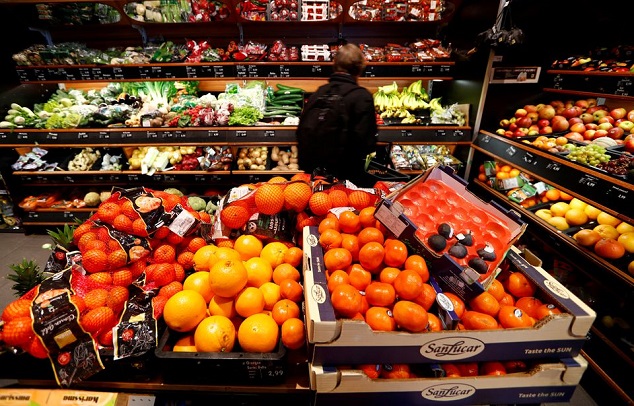
Germany to host G7 meeting on Ukraine invasion’s impact on food security – Germany will host a virtual meeting of agricultural ministers from G7 countries on Friday to discuss the impact of Russia’s invasion of Ukraine on global food security and how to best stabilize food markets, the government said.

“The provision of foodstuffs in Germany and the European Union is safe but greater shortages can be expected in some countries outside the EU – especially where scarcity already reigns today due to issues like drought,” German Agriculture Minister Cem Oezdemir said in statement.

“Price hikes for agricultural products cannot be excluded in industrialized nations either.”

More Than Double?

For the country that already pays the highest energy prices in Europe?

Why The Latest Russia Crisis Might Be Worse For Berlin Than Moscow And Kyiv – Germany is wedded to Russian oil and gas. If things got hot, what would Russia do?

“In the hypothetical event of a full-blown conflict between Russia and Ukraine, we would expect the main impact on the eurozone economy to stem from higher gas prices. We would expect gas prices to more than double. Eurozone inflation would hit over 6% by the spring and remain elevated longer than in our base case.”

German Green Government In Action

It’s brilliant, really. Or diabolical, if you prefer.

First create the current energy crisis by forcing the country to go down the ideological path to unreliable and unaffordable renewable energy, come what may, heavily burdening the German taxpayer, consumer and businessman in the process. Then promise aid to those most negatively affected by this crisis by burdening the German taxpayer, consumer and businessman even further. And still come out of it smelling like a rose. Aid here is just another nice word for taxation.

Germany’s soaring energy prices force government to promise aid – Headline inflation dips slightly, but energy costs still rising at double-digit pace.

Does Germany Have A Receding Scare-Line?

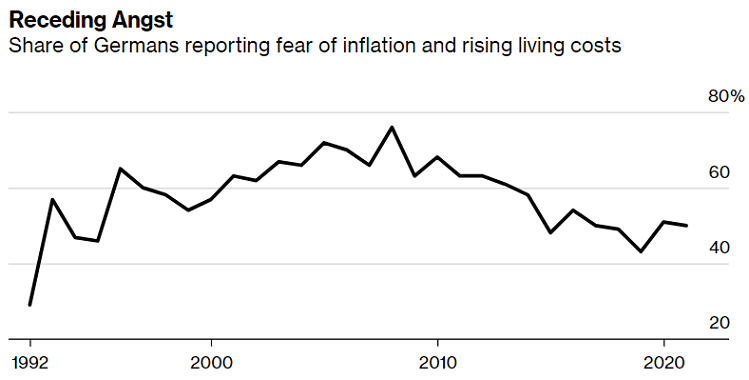
Not really. They’re just saving up their Angst for a rainy day. Oh, my. Look at those dark clouds over there…

German Inflation Hysteria Mysteriously Missing Before Vote – Germany’s sudden spike in pandemic-induced inflation is prompting a noticeably less hysterical response than the country is used to.

That marks a shift from traditional fears of lax southern European-style economics, infused with worries of 1920s Weimar-Republic hyperinflation, that caused alarm during the euro-zone debt crisis in the previous decade, according to academics including Ferdinand Fichtner of Berlin’s University of Applied Sciences.

“It’s surprisingly quiet compared to what you would have expected 10 years ago,” he said. “The outcry could have been louder. As far as the election is concerned, the topic may even be over because there’ll be no new inflation numbers.”

Energy Prices Can’t Be High Enough

The German Greens reassure their voters. To save the planet and all that.

But their voters are finally starting to get restless. Even Good Green Germans may stop doing what they’re told at one point.

Not easy voting green: Germans wary of getting climate bill – Climate change is among the top concerns for Germans going into this month’s national election, which will determine who replaces Angela Merkel as chancellor.

“They don’t say enough where the money is going to come from.”

Inflation Is Taxation Without Legislation

Or: “By a continuing process of inflation, government can confiscate, secretly and unobserved, an important part of the wealth of their citizens.”

German inflation hits fresh 13-year high in August – Germany’s annual consumer price inflation accelerated to a fresh 13-year high in August, data showed on Monday, underlining growing price pressures as Europe’s largest economy recovers from the pandemic and companies struggle with supply shortages.

Consumer prices, harmonised to make them comparable with inflation data from other European Union countries (HICP), rose 3.4% compared with 3.1% in July, preliminary figures from the Federal Statistics Office showed.

The Perfect Storm?

Inflation is up. Beer sales are down.

Let’s party!

German inflation levels exceed 3% for first time since 2008 – It’s the first time since the 2008 global financial crash that inflation in Germany has reached such levels.

German beer sales in this year’s first half were 2.7% lower than a year earlier, dragged lower by closures of bars and restaurants that stretched through winter and into spring, official data showed Friday.

One Million Dollars!

Unlike in Germany, where at least fifty percent of all German politicians stem from working-class families, where none are susceptible to bribery or lobbying influence and most can just barely make ends meet on the meager remuneration they receive (or so I must assume, to judge by the outrage here), word is out that more than half of Amerika’s lawmakers are now “worth at least $1 million” (although I personally have always held them all to be priceless).

Dollars

This is a scandal or something. This has never ever been the case before because American politicians, gosh darn it, up until now anyways, never ever used to enter politics just to obtain money and/or power. In the past, I mean. Something bad has now apparently happened. Or something. That is why we must look to Germany for the answer, as usual.

Everything here in Germany works better, you see. This is because Germany is a so-called “classless” society. But with class. Just go and ask the folks here who run the country. They’ll tell you.

In Deutschland ist die “Millionärswahl” eine TV-Show, in den USA Realität.

Discountrepublik Deutschland

Verblüffender Befund (an amazing finding)? I don’t see how it could amaze anyone here – anyone who has ever gone shopping in Germany and then compared those prices to those you would pay in other European countries, that is.

Prices

Germans apparently aren’t aware of the fact that they have some of the lowest Lebenshaltungskosten (living costs or cost of living) in all of Europe. Of their immediate neighbors, it’s only cheaper to live in Poland and Czechia.

What is really amazing I find, however, is the fact that the Germans are able to enjoy these cheap prices while still having a higher per capita GDP than a lot of the European countries with a higher cost of living (Belgium, Denmark, France).

Beats the hell out of me. Hey, es darf eben nichts kosten here.

Verbraucher in Deutschland bekommen für ihren Euro mehr als die Menschen in den Nachbarländern. Lediglich bei den Nachbarn in Polen und Tschechien sind die Lebenshaltungskosten niedriger.

Bond, Sovereign Bond

So, is it time for the sweet poison or the silver bullet? Germany (or one German) is the last man standing and it’s time to pay up or shut up.
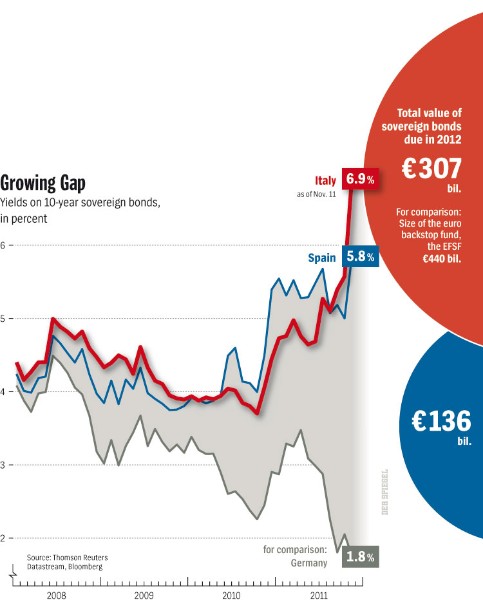
Can Germany (and Germany’s “independent” Bundesbank President Jens Weidmann) jump over its/his shadow and allow the European Central Bank to become the lender of last resort in Europe’s never-ending efforts to prop up the euro?

Pump up the volume already. Half a dozen bailout packages and half a trillion euros later, Greece is closer to leaving the euro zone than ever before and Italy now seems bound for bankruptcy, too. Who’s next? And where’s the money? It looks like Europe’s arsenal is down to one last taboo here: Let the ECB vouch for all of the outstanding debt of the debtor nations, “permanently, to an unlimited extent and in violation of all applicable laws.” Germany, for some strange (and wonderful) reason, is still against doing this.

You know the deal, my fellow Americans. It’s the easy way out: “Print money and drown the debt crisis in a sea of liquidity.” Look what its done for us – so far.

Hey look, I don’t know much about economics (nor do at least half of the world’s economists, for that matter), but I do know that if President Barack Obama, President Nicolas Sarkozy and European Commission President José Manuel Barroso are all urging the Germans to abandon their resistance to the ECB plan, it’s probably best for the rest of us out there if this Weidmann guy sticks to his guns. I wouldn’t bet money on him doing so, though. And I certainly wouldn’t bet using the euro.

He mechanically recited the traditional mantras of the Bundesbank: “independence,” “a culture of stability” and “credibility.”