Germany To Introduce Stricter Sword Control Legislation

I assume.

Sword

A 36-year-old man was stabbed to death in Stuttgart on Wednesday with a weapon described as a “sword.”

The man was attacked in a street in the late afternoon, police said. Witnesses called police after the attack, which occurred during a dispute.

The victim succumbed to his injuries despite rescue efforts. Tabloid newspaper Bild reported the victim was a German Kazakh.

Police initially reported the alleged perpetrator was a Syrian citizen who had lived in Germany since 2015. However, local media have reported there may be discrepancies in that, with Bild reporting there was suspicion that the suspect could be a Palestinian who has assumed a false identity.

Mohammed hat die Tat zwar gestanden und sitzt in Untersuchungshaft – aber dennoch gibt der Fall Rätsel auf.

Never Report A Suspect’s Nationality

Especially if he doesn’t have the “correct” one.

Suspect

After Frankfurt tragedy, should German media report a suspect’s nationality? The tragedy in Frankfurt will have serious consequences for an already-tense societal debate in Germany. That’s why it’s so important that the media report the truth completely.

A horrific event in Frankfurt on Monday has Germany in shock: At one of the country’s largest railway stations, an 8-year-old boy and his mother were thrown in front of an oncoming express train. The child was killed; the mother survived.

The suspect attempted to flee the scene but he was detained by onlookers and arrested. A few hours later, a police spokeswoman stated that the suspect was 40 years old and was not believed to have known the victims. It was also revealed that he comes from Eritrea.

Where’s The Pork?

German oddity 415. The pig is big here. Germans have more pig and sow idioms then wurst varieties – and that’s a whole lot. They also seem to think that any phrase or saying can be improved just by adding the words pig or sow to it, thus making said phrase or saying saugut (sow good or damned fine).

Pork

So what about this German oddity in the news today? After a German day care center in Leipzig decided not to offer pork on its meal plan anymore (gee, I wonder why?) threats started coming in. The police have now decided to guard the place.

And after BILD decided to report about the day care center’s decision the hashtag #Schweinefleisch (pork) reached the number one spot in Germany.

Polizeischutz für Kita ohne Schweinefleisch in Leipzig.

Slow Learners

The Good Germans still haven’t figured it out.

Heiko

Although this became loud and clear as a bell very quickly after Angela Merkel opened up the floodgates back in 2015, many German Gutmenesch (do-gooder) politicians still believe they can convince leaders in other European countries to help them establish a “fair” distribution system for the asylum seekers who Germany unfairly invited to Europe.

More dream world thinking, in other words. Personally, I think the fairest solution would be to fly all would-be asylum seekers wishing to come to Europe directly to Germany, Berlin Airlift style.

German foreign minister calls for alliance of EU countries to take in migrants – Berlin is willing ‘to make a substantial contribution,’ says Heiko Maas…

His proposal was immediately rejected by Austria’s former and possibly future chancellor, Sebastian Kurz. Kurz, who is running to regain the chancellorship in September, described quotas as an outdated idea and declared that “the distribution of migrants across Europe has failed,” in a statement Saturday reported by dpa.

Fifteen Years!

Fifteen years? That’s what a “life sentence” in Germany means.

Crime

In other words, in Germany you get away with murder when convicted of murder.

A failed Iraqi asylum seeker has been handed life in prison for the rape and murder of a 14-year-old German girl.

Ali Bashar, 22, had admitted in court in Wiesbaden that he strangled Susanna Feldman on 23 May 2018, but claimed he did not know how it happened…

Susanna’s mother, Diana, said that “part of my future and my heart disappeared” when her daughter died. “I have already received life imprisonment, although I am not guilty. I will never get a chance for a pardon.”

The Next German Folk Hero Is Born

For fifteen minutes or so, at least.

Folk Hero

Carola Rackete has been lauded as a heroine and decried as a criminal for helping asylum-seekers stranded in the Mediterranean Sea. What drives the 31-year-old German captain of the Sea-Watch rescue boat?

That’s easy. It’s the drug she’s taking: Guilt. Guilt gets people high. At least here in Germany it does. Guilt-induced moral intoxication turns its users from nobodies minding their own business into moral supermen saving the world. Those they claim to help are of secondary importance.

“I have decided to enter the port of Lampedusa. I know what I’m risking, but the 42 rescued people are exhausted. I’m taking them to safety now.”

Who Makes This Stuff Up?

Oh, Al Jazeera makes this stuff up. Then it makes sense.

Germany

Germany welcomed refugees. Now it’s reaping the economic benefits – German companies need more skilled workers. Refugees are helping to fill the gap.

This is not the German reality. When Angela Merkel opened the floodgates in 2015, talk was soon everywhere (where talk like this was expected to be – see state television) that precisely this would happen; highly skilled engineers, doctors and other specialists from Syria would “fill the gap” in a booming German economy short on workers. This simply did not happen. The small number of specialists who did make it here were generally stymied by German bureaucracy or simply do not have the skills German companies expected them to have. Who did come? Armies of unskilled workers who are now a big burden on the German social system.

It’s not the Syrians’ fault that Germany does everything bass ackwards here, though. The Germans needed skilled workers so they let the unskilled in. They don’t even bother to introduce a comprehensive immigration law so they can decide who enters their country or not – haven’t gotten around to it to this very day. And on and on it goes. Al Jazeera’s fantasy Germany makes for good stories, I guess, but it has nothing to do with the real Germany. Not that anybody is interested. Just sayin’.

Just In Time For Summer!

No creeping multicultural parallel societal infiltration going on here, folks.

Burkini

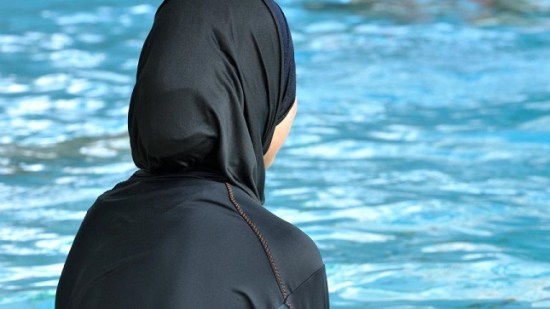
German court has lifted a city’s ban on the burkini, an all-encompassing swimsuit used by some Muslim women.

Wearing the garments in municipal pools in the western city of Koblenz was forbidden at the beginning of this year after the local council narrowly approved a ban. Officials argued that the suite makes it impossible to check whether wearers have open wounds or diseases.

The rules were challenged by a Syrian asylum-seeker, a pious Muslim who said doctors had recommended that she use a swimming pool to tackle pain caused by a back problem.

Das Burkini-Verbot in Koblenzer Schwimmbädern ist nicht rechtens. Es verstoße gegen das verfassungsrechtliche Gleichbehandlungsgebot, hat das Oberverwaltungsgericht Rheinland-Pfalz entschieden.

“Why The Name Mohammed Is So Popular”

In Germany. In Berlin, in particular. That’s the title of this article down here.

Name

I didn’t bother to read it. I’m pretty sure I know why that is and I don’t need a journalist explain to me why I’m wrong.

Mohammed is the most popular name for baby boys in Berlin… Bild, a German newspaper, reported data from the Gesellschaft für deutsche Sprache (GfdS), or German Language Society.

Mohammed in all its variants was the most popular name in Berlin, and the second most popular in Bremen, ahead of Ben but behind Elias.

Dass Mohammed in Berlin erstmals auf Platz eins der Vornamen-Hitliste steht, sorgt für Aufregung. Aber warum eigentlich?

Well, We Certainly Don’t Want To Spark Controversy

Do we? German conference on Islamic veil sparks controversy.

Veils

The Islamic veil – Symbol of dignity or oppression? I’m going to go out on the limb here, folks. I’m going with oppression. Just sayin’.

Islamic veils are a hot topic in Germany, particularly due to a growing Muslim population. Now, outcry over an academic conference on the issue has surprised even its organizer, who says freedom of speech is at stake…

Germany’s Muslim population, which has rapidly increased in recent years due to immigration from Muslim-majority countries, was estimated at between 4.4 and 4.7 million people or approximately 5.5% of the country’s total population in 2015, according to the Federal Statistical Office. The number is doubtless higher now, according to the agency, but updated official figures exist.

With these demographic changes come societal debates — one of which, that of the Islamic veil, has been a continual source of discussion. The latest veil controversy, which made headlines all across Germany, has occurred over a planned academic conference — something that even its organizer did not expect.

“Dissenting opinions must be respected and tolerated.” Must they? For how much longer?