German Thoroughness Grossing Refugees Out

It’s taking too long to get their asylum papers processed, you see. So now they’re suing. And winning, of course.

Lawyers

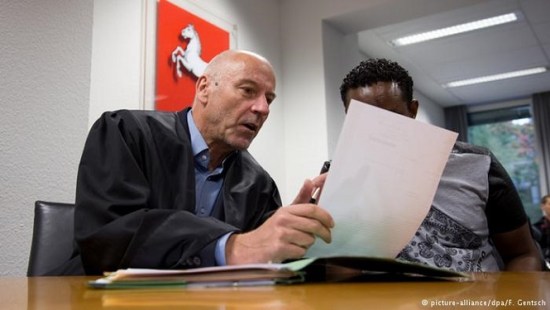
A Somali man has won his suit against the German government for failure to act on his asylum application. Despite their increased workload, the federal office for refugees now has three months to decide his fate.

It’s one thing to flee for your life and seek refuge in a country that is apparently willing to help you out. It’s quite another thing to actually have to wait for months until your paperwork gets processed. That’s unmenschlich (inhuman) or something. Just call Larry the Lawyer. He’ll make it happen.

“Sie behandeln uns wie in Syrien.”

A Fireside Chat With Angela

Things have caught fire here and there these days, you see.

Fireside

We have nothing to fear but the refugees themselves. Just kidding, Leute (people). Sort of.

Repeating the mantra “Wir schaffen das,” (“We will manage,”) German Chancellor Angela Merkel is defending her strategy on handling the refugee crisis against growing criticism.

“Let’s just assume we all would declare that we will not manage it — then what?” she asked host Anne Will in a primetime, one-on-one TV interview on Wednesday night.

Unlike critics, “I actually have to work out this problem,” says the German chancellor.

Ich habe einen Plan.

PS: The word crisis originates from the Greek word krisis, which means “decisive moment.” Krisis like circle? As in turnaround? I haven’t seen one here yet.

Why Does This…

Unity

Remind me of this?

Just kidding. Sort of.

When East and West Germany reunited 25 years ago this weekend, the country was drunk on euphoria and a sense of heightened optimism. While reigning chancellor Helmut Kohl promised “flourishing landscapes”, his predecessor Willy Brandt produced the now legendary sentence: “What belongs together, will grow together”.

The Mood Keeps Getting Better

Not. Here’s the latest Germany refugee crisis update:

Refugees

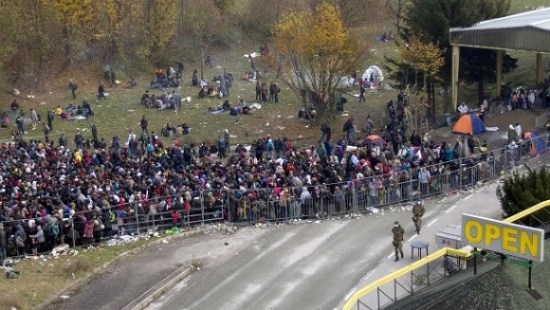
The European Union has criticized Germany for being much too lax with refugees who are seeking asylum in Germany. Not enough are being rejected (only one in six).

Nearly a third of migrants in Germany claiming to be Syrians aren’t from Syria.

Mass brawls are beginning to break out at German refugee centers.

Germany property is now being confiscated by the government to make it available for migrants.

An imam at a refugee camp refused to shake hands with the visiting CDU party boss in Rhineland-Palatinate because she is a woman.

And chancellor Angela Merkel’s popularity ratings are dropping sharply over her handling of the refugee crisis, two polls showed this weekend.

Other then that, though, everything is working out just fine.

Germany in a state of SIEGE: Merkel was cheered when she opened the floodgates to migrants. Now, with gangs of men roaming the streets and young German women being told to cover up, the mood’s changing

You Can Fool All Of The People Some Of The Time

Roughly half of Germans asked are dissatisfied with chancellor Merkel’s refugee policy. This has come out in a survey taken by the INSA Opinion Research Institute in Erfurt. 48 percent disagreed with the statement “For the most part I am satisfied with the chancellor’s handling of the situation.” 41 percent agreed. 11 Percent did not specify.

Merkel

Despite Chancellor Angela Merkel’s warm words and saintly intentions to shoulder the refugee crisis, her efforts are meeting resistance at home. The populace feels overwhelmed and unsupported, not knowing where to accommodate so many people.

„In der Flüchtlingspolitik hat die Bundeskanzlerin die Deutschen mehrheitlich gegen sich. Und zwar aus ganz unterschiedlichen Gründen: Die einen nschen sich noch mehr Offenheit gegenüber den Flüchtlingen, die anderen Orbans Härte.“

German Media Giving Germans A Distorted Image Of The Migrant Crisis?

No way. Or way?

Migrant

The German language website Frankfurter Allgemene has reported on how the British media “reports on the crisis differently than the German” media.

The newspaper explains: “When it came to clashes between Hungarian border guards and refugees, the BBC showed young men who threw stones.”

The rioting, fit young men were of course described as “hungry”, “desperate” and “defensive,” but at least the images were shown. The suggestion that such a key part of the developing story was omitted on German TV is a startling one.

“On [German channel] ARD Tagesschau,” Frankfurter Allgemenie reports, “the most dramatic pictures could not be seen – instead, women and children, fleeing the tear gas by security forces [was shown]… German television suggesting disproportionate action by Hungary, however the BBC reported of the “defense of the borders…””

Flüchtlinge sind eine Chance, heißt immerfort. Und das entspricht der Wahrheit. Gleichzeitig jedoch stellen uns die 800 000 Flüchtlinge vor Integrationsprobleme, die offen anzusprechen ein Tabu ist. Menschen, die dies trotzdem tun, werden unbedarft rechts verortet, teils sogar medial beleidigt. Dabei muss das Stellen von Fragen erlaubt sein: Wenn so getan wird, als gäbe es bei hunderttausenden Flüchtlingen keine oder kaum Probleme, können diese auch nicht bekämpft werden.

Migrants To Crash The Oktoberfest ITSELF?

Of all fests? Is nothing heilig anymore? Some folks are already referring to number 182 as the Krisen-Wiesn (crisis Oktoberfest). In your neighborhood tomorrow. If you live in Munich, I mean.

Oktoberfest

On Munich’s main shopping street on Tuesday, women in abayas—the long robes worn by some Muslim women—were studying lederhosen and dirndls—the revealing shorts and dresses traditional in Bavaria—in the shop windows.

“Asylum seekers in particular from Muslim countries aren’t used to encountering heavily drunk people in public. It could get out of hand.”

Are We Having An Ugly American Border Wall Yet?

Sooner or later reality gets up in your face.

Germany

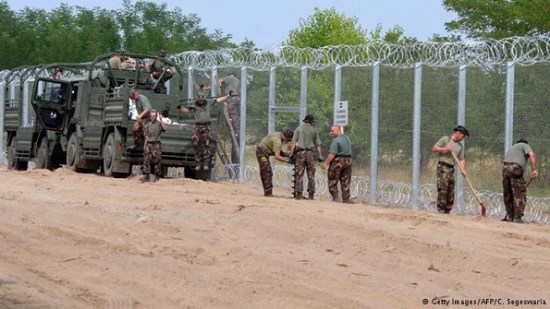
Germany has introduced temporary controls on its border with Austria to cope with the influx of migrants, the interior minister has said.

Politically this is a shrewd move by Thomas de Maiziere. His announcement comes just a day before he travels to Brussels to meet other EU interior ministers to discuss the migrant crisis. The measure will help him put pressure on other European countries to do their bit. It highlights just how much Germany is struggling to cope.

The move could also serve as a useful threat; after all, Mr de Maiziere said Germany was controlling the border with Austria “first”, the implication being more could follow. The possibility that Germany might suddenly decide to control its other borders could well help jolt EU partners into action.

Is Bild Without Bild Still Bild?

Germany’s best-selling newspaper has removed all pictures from its print edition and website in response to complaints about its decision to publish images of the three-year-old Syrian refugee who drowned trying to reach Greece.

Bild

The decision to remove pictures in print and online comes less than a week after the newspaper dedicated its whole back page to the distressing image of Alan lying face down on the beach in Bodrum, surrounded by a black background and a plea for action from Europe.

The Problem With European Immigration Policy…

Is that there is no European immigration policy.

Refugees

There is a mish-mash of national policies, a patchwork of systems and criteria which are contradictory, incoherent, fragmented. Italy is very far way from Finland, not only geographically, but when it comes to immigration and asylum. France and Germany have quite different historical approaches to integrating newcomers. Sweden and Denmark are neighbours with a close shared history, but their immigration policies are chalk and cheese.

The seven countries of central Europe and the Baltic are being asked to take fewer than 30,000. It should not be a problem for big international cities such as Warsaw, Prague and Budapest. But the east Europeans are retreating into parochialism, digging into their national bunkers while nursing resentment at what they perceive to be German bullying.

Hungary’s prime minister, Viktor Orbán, is the cheerleader of the “Europe is useless” chorus, but Robert Fico, the Slovakian premier, and President Milos Zeman in Prague are not far behind. Ewa Kopacz, the prime minister of Poland, sounds more moderate, but she looks likely to lose an election next month to the nationalist right. Her hands are tied.

I wouldn’t worry about any of this, however. Think Greece: Europe always manages to get together in the end, when stalling for time is no longer possible, to not solve a problem by doing almost just enough to put it off until it does not go away by itself.

“If this is Europe, you can keep it.”