Now We’re Back To Traditional German Numbers Again

Germans don’t generally like any of this namby-pampy, 50/50 stuff when it comes to opinion poll percentage results. Not like the way we often have them in US-Amerika, for instance.

Merkel

Germans like something they call Klarheit (clarity). They always want to know wie der Hase läuft (how the rabbit is running or which way the wind is blowing). Most Germans (80%+?) are still infatuated with our El Presidente, for instance. To this very day. 80%+ would also support the promise of free beer, which pretty much comes down to the same thing, come to think of it (there is no such thing as free beer and El Presidente never happened either, of course).

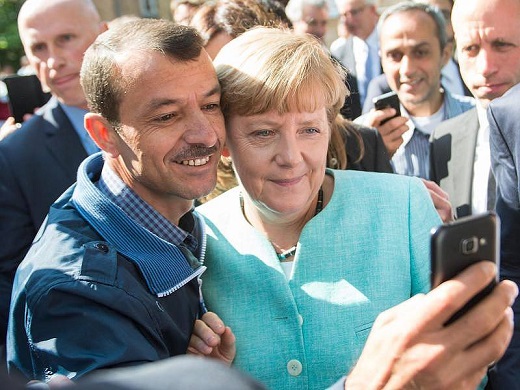
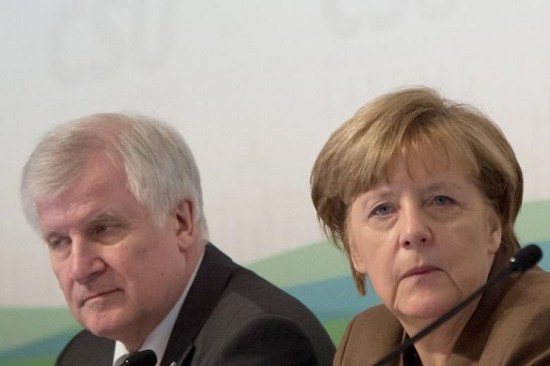
So it did my heart good to see that  the number is also back up over the 80% mark (and climbing) when it comes to how they feel about their own El Presidente, only she’s a Chancellorente, and a girl: 81% of Germans say Merkel has made a mess of the migrant situation as her popularity hits five-year low.

This is a good thing, I find. If only for the Klarheit. And the rabbit on the run.

Dann ist das nicht mehr mein Land“, hat Angela Merkel gesagt, als man ihr vorwarf, die Flüchtlinge in Deutschland allzu freundlich zu empfangen. Jetzt scheint der Gedanke wahr geworden zu sein.
Water Now At Ankle Level

And rising, captain.

Polls

The chancellor and her party’s (and partner party’s) popularity poll ratings: Not wirklich (really) so good at the moment. Some think this might possibly maybe have something to do with her refugee policy.

A current election poll indicates that the popularity of the Union (CDU/CSU) has dropped to its lowest level since July, 2012. The weekly “Sunday trend” by the Emnid opinion research institute taken for the “Bild am Sonntag” newspaper indicates that the CDU and the CSU now have an approval rating of only 34 percent, two percentage points lower than the previous week.

Die Union kommt in einer aktuellen Wahlumfrage auf den schlechtesten Wert seit Juli 2012. Im Emnid-“Sonntagstrend”, den das Meinungsforschungsinstitut wöchentlich für die “Bild am Sonntag” erhebt, erreichen CDU und CSU nur noch 34 Prozent, zwei Prozentpunkte weniger als in der Vorwoche.

Germany Overall Best Country In Overall Best Of All Possible Worlds

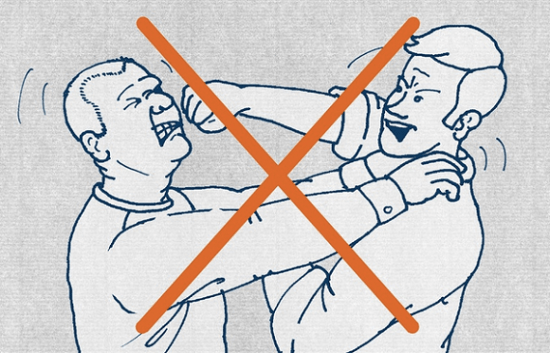
But they still won’t let you do this here:

Refugees

Forget about trying this, too:

Refugees

Germany was ranked the overall best country in the world, according to the rankings released by US News & World Report on Wednesday…

Algeria was perceived as the worst country of the 60, with Ukraine and Iran rated just above.

And always remember: “Please don’t poop in showers.”

Germans Have Nothing To Fear But Angst Itself

German Angstforscher (fear research specialists) at the GfK research institute in Nuremberg have determined that the majority of Germans polled are fearful about the coming year, up nearly double from last year’s survey.

Angst

This immediately made the Germans reading these results even more ängstlich (fearful), screwing up the survey for the 69th year running.

Researchers then tried calming everybody down again by explaining  to them that these types of studies have certain weaknesses and should not be taken at face value. Many of the Germans they attempt to survey, for instance, suddenly break out in a wild panic and run away in terror before completing the questionnaires. So the numbers could actually be a lot worse or something, they said.

The poll, carried out by the German market research institute GfK on behalf of the Hamburg BAT Foundation for Future Studies, found that 55 percent of Germans are fearful about the coming year, up from 31 percent last year, and 28 percent in 2013.

“Donald Trump hätte auch bei uns gute Chancen.”

Stress Lady Back With A Vengeance

Just like she already was here and here and here and here. And here.

Stress

Jeepers. What took her so long this time? I mean, what with all of this refugee-terror-soccer-match-cancellation-stress going on around here these days.

But as it turns out, she and her German compatriots don’t seem to be all that stressed out about those kind of things, believe it or not (believe it).

The latest stress survey indicates, for instance, that about one quarter of all Germans are primarily stressed out about the kind of stress that they put themselves under. These are Germans stressed out about being , well, German, I guess you could say. Damn. I wouldn’t want to live under that kind of stress, either.

Some 19 percent are stressed out about not having enough money.

Around 15 percent need more sleep and early retirement, I assume, because having to work for a living is a really big stress factor for them.

And 14 percent are stressed out by not having enough time to do what they want to do. You know, like being more stressed out about stuff?

The Germans remaining, I assume, were not able to adequately stress through verbal communication just how stressed out they really, truly are.

Wie die GfK in einer am Mittwoch veröffentlichten Umfrage herausgefunden hat, stellt der Druck, den man sich selbst macht, die hauptsächliche Stress-Ursache bei den Deutschen dar.

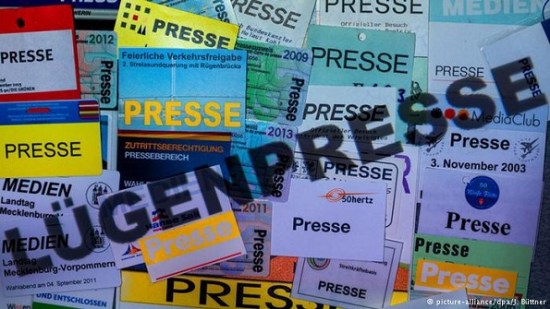
German Of The Day: Lügenpresse

That means the lying press. And, like, welcome to the club already, Germany. It appears that many Germans were not aware of this up until now. I mean, when has the media anywhere ever not been guilty of “embellished and inaccurate reporting?”

Lügenpresse

In a recent German survey, 44 percent of respondents said they partially, or wholly believe the media regularly lies to the people, as the Pegida movement asserts. Media experts (the people helping with the lying?) examine whether that’s true.

Media outlets in Germany “are controlled from the top,” and therefore spread “embellished and inaccurate reporting.” Nearly half of the 1,000 German citizens recently polled by the Dortmund-based Forsa Institute agreed with these statements.

Currently, the refugee situation dominates media reports. But Germans are simultaneously experiencing the crisis first-hand in their own towns and cities – and often finding dramatic differences between their perceptions of these events and journalists’ representations of them…

For example, Sebnitz: In this village of 8,000 residents in Saxony, where right-wing radicals often make headlines, the son of a German-Iranian couple, both of whom are pharmacists, died accidentally. The immediate headline read: “Neo-Nazis Drown Child.” In truth, the boy drowned after having a heart seizure. A newspaper that reported on the actual facts of the accident nevertheless added: But the way the mood is in Sebnitz, neo-Nazis could well have done it.”

Above all, the issue is often about choice of words: BBC World reported: “Dutch politician Geert Wilders acquitted of hate speech charges in The Hague.” Germany’s national news broadcast, Tagesschau, formulated the same story thus: “The Islamophobe and right-wing populist politician, Geert Wilders…”

You Can Fool All Of The People Some Of The Time

Roughly half of Germans asked are dissatisfied with chancellor Merkel’s refugee policy. This has come out in a survey taken by the INSA Opinion Research Institute in Erfurt. 48 percent disagreed with the statement “For the most part I am satisfied with the chancellor’s handling of the situation.” 41 percent agreed. 11 Percent did not specify.

Merkel

Despite Chancellor Angela Merkel’s warm words and saintly intentions to shoulder the refugee crisis, her efforts are meeting resistance at home. The populace feels overwhelmed and unsupported, not knowing where to accommodate so many people.

„In der Flüchtlingspolitik hat die Bundeskanzlerin die Deutschen mehrheitlich gegen sich. Und zwar aus ganz unterschiedlichen Gründen: Die einen nschen sich noch mehr Offenheit gegenüber den Flüchtlingen, die anderen Orbans Härte.“

This Is The End

The end of German society as we know it, I mean. The latest survey says it’s all over but the Heulen (crying).

Germans

A shocking 71 per cent of Germans, it turns out, would risk crossing the street even when the pedestrian signal is red.

39 per cent of Germans said they had taken public transport without paying for a ticket.

And 20 per cent of cyclists said they would run a red light.

Asked what most represents Germany to them, 63 per cent of respondents named Volkswagen, ahead of Goethe (49 per cent), Angela Merkel (45 per cent), and the national anthem (44 per cent). Somewhat alarmingly, Adolf Hitler came seventh, named by 25 per cent of those polled.

More Negativity

But it ain’t nothing new, folks.

Flag

More than half of Germans (53 percent) said they did not believe the United States government respects the personal freedoms of its people, according to a Pew Research Center report published on Tuesday.

“The U.S. receives largely positive reviews among many of its key NATO allies. About two-in-three Canadians have a favorable opinion, as do large majorities in Italy, Poland, France, the UK and Spain. The outlier is Germany.”

Know Your Friends

You know, like you know your enemies? But with friends like this…

NATO

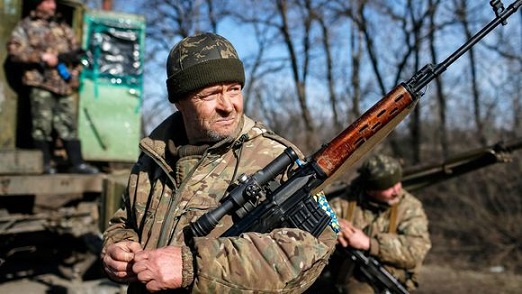
According to a Pew Research Center study, only 38 percent of Germans would want to help a NATO country if it were to be attacked by Russia. Far more than half of those asked would be against it. So much for NATO’s Article 5.

Das ist im Vergleich mit anderen Nato-Ländern die größte Ablehnung militärischer Hilfe nach Artikel 5 des Nato-Vertrags, der im Angriffsfall die gemeinsame Verteidigung vorsieht. In Italien (51 Prozent), Frankreich (53) und Spanien (47) sind die Werte der Umfrage zufolge etwas niedriger, während in Polen und Großbritannien fast die Hälfte der Befragten für eine militärische Unterstützung wäre.