“Explosive Narcissism And Vulgar Capitalism”

Are bad things, I guess. What the people over at Spiegel Online really want is vulgar narcissism and explosive capitalism, I assume.

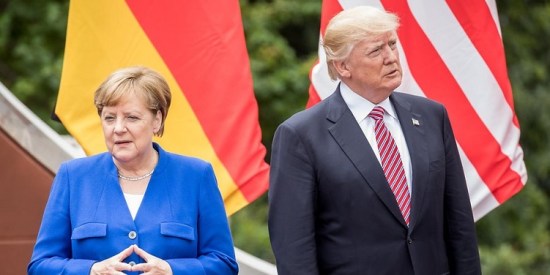
Trump

I could only read a paragraph or two of this little gem because… I dunno. Try reading it yourself and see. But the just of it is, I believe, that Donald Trump is really, really bad and it’s high time for Europe to start doing more for itself. Knock yourself out on that one, folks.

More than half of Germans think Europe can defend itself without military backing from the United States, a poll showed on Monday, less than two weeks after U.S. President Donald Trump said he could withdraw support.

German Of The Day: Alarmbereitschaft

That means “alarm preparedness.” And you have just been placed in it. Or on red alert, if you prefer.

Bannon

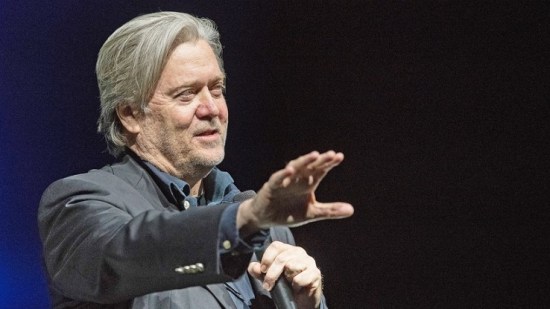
Isn’t that sophisticated imagery? Get it? Really subtle. Or subliminal or something.

“Trumps ex-strategist wants to support Europe’s right” – Bannon is moving to Europe to set up The Movement, a populist foundation to rival George Soros and spark a right-wing revolt across the continent.

This “movement,” you see, is obviously no different than Adolf Hitler’s movement a few years back and all forces of Goodness and Niceness must be placed in Alarmbereitschaft immediately to ensure that they are and remain alarmed, or at least be prepared for alarm or red alert or whatever (with the emphasis on red). You know, like this guy here? No fifty shades of gray here, folks. It’s all perfectly black and white. Or brown, actually. So are you finally alarmed now? Me, neither.

Steve Bannon, der frühere Chefstratege von US-Präsident Donald Trump, will eine Stiftung gründen, die rechtspopulistische Bewegungen in Europa stärkt. Die Organisation mit dem Namen “The Movement” werde ihren Hauptsitz in Brüssel haben, berichtete das US-Nachrichtenportal The Daily Beast unter Berufung auf Bannon. Vor der Europawahl im Mai 2019 werde sie zehn Mitarbeiter einstellen.

Germany Is So Wunderbar

As we all know, or are at least that’s what we’re told time and time again. But it is a country that presents us as in US/the NATO allience with, well, a bit of a challenge.

NATO

NATO’s 21st-century problem is not the United States, which provides a large percentage of its wherewithal, but Germany. As the most populous and most affluent of European nations, Germany still insidiously dominates Europe as it has since its inception in 1871.

Berlin sends ultimatums to the indebted Southern European nations. Berlin alone tries to dictate immigration policy for the European Union. Berlin establishes the tough conditions under which the United Kingdom can exit the European Union. And when Berlin decides it will not pony up the promised 2 percent of GDP for its NATO contribution, other laggard countries follow its example. Only six of the 29 NATO members (other than the U.S.) so far have met their promised assessments…

This is the NATO that Trump inherited and that he tried to shake up with his customary art-of-the-deal antics. Trump may be loud and uncouth, but his argument that NATO countries need to pay more money for their shared alliance’s self-defense is sound. If successful, it would lead to a stronger NATO.

In contrast, German Chancellor Angela Merkel sounds customarily professional and diplomatic as she continues to weaken the alliance and pursue German commercial and financial interests at the expense of fellow NATO members.

Germans Not Only Fear Donald Trump More Than Vlad Putin

According to an unreleased secret poll yet in my possession…

Trump

Over ninety-seven percent of Germans asked also fear Donald Trump more than Joseph Stalin, Caligula, Jack the Ripper, Freddy Krueger, Jaws (does he, like, actually have a name?) and Chuck Norris. Combined. To name just a few.

The United States may be Germany’s No. 1 ally, but two-thirds of Germans think that the US president is more dangerous than his Russian counterpart. That’s not surprising when you look at Germany’s political priorities.

“Vor einem US-Präsidenten Donald Trump habe ich definitiv mehr Angst als vor Putin.”

Good Deportees Are Hard To Find In Germany These Days

In fact, any kind of deportees are hard to find in Germany these days.

Deportees

But at least we know that they are here in Germany, authorities assure the worried public. What other country would put up with this madness?

A German federal police report says that deportation orders were up 17 percent, but that actual deportations were down 4 percent. Meanwhile, the labor minister argues that some of those being deported shouldn’t be.

More than half of the ordered migrant deportations failed to be carried out through May, in almost all cases because the individual could not be located, a German newspaper reported on Sunday.

Through the first five months of the year nearly 24,000 people were ordered to be returned to their home country but only about 11,000 deportations were completed, according to an internal report by the federal police that was first reported by the Welt am Sonntag.

“How we deal with the migration issue will determine whether Europe will last.”

Only In Germany

I don’t make this stuff up, people.

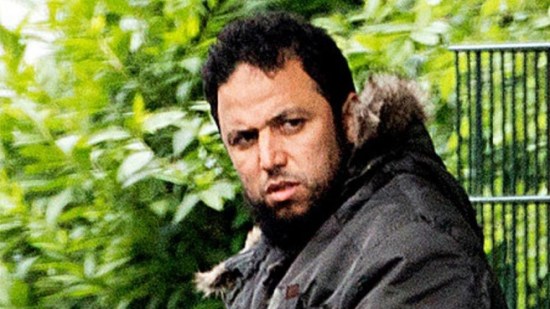
Sami

As reported earlier, after finally deporting Osama bin Laden’s freeloading bodyguard (he and his family received welfare payments for years/decades while he worked as an Islamist hate preacher), German authorities have now realized that the other German authorities who did the deporting did not deport Sami A in the proper German legalese fashion so… Now they want him back. In order to deport him again. Only this time gründlich (thoroughly). Without any Pfusch (botching it).

It’s times like these I think there really is something to this old Oswald Spengler stuff.

Germany suspects 42-year-old Sami A. of working as a bodyguard to late al-Qaida leader Osama bin Laden. A German court wants him to return from Tunisia after ruling his deportation was illegal.

Anwältin: Sami A. soll mit Visum nach Deutschland.

German Of The Day: Gefangener

That means prisoner or captive. You know, as in “Germany is a captive of Russia.”

Yeah. A captive who finally got caught.

Germany

“It pays billions and billions of dollars to Russia for energy. Germany is a rich country. Why should the U.S. protect you against Russia when the two countries are making deals? You tell me, is that appropriate?”

Deutschland ist ein Gefangener Russlands.

When Had We Left The Jungle?

I wasn’t aware that we had.
Jungle

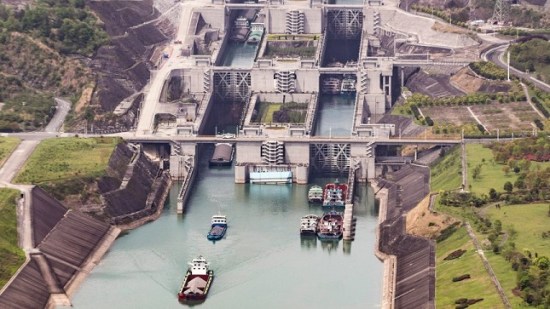
WTO Faces Existential Threat in Times of Trump -U.S. President Donald Trump has set his sights squarely on the World Trade Organization in Geneva. Even its critics are worried that without the organization, the world of trade would revert to the law of the jungle.

The U.S. and other industrialized nations made several concessions to developing economies when the WTO was founded in 1995 and significantly reduced their tariffs. In return, they were able to push through stronger protections for intellectual property. They hoped that the strategy would help slow China’s rise.

But from the U.S. perspective, the system has not been beneficial. And once China joined the WTO in 2001, that dissatisfaction only grew, partly because the Chinese proved adept at taking advantage of the rules. Even today, there is significant dissent within the WTO because the economic superpower China is still classified as a “developing nation” by the organization, which gives it certain privileges. On the other hand, China is fighting for recognition as a market economy, to which both the U.S. and the European Union are opposed because it would mean they could no longer defend themselves against state-subsidized Chinese exports with anti-dumping duties.

On top of all that, the WTO is facing a more fundamental problem: its size and its sluggishness. Negotiating rounds focused on removing tariffs have become increasingly complex. And because everything is up for negotiation at the same time, every member state can paralyze the process by simply exercising its veto. The Doha Round, launched in 2001, is a perfect example: It never achieved any results and has become symbolic of the WTO’s failure.

“The problems are coming from the behavior of a single country that would like to return to the jungle.”

Social Democrats Using The F-Word Again

You know, Fascism? As in everybody I don’t agree with is Hitler?

Schulz

Whenever other folks see things differently than they do (this time it’s Italy’s interior minister Matteo Salvini who is hard on migration) the Enlighted Left get all excited and squirrly. German Social Democrats are no different here.

This time it was Martin Schulz (remember the Schulz Effect?) who did the name-calling, labelling Salvini’s views “near-Fascism.” Italians and Fascism fit particularly well together, see? Today’s Italian politicians, is the implication, are “radical authoritarian ultranationals, characterized by dictatorial power, forcible suppression of opposition and control of industry and commerce, which came to prominence in early 20th-century Europe.” Like breath in and out slowly a few times and take a chill pill already, Martin.

„Was wir erleben, ist eine Brutalisierung der politischen Sprache, bei der jede Form der Solidarität, des Respekts und der Würde zerstört wird. Das bedeutet das Ende der Demokratie.“

Seems Like A Fine Idea To Me

As speculated upon earlier, the Pentagon is considering plans to remove American troops from Germany, possibly placing them in Poland instead.

Troops

Hey, the world changes. That old Cold War line doesn’t run through Germany anymore, it’s moved to the East. And Germany, although not willing to pay it’s fair share for it’s own defense, doesn’t want American troops here in Germany anyway (Germans are pacifists) so it’s a win-win situation if you ask me. I know, you didn’t ask me but I told you anyway.

Poland is willing to spend $1.5 billion to $2 billion to entice the U.S. to build a permanent military base there, according to a Defense Ministry proposal. The plan offers a strong incentive for the U.S. to consider moving at least some of its forces from Germany, especially since the current deployment makes little military sense.

Das US-Verteidigungsministerium prüft laut einem Bericht der „Washington Post“ einen Abzug der in Deutschland stationierten US-Soldaten. Zu den erwogenen Optionen gehöre eine Rückkehr eines Großteils der rund 35.000 in Deutschland stationierten Soldaten in die USA oder die Verlegung des gesamten oder eines Teils des Kontingents nach Polen, berichtete die Zeitung am Freitag.