German Of The Day: Bußgeld

That means fine. As in money. As in Corona money.

Fine

Most of Germany imposes $59 fine for mask-wearing breaches – German Chancellor Angela Merkel says most of her country’s states have agreed to impose a minimum fine of 50 euros ($59) for breaching mask-wearing rules as coronavirus infections rise again

Hmmm. In theory, Germany is a federal Government and this should be left up to state governments to decide but the times, as we can see, they are a changin’.

In decentralized Germany, imposing and loosening virus-related restrictions is a matter for the 16 state governments, so a patchwork of rules has emerged in recent months. Some areas have imposed no punishment for people who don’t wear masks as required in public transport, shops and elsewhere while others have imposed high fines.

Berlin Cancels Protest By Protestors Who “Question Democracy”

By, well, cancelling Democracy itself.

Ban

Berlin bans large weekend protests against coronavirus restrictions, citing health grounds – The city government of Berlin has called off several planned weekend protests, the largest of which on Saturday expected to draw 20,000 people or more. The organizers plan to challenge the move in court.

Anyone who does not conform to the red-redder-green party line is immediately labeled a right-wing extremist. Works every time.

No Way Back

No way out. No doubt about it.

Out

Spending other people’s money is so exciting. Joint debt is the bestest kind of debt there is. It’s free. Somebody else will pay it back. In this case, the Germans. Germans who haven’t even been born yet, but still.

Germany’s Scholz (SPD) sees ‘no way back’ from EU joint debt – German Finance Minister Olaf Scholz said Sunday (23 August) that the European Union’s recovery package financed by joint borrowing was a long-term measure rather than a short-term coronavirus crisis fix, contradicting Chancellor Angela Merkel.

“The Recovery Fund is a real step forward for Germany and for Europe, one we won’t go back on,” Scholz, who is also the centre-left Social Democratic Party (SPD) candidate to succeed Merkel in 2021 elections, told the Funke newspaper group.

Wouldn’t A 3-Day Work Week Save Even More Jobs?

Personally, I think it’s time to start talking about the 2-day work week. But that’s just me. I’m a visionary or something.

Work

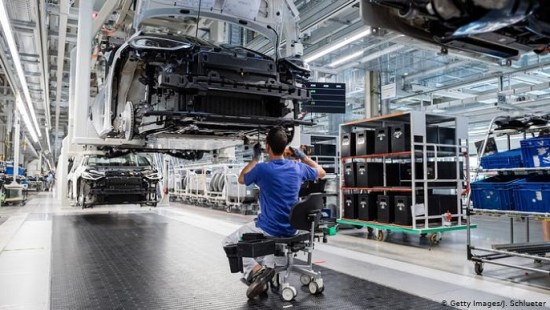
Germany’s biggest union calls for 4-day week to save thousands of jobs – Germany’s automotive and industrial sectors were already undergoing huge structural changes before the pandemic struck. The IG Metall union thinks a shorter working week could now help prevent mass layoffs.

In the upcoming union talks, Hoffman said IG Metall would call for a wage increase for workers, despite the recession.

The Russians Are Crazy To Release A COVID-19 Vaccine So Soon

The Germans say. This is a process that normally takes eight years or longer.

Germany

But Germany will have a vaccine “in the next months” and that’s OK. OK.

Germany ‘optimistic’ about having coronavirus vaccine soon – Germany’s health minister has said he is “optimistic” the country will have a vaccine “in the next months, and certainly in the next year.” However, he warned the number of new infections among young people was rising.

Spahn warned Russia had not carried out sufficient broad testing and said that there was relatively little data available on the vaccine.

Numbers, Numbers Everywhere

And not a drop to drink. I mean think. Absolute numbers can be absolutely worthless. But who’s counting?

Covid-19

Read an interesting observation yesterday while going through an article by journalist Jürgen Kunze at the Swiss nzz.

Is the USA going to get the pandemic under control? Looking at absolute numbers can be spectacular but being that it was the expected number of deaths that got politicians to act we must concentrate on that: Per 100,000 inhabitants, the death rate list is led by Belgium with 86, followed by Great Britain with 70, then Peru 67, Spain 61, Italy 58, Sweden 56, Chile 54, USA 50, Brazil 48, France 46. Germany lands at place 36 with 11. Consequently, the USA is in the upper middle range. Shouldn’t one be asking why Belgium can’t get the pandemic under control!

Bekommen die USA die Seuche nicht in den Griff? Der Blick auf absolute Zahlen kann spektakulär sein, aber da ja die erwarteten Sterbefälle die Politik zum Handeln zwang, müssen wir auch dabei bleiben: Pro 100000 Einwohner führt die Todesratenliste (alles gerundet) Belgien mit 86 Toten an, gefolgt von Großbritannien mit 70, dann Peru 67, Spanien 61, Italien 58, Schweden 56, Chile 54, USA 50, Brasilien 48, Frankreich 46 und an 36. Stelle Deutschland mit 11 Verstorbenen. Somit befinden sich die USA noch im oberen Mittelfeld. Man müsste eigentlich fragen, warum Belgien die Seuche nicht richtig in den Griff bekommen hat!


But Isn’t Everybody In Sweden Dead By Now?

How could their economy be in relatively good shape? They were BAD (compared to head of the class Germany) because they didn’t do that COVID-19 lockdown thing. I don’t understand.

Sweden

The 18 members of the DAX 30 index of Germany’s biggest firms that have already reported swung from a healthy profit in the second quarter of 2019 to a loss almost as big this year. For many companies, including Volkswagen, a giant carmaker, and BASF, the world’s biggest chemicals concern, results were even worse than analysts had expected. The income of the 27 Swedish firms in Stockholm’s OMX 30 that have reported so far fell by 49%, bad but much better than the DAX. If you include adjusted earnings of two opaque investment vehicles in the OMX, income actually rose…

In public, CEOs of big German companies generally praised their government’s tougher policies. Privately, though, some shared the fears expressed openly by the BVMW, the association of Mittelstand firms that represents 3.5m businesses with up to 250 employees. In an open letter in May the BVMW called on the government to lift the lockdown “before it is too late” and criticised it for lacking an exit strategy.

Schools Reopen In Germany

“But the coronavirus is not gone.”

Schools

Politicians are agreed on the need to avoid large-scale closures. But the coronavirus is not gone.

Schools are considered lower-risk and many doctors favor a return to the normal schoolday. But the coronavirus is not gone.

In May and June, 2,600 students and teachers were tested as part of a pilot project and not a single acute infection was found. But the coronavirus is not gone.

Fewer than 20 of those tested had antibodies in their blood, which usually indicates an infection in the past. But the coronavirus is not gone.

Experts say a new lockdown would have negative psychological and physical repercussions for young people. But the coronavirus is not gone.

The German teacher’s union doesn’t want the schools to open, however. Because the coronavirus is not gone.

If You’re Against Covid-19 Restrictions In Germany…

You’re a neo-Nazi.

Protest

That’s pretty straightforward. It is also deceptive, unbalanced and an incorrect. Some would even go as far as to say it is fake news. But then they would be called neo-Nazis too.

Neben Corona-Leugnern und Impfgegnern waren auch viele Teilnehmer mit eindeutig rechtsgerichteten Fahnen oder T-Shirts in der Menge. – Along with Corona deniers and anti-vaxxers many participants in the crowd were waving what were clearly right-leaning flags or wearing related t-shirts.

Politik diskutiert über Einschränkung der Versammlungsfreiheit – Politicians are discussing the restriction on freedom of assembly.

German Of The Day: Ohne Mundschutz

That means without masks (“mouth protection”).

Masks

Uh-oh, the natives are getting restless. Pandemic Is Over! (If You Want It).

Thousands of maskless Germans protest COVID-19 rules in Berlin – Thousands protested Germany’s coronavirus restrictions Saturday in a Berlin demonstration marking what organizers called “the end of the pandemic” — a declaration that comes just as authorities are voicing increasing concerns about an uptick in new infections.

Ohne Mundschutz, ohne Abstand – Tausende demonstrieren gegen Corona-Maßnahmen.