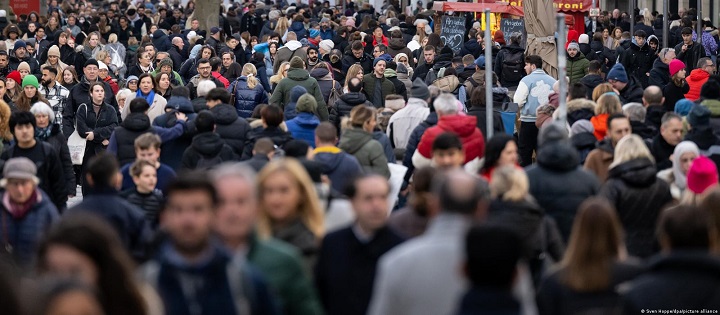
It’s at an “all-time high.” Due to illegal immigration (AKA “migration”).
Doctors, engineers and other desperately needed Fachkräfte (specialists, professionals) keep pouring in over the non-border by the tens of thousands (a mid-size German city every year). Thumbs up, Germany.
German population hits all-time high – According to official statistics, the number of people living in the EU’s largest nation grew due to record migration.
What does it matter that the EU can’t even control its own borders, create a common defense, organise vaccines, agree on a data protection law, control money laundering, unite properly over practically all major issues, agree on one location to seat its government, sanction its own misbehaving members, actually get rid of daylight savings time after having announced it got rid of daylight savings time many years ago… And so very, very much more?
Its bureaucrats, technocrats, kleptocrats and all the other crats mean well and have their hearts in the right place. So, sure, who could be better qualified to place Twitter under direct supervision? Other than Big Brother himself. I mean herself. You know what I mean. Whatever kind of self Big Brother might have these days.
EU should put Twitter under direct supervision after missteps: German official – A senior German official said on Thursday Twitter should join other tech firms in being directly monitored by the European Commission, saying the company’s erratic behaviour under new owner Elon Musk posed a threat to free speech.
“The power of the big platforms over public discourse needs necessary safeguards so that fundamental rights are effectively protected.”
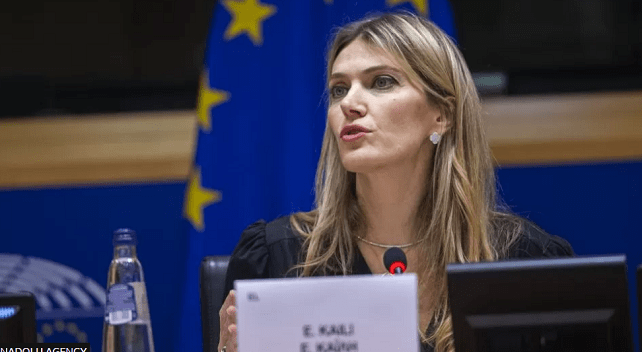
Beautiful corrupt EU socialist technocrat of the week.
Because somebody has to admire them.
European Parliament Vice President Eva Kaili has been arrested in an investigation into suspected bribery by a Gulf state…
Cash worth about €600,000 ($632,000; £515,000) was seized by Belgian police in 16 searches in Brussels on Friday. Computers and mobile phones were also taken by police in order to examine their contents.
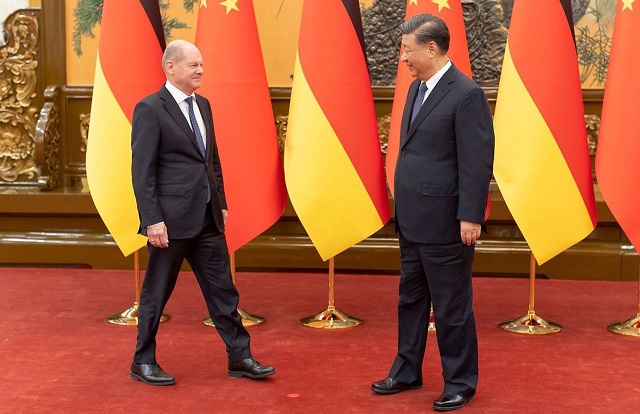
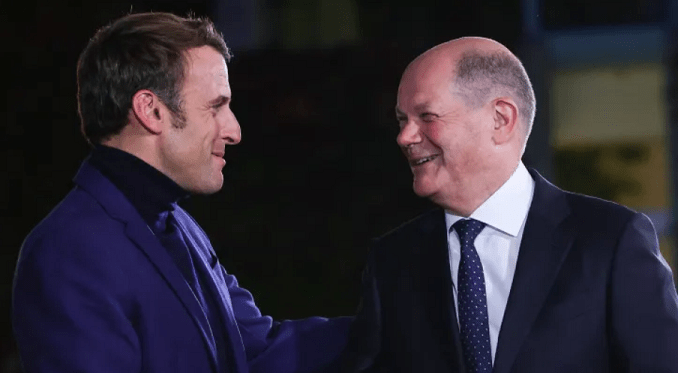
European Commissioner for Industry and the Internal Market Thierry Breton, a Frenchman, warned Scholz: “The time for naivety is over. We must be on guard.” The behaviour of the individual EU members towards China must be coordinated and not decided alone, “as China apparently prefers.” French President Emmanuel Macron suggested that he and Scholz should fly to China together at a later date to demonstrate European unity, a suggestion which Scholz ignored.
Christian Democratic Union (CDU) foreign policy expert Norbert Röttgen also attacked Scholz sharply. He accused him of damaging Germany’s foreign policy during his trip, “because it costs us our partners’ trust. It does not even strengthen our reputation with the Chinese, because they only react to strength and despise weakness.”
That’s a very popular political mantra here. You normally hear it right before Germany goes it alone again.
France and Germany’s relationship questioned as Scholz goes alone on policy – Germany has been criticized for approving a 200 billion euro ($200.2 billion) rescue package.
Fresh tensions between France and Germany are challenging their relationship at a time when their unity is critical for broader European policy in tackling the energy crisis.
The leaders of the two nations will meet in Paris on Wednesday, but this encounter almost got canceled.
Germany’s Continued Illusions About China and Russia – Berlin’s pursuit of economic and political ties with Beijing and Moscow has created dangerous dependencies. A change in strategy would benefit both Germany and the EU
Over the years, these two authoritarian regimes embedded themselves in the German economy and ingratiated themselves with the elites. Such developments prevented the EU from forging a coherent, critical strategy toward both Moscow and Beijing.
Thank God. The Germans are relieved. For a while there things were starting to look way too positive.
Post-Brexit-wise.
Positive trend in German exports to Britain no cause for optimism – DIHK.
German exports to Britain this year could grow for the first time since 2015, statstics office data showed, but the DIHK business association said the numbers did not mark a turn for the better, especially in light of Britain’s current turbulence.
They’ll be using their own, domestically produced broomsticks for training in the future, I guess.
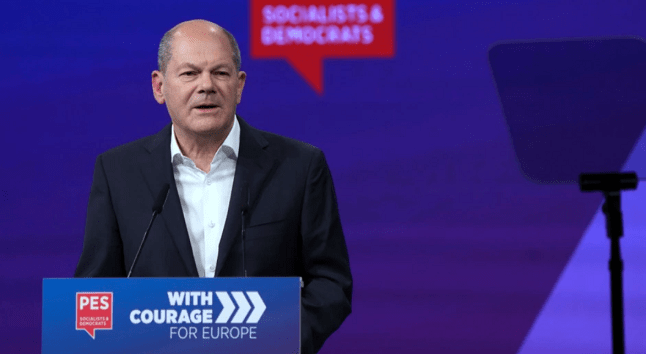
German Chancellor Calls for EU Reforms, Military Autonomy – German Chancellor Olaf Scholz Saturday called for reforms of the European Union to make it fit for the admission of new countries as well as more military autonomy of the 27-country bloc.
Speaking at the Congress of the Party of European Socialists in Berlin, Scholz advocated for gradually abolishing the principle of unanimity for decisions in foreign policy, but also in other areas such as tax policy…
Scholz also supports more military autonomy of the EU. He called for coordinated procurement of weapons and equipment, the establishment of an EU rapid reaction force by 2025, and for an EU headquarters for European armed forces.
Or, if you prefer, no more German Alleingänge (going it alone)… After this one. Promise.
Tensions flare over the EU’s new irresponsible big spender: Germany – Countries say Berlin has a burden of responsibility not just to pour billions into its own economy — when German mistakes created the crisis.
Ten years ago, when Europe was in the throes of the eurozone crisis, Germany led the drive for austerity. Now the rest of Europe is fuming about Germany’s heavy spending on energy subsidies that they fear could exacerbate the Continent’s politically explosive rich-poor divide. It hardly helps these growing tensions that it was Berlin’s misguided dependence on Russian gas that helped trigger the bloc’s energy crisis in the first place.
But you better be polite. The Germans are thinking too much. Again.
Can You Speak To a War Criminal?
Russia has tens of thousands of lives on its conscience in Ukraine, yet calls for diplomatic initiatives are growing louder in the West. In Germany, a growing number in both the governing parties and the opposition would like to see talks with Moscow.
When the German chancellor speaks to Vladimir Putin by phone, the Russian president is always extremely polite. People familiar with the calls say that his voice it rather soft and that the tone is less preachy than in his public appearances. Putin usually speaks a few sentences of German as a greeting before switching to Russian, with an interpreter then jumping in to translate…
“You can’t negotiate with this Putin right now.” Annalena Baerbock, German foreign minister.