Artistic Productions Like This Cost Money You Know

We’re artists. So give us your, I mean our money.

This is what Germans get for a billion euros of arts subsidies each and every year. Jiminy Crickets. I don’t even want to think about what they’d be getting for less.

Please, Berlin. For the love of all that is holy freakin’ cow. Keep those subsidies coming.

“Der Kulturinfarkt: Von allem zu viel und überall das Gleiche.”

It’s OK That Obama Got Caught Saying That

Der Spiegel rushes to tell us.

Because other politicians have been caught on mic saying bad things, too.

Only they were bad. So there.

“Nach meiner Wahl habe ich mehr Flexibilität.”

Germany In Grave Danger Again

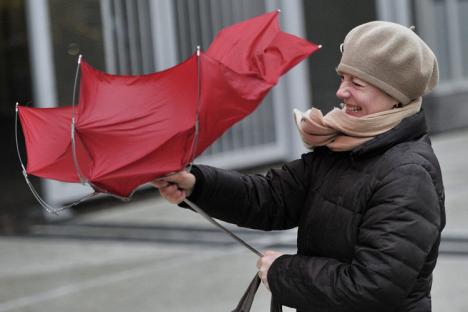
It’s all over but the crying now. Or whining, if you prefer. German Wetter (weather) just keeps getting wetter!

A new study tells us that the number of “devastating” storms, heavy rains and other weather-related “natural catastrophes” has tripled in Germany since the 70s! Wow. Have there actually been three already?

Scarier still is that the climate model for the next thirty years (this in a country that can’t get the weather forecast for tomorrow right, mind you) calls for even more “heavy precipitation” that will most likely lead to – oh my God we’re all going to die – flooding! That’s right, the f-word. Oh the horror or something. And you thought it couldn’t happen here.

„Für die nächsten 30 Jahre rechnen Klimamodelle in Deutschland vor allem mit einer Zunahme der Sturmintensität und mit mehr Starkniederschlägen, die zu Überschwemmungen führen.“

Germany’s Energy Turnaround Rocks

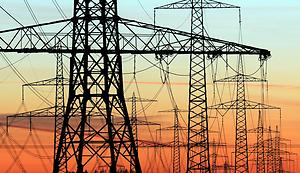
They never promised you a rose garden (actually, they did). It looks like Germany’s Energiewende (the energy turnaround = shutting down nuclear power and waiting for solar and wind energy to pick up slack) is going to have its price, too.

And it looks likes the first installment will by about a seven percent increase in energy costs for private housholds. But Germans pay these increases gladly, I think. At least for now (seven percent is just the start, of course). It’s back to the future. It’s for the common good. Or it’s for saving the planet or something.

Uh, like why don’t they just have “the state” pay for it. Oh, that’s right. They already are (the taxpayers are, that is).

Stromtrassen, Umschlagwerke oder intelligente Stromzähler kosten den Staat Milliarden. Draufzahlen muss am Ende oft der Verbraucher – offenbar bis zu sieben Prozent in den kommenden Jahren.

Remember The Ozone Hole?

We were just kidding.
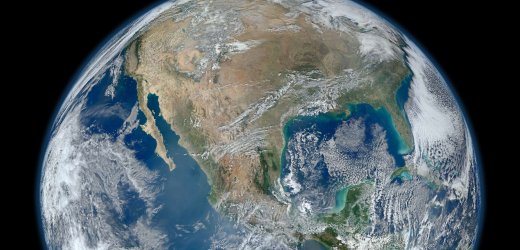
No, seriously. Something called the Montreal Protocol just saved the world as we know it from most certain destruction, bringing about a “healing of the ozone layer” and thus reducing our exposure to harmful UV rays from the sun which was being caused by, well, refrigerators and aerosol spray cans. Just like that. Almost as if by magic or something.

A German research institute has even confirmed this wonderful news, so you can bet that it’s for real (Germans are very thorough, you know). And said German research institute, like all those other research institutes out there, is being completely objective here and has in no way profited from the research funds given it to research said ozone hole phenomena and only böse Zungen (malicious tongues) would suggest otherwise.

The underlying message here: To rid the world of all manner of unpleasantness and harmful gas, both hot and cold, all we need are more protocols (like Montreal or Kyoto, say), and not less. Or fewer, I mean. And more funding, of course.

“The results are encouraging. The fact that the ozone layer in the regions researched has become thicker is a result of the successful Montreal Protocol.”

“Tax Advice Mission” Impossible

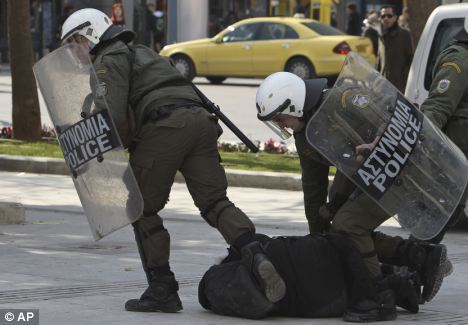
How about a little more sensitivity here, Greece? Germans are only trying to help.

And it doesn’t look like they’re going to stop trying to help you anytime soon, either. That’s why if they can’t get that “budget commissioner” they proposed to help monitor the Greek government’s (lack of) management of its finances, some 160 German tax collectors have now selflessly volunteered for assignments in Greece to help gather Greek taxes more efficiently. And as you can imagine, when it comes to taxation and tax collection, German efficiency can really hurt.

A recent flurry of acrimonious exchanges between Athens and Berlin reflect deepening doubts among mainly northern members of the 17-nation euro zone about Greece’s ability and willingness to overhaul its economy to satisfy lenders’ demands.

Endless War And Violence?

And it’s the worse that it’s ever been. And it’s only getting worse, right?

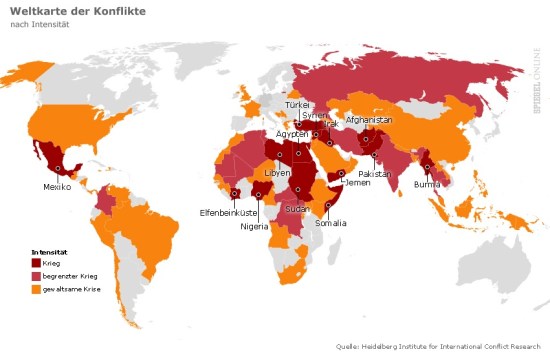
And if you ask this Heidelberg research group who just put out their “Conflict Barometer,” they will tell you that more wars took place worldwide in 2011 than at any time since 1945 (and 2012 doesn’t look all too promising, either).

But what does that mean?

If you really want to put our dreadful, horrible and unspeakably violent age into true historical perspective, do yourself a favor and take a look at what this guy has to say about it.

Thanks for the letting me stumble on to/over this, ¡No Pasarán!

In ihrem “Konflikt-Barometer” zählen Heidelberger Forscher so viele Kriege wie seit 1945 nicht mehr.

Cut The Loses And Run

The German government is about to cut solar subsidies by 30%.

Despite the massive investment, solar power accounts for only about 0.3% of Germany’s total energy. This is one of the key reasons why Germans now pay the second-highest price for electricity in the developed world (exceeded only by Denmark, which aims to be the “world wind-energy champion”).

According to Der Spiegel, even members of Chancellor Angela Merkel’s staff are now describing the policy as a massive money pit. Philipp Rösler, Germany’s Minister of Economics and Technology, has called the spiralling solar subsidies a “threat to the economy.”

Unterdeckungen

That’s German for deficient coverage. And German readers might be reading that word a lot in the weeks to come, at least when it comes to the electricity supply in Germany.

„We have been observing for weeks now that something with the system just doesn’t seem to be right,” one market expert said.

And in a letter from Germany’s Federal Network Agency to the power traders it deals with, it makes clear its concern about the rather volitile situation going on at the moment and has even warned of the collapse of the German power network. It almost happened on Febuary 6, already, they wrote, as “substantial undercoverage continuing over several hours” nearly brought the system to its knees.

Hmmm. Last year at this time, during one of the coldest winters ever, there wasn’t any problem with the German electricity supply at all. What on earth could have possibly happened since then and now to have caused this disturbing situation?

Nach dem Reuters vorliegenden Schreiben stand das Stromnetz in den vergangenen Tagen mehrfach vor dem Kollaps.

A Life Sentence?

In Germany? I don’t think so.

“An Islamic extremist who admitted killing two U.S. airmen at Frankfurt airport last year has been convicted of murder. The state court in Frankfurt found 22-year-old Arid Uka guilty Friday and sentenced him to life in prison for the March 2 attack on Afghanistan-bound servicemen as they boarded a bus at the airport.”

Well, that simply isn’t true. You may have known that there is no death penalty in Germany, but don’t be tricked by that ridiculous “life in prison” misnomer that Germans like to use all the time (lebenslänglich). Nobody spends life in prison here.

What Germans mean with a life sentence (in Germany) is 15 years. After that the convict gets paroled. Or, as in this terribly severe case, paroled and then “threatened” with possible  deportation.

Uka droht nach seiner Haft die Abschiebung.