Germany’s power operators have requested that reserve generators at a power plant in southern Germany and two plants in Austria be activated because, well, the lights are fixin’ to go out here (it’s c-c-cold).
But don’t think for a moment that this has anything at all to do with eight of Germany’s 17 nuclear reactors having been switched off because of an earthquake in Japan last year because it doesn’t. You got that?
“We do not have a problem of supply, of quantity, it’s principally a question of stabilizing the network.”
Here’s a little tidbit about the dark side of “Germany’s jobs miracle.”
“BEST LOW WAGE SECTOR IN EUROPE”
Job growth in Germany has been especially strong for low wage and temporary agency employment because of deregulation and the promotion of flexible, low-income, state-subsidised so-called “mini-jobs”.
The number of full-time workers on low wages – sometimes defined as less than two thirds of middle income – rose by 13.5 percent to 4.3 million between 2005 and 2010, three times faster than other employment, according to the Labour Office.
Germany can only hope that other European countries do not emulate its own wage deflationary policies too closely, as demand will dry up: “If everyone is doing same thing, there won’t be anyone left to export to.”
PS: Like I noted on a post the other day, the USA and Germany have more in common than they think. Now the Greeks are burning German flags, too.
I call it Hurt Feelings Burnout Syndrome (HFBS). With an emphasis on the BS. Oh man, I had to laugh out loud while reading the latest on the poor, misunderstood German front.
It appears that many German intellectuals are very concerned about how their European neighbors think of them (Germany) these days. Needless to say, it isn’t very highly at all. And some have come to the stunning conclusion that they are so disliked at the moment because, now get this, they are so big and strong. Imagine that.
Germany is the USA of Europe – only with a different history.
You don’t need to puzzle for very long about the question of why so much Nazi name-calling is going on at the moment: For the first time since 1945, Germany has appeared in full strength again. Not because anybody wanted it, but because the European debt crisis has made the most economically powerful country the most politically powerful one, as well. Germany is now intervening in the internal affairs of others in a big way.
Slowly but surely, the country is taking over a role for Europe that the USA has played for the rest of the world for so long, as being the country that uses (and sometimes misuses) its power, the country that is to blame for everything, the country that is supposed to save everything and is reviled for the way it does it. What has America not been accused of? The CIA has always been behind everything and American imperialism has always been the motivation.
How moving. Or something. And the rest of the story? Now folks are calling Germans Nazis again (as if they had ever stopped). Boo-hoo-hoo already. Come on, Germany. Wake up and smell the coffee. You’re the big kid on the block. Run with it. Enjoy. It comes with the turf.
And in a related story (I find), it turns out that Germans are also now “burning out” like flies (it’s hard to carry on when nobody likes you, I guess). This imaginary disease (yet another American import – are we having irony yet?) is currently running rampant among Germany’s workforce, with nearly 1 out of 10 sick days in Germany in 2010 being attributed to it (tendency rising). Another connection to US-Amerika? Oh my God. No wonder so many Germans are getting sick. Please note: The high-brow daily Frankfurter Allgemeine Zeitung questioned why burnout was being written so much about in Germany, while in France, which is economically a lot worse off, “it’s hardly a preoccupation at all.”
Remember: HFBS is incurable, but there are many effective treatments. One of them is shutting the #!?#! up.
Man braucht wirklich nicht lange an der Frage rumzurätseln, warum die Nazi-Vergleiche im Moment so oft gezogen werden: Zum ersten Mal seit 1945 tritt Deutschland wieder mit voller Macht auf, nicht weil man das gewollt hätte, sondern weil die europäische Schuldenkrise das ökonomisch stärkste auch zum politisch mächtigsten Land gemacht hat. Deutschland greift nun tief ein in die inneren Angelegenheiten Dritter.
Allmählich bekommt das Land für Europa eine ähnliche Funktion, wie sie die USA lange Zeit für die ganze Welt hatten. Als jene Macht, die ihre Kraft gebrauchte, manchmal missbrauchte, die an allem schuld war, die alles retten sollte und sich dafür beschimpfen lassen musste, wie sie es tat. Was wurde den Amerikanern nicht alles Übles angedichtet, immer steckte die CIA hinter allem Bösen, stets wurden die Amerikaner des Imperialismus geziehen.
PS: I hate to admit it, Germany, but I guess we’ve got more in common than we would like to admit (thanks for the idea, Old Phat Stu).
Germans are notorious pessimists, as you know. And they’re always bitching and moaning, especially when they don’t have anything to bitch and moan about. Take this latest Gallup survey, for instance:
“The 4 in 10 Germans who rated their lives highly enough to be considered “thriving” throughout 2011 was lower than in 2010.”
That could have been a whole lot worse, though. I’ve been living here so long that the first time I read that sentence I swear I was sure it read
“The 4 in 10 Germans who rated their lives highly enough to be considered “LIVING” throughout 2011 was lower than in 2010.”
Come on Germany, you’re giving me a complex. Go out there and live a little already!
In addition, the percentage of Germans who are “suffering” ticked up slightly in the fourth quarter of 2011, amid escalating economic turmoil in the eurozone.
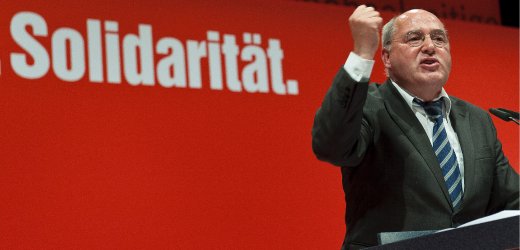
Around a third of Germany’s far-left Left Party’s parliamentarians are under observation by the country’s Verfassungsschutz or BfV (the Federal Office for the Protection of the Constitution), a domestic intelligence agency designed to, well, protect the German constitution.
This is outrageous, I guess, and Germans everywhere are empört (scandalized), as usual. How could it possibly be, they ask themselves, that a political party having members who…
belonging to the “Communist Platform,” claim that in order to introduce a new social order, “illogical, unobjective, unjust and pure power” will be necessary at first…
belonging to the “Marxist Forum,” maintain that “the ruling elite” must be removed from the “operating levers of state power” and have their “economical power base wrested from them…”
get enthusiastic about a party leader (Gesine Lötzsch) who congratulates Fidel Castro on his “fullfilled life of armed struggle and many accomplished works…”
having belonged to the Stasi (the GDR’s Ministry of State Security) still, in essence, belong to the GDR’s Ministry of State Security…
How could it be, like I said, that they could possibly, by any wild stretch of the imagination, ever be considered to be a threat to modern German democratic society based as it is upon the rule of law?
Like I said, what a shock or something.
Es geht nicht darum, eine Partei unter Generalverdacht zu stellen. Es geht darum, verfassungsfeindliche Bestrebungen zu orten, bevor sie Schaden anrichten. Hat man dem Verfassungsschutz nicht gerade – zu Recht – vorgeworfen, das Undenkbare nicht gedacht zu haben? Extremismus kann auf vielerlei Humus wachsen. Auch auf linkem.
PS: By the way, Left Party members are big fans of Iran and Syria, too, to name just a few. I’m just sayin’, it’s none of my business or anything.
God punishes us, I mean you, by giving you what you want.
The 1960s saw demonstrations across West Germany against the Vietnam war and the 1980s brought large protests outside some U.S. bases against plans to deploy new medium-range nuclear missiles. U.S. forces have always been viewed by some, especially on the political left, with hostility, as occupiers.
“We Germans fought for the Russians to go, now we are fighting for the Americans to stay.”
Like when it comes to anti-Semitism and bad old fashioned anti-Jewish thought crime.
Honestly, let’s put this latest study in perspective and maybe not paint the Germans as being the Hollywood Nazis they aren’t for once (but just this once).
Sure, 20 percent is a lot. But you know that you know you thought it was higher (or wanted it to be). And “the study — which draws on several different surveys and other research — puts Germans in the middle of the pack in Europe, showing more latent anti-Semitism in countries such as Poland, Hungary and Portugal, and less in Italy, Britain, the Netherlands and France.”
And what happens to that 20 percent once you subtract the extremist right/Islamic fringe and those who think like and/or support them? I’m all for subtracting them, by the way, but we don’t live in a perfect world. What can I say? It’s a never ending story.
Ob auf Fußballplätzen, im Netz oder in islamistischen und rechtsextremen Milieus – Judenfeindlichkeit ist in der deutschen Gesellschaft noch immer gegenwärtig.
German lawmakers are like lawmakers everywhere else on the planet. At least when it comes to giving themselves raises, they are. They give themselves modest raises, of course, albeit at very regular intervals, and as quietly as humanly possible.
This time they’re giving themselves a ridiculously measly 500 euro a month raise, bringing the grand total up to a less than measly 10,700 euros per month.
Now that may seem like a lot to you, but it really isn’t. Ask any SPD man and he’ll tell you why: “Representatives cannot be compared to those in lower income brackets.”
Well there we have it. They have to be on equal footing with others out there with, uh, I dunno, lots of money? Otherwise they might be susceptible to corruption or something. And we (I mean you) don’t want that because in Germany, as you may know, there is no corruption. So shut up and pay up.
“Abgeordnete kann ich nicht vergleichen mit unteren Einkommensgruppen.”
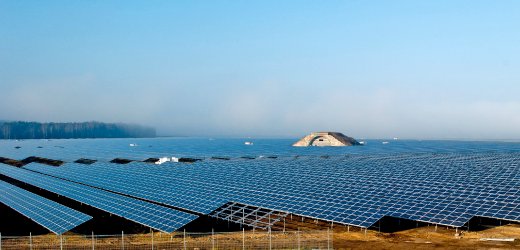
Three percent. That’s how much solar energy contributes to Germany’s overall energy mix (now don’t go be a jerk and break it to the Germans that the sun doesn’t shine very much here).
But that doesn’t really matter because, jeepers, that measly three percent only costs consumers half of the total 17 billion euros they have to shell out for renewable energy here.
It’s the principle of the matter, you see. If the Germans left this solar energy stuff up to the free market (that means no subsidies), then solar power’s contribution would be even lower than three percent – at none of the cost – and just think about how ridiculous they would look then.
And (even) the Spiegel says: Solar Subsidy Sinkhole
Germans just can’t stop going on vacation. It’s what they do.
And that’s why they win the Reiseweltmeisterpreis (World Champion Travellers Award) every year. It’s not a real award, of course, but Germans are always talking about it as if it were (and only a German would be interested in winning an award like that in the first place, come to think of it).
And in 2011, the German nation spent 60 billion euros (that’s billion with a b) on travel.
“Tourists don’t know where they’ve been, travelers don’t know where they’re going.”
Die Deutschen bleiben Reiseweltmeister. Über 60 Milliarden Euro gaben sie laut einer Studie 2011 für Reisen ins Ausland aus.




 Observing Hermann