“Progress has been limited…”

Oh, I dunno. Depends upon how you look at it.

Progress

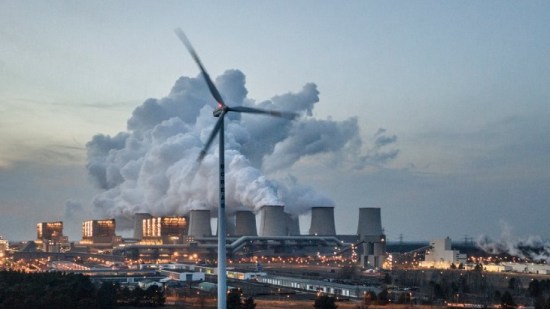
In 2011, German Chancellor Angela Merkel announced the country was turning away from nuclear energy in favor of a renewable future. Since then, however, progress has been limited. Berlin has wasted billions of euros and resistance is mounting…

But there’s been plenty of change here, although I wouldn’t call it progress. Lots of people can’t afford to pay their power bills in Germany – the country with the highest energy costs for consumers in Europe. Could there possibly be a connection to the “energy turnaround” here?

More than 340,000 electricity customers across Germany have their power cut off each year for failing to pay bills. A new proposal from one political party aims to change this.

Productivity?

What’s that? I live in Berlin.

Productivity

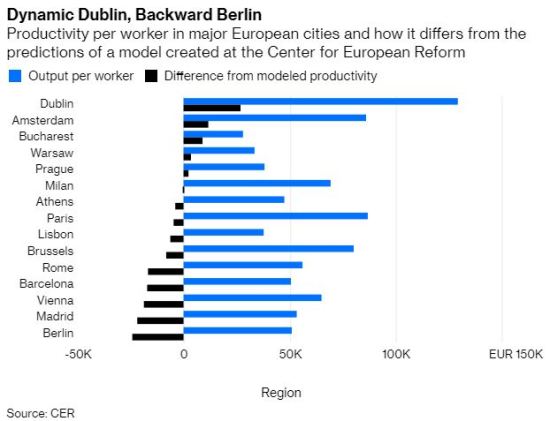
Asked which region in Europe has been the absolute worst at realizing its economic potential, most people probably wouldn’t name Berlin. The German capital isn’t just nice to live in, it’s throbbing with excitement; a startup is reportedly created here every 20 minutes, and if you leave for a night out, you risk not coming back for a week. But according to a study of the economic performance of European regions, Berlin is indeed the worst.

What is more important: productivity or a city’s peculiar, esoteric feel? Berlin is one of the places where this question is especially poignant.

Shame On Him!

Trump treats Germany like ‘America’s worst ally.’

Worst

Especially because, well, like, you know… They are.

North Korea, China, Iran, Cuba, Venezuela: America currently has disputes with a lot of countries. Europeans, meanwhile, have done quite well at keeping their heads down. A US-EU trade truce is still holding. And Nato’s 70th anniversary festivities in Washington came and went in early April without tweet fireworks from the president threatening US withdrawal.

There was one notable exception to this queasy peace, however: Germany.

At a think-tank event during the Nato celebrations, vice-president Mike Pence castigated Germany for its inadequate defence spending and for being a “captive of Russia”. A few weeks later, presidential daughter-in-law Lara Trump opined on Fox Business that Angela Merkel’s welcome of refugees in 2015 had been Germany’s “downfall” and “one of the worst things to ever happen” to the country.

Germany is, in fact, having a bit of a moment in the roiling imagination of the Trumpian nationalist right. It has been denounced as “selfish” and “America’s worst ally” by Ted Bromund, a scholar at the Heritage Foundation. Jakub Grygiel, until last year a member of the State Department’s policy planning staff, called it “a source of fear and resentment”. And Michael Anton, a former senior White House adviser for strategic communications, just published an essay on the “Trump Doctrine” which contends that the EU is “a fraud” and Germany “treats the EU as a front organisation”…

Like I said. All of this is outrageous. And, well, I dunno, like, how should I put it? True. It’s actually much worse than all of that but nobody wants to hear it so, shame on you, President Trump!
Well, It’s Not Like They Could Be Arrested

Drug dealers need a safe space, too. At least in Berlin they do.

Drug dealers in Berlin are to be given designated spaces in a city centre park to carry out transactions, leading to criticism that authorities have capitulated to criminal gangs.

For years there has been a heated debate about Görlitzer Park, a popular meeting point in the trendy southern Berlin district of Kreuzberg, which has been attracting an ever increasing number of drug dealers. Local people said they were reluctant to let children and pets roam free there.

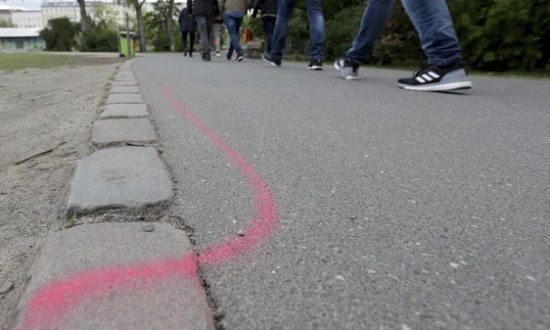
After repeated attempts by police to clear the dealers failed, the park manager declared areas where they should be allowed to operate, identified by spray-painted pink boxes.

“This method has purely practical reasoning behind it. It’s not that we’re legalising the selling of drugs.”

“Why The Name Mohammed Is So Popular”

In Germany. In Berlin, in particular. That’s the title of this article down here.

Name

I didn’t bother to read it. I’m pretty sure I know why that is and I don’t need a journalist explain to me why I’m wrong.

Mohammed is the most popular name for baby boys in Berlin… Bild, a German newspaper, reported data from the Gesellschaft für deutsche Sprache (GfdS), or German Language Society.

Mohammed in all its variants was the most popular name in Berlin, and the second most popular in Bremen, ahead of Ben but behind Elias.

Dass Mohammed in Berlin erstmals auf Platz eins der Vornamen-Hitliste steht, sorgt für Aufregung. Aber warum eigentlich?

Germany’s Once Mighty Air Force?

That must have been a long, long time ago.

All of the Reasons Germany’s Once Mighty Air Force Is Dying – The German magazine Spiegel recently revealed that most of the Luftwaffe’s—the modern German air force’s—128 Eurofighter Typhoons are not flightworthy.

In fact, only about ten of the aircraft are ready for operations, Spiegel said. This raises doubts about Germany’s ability to meet its NATO defense commitments.

“The problem is complicated.” Uh, no it’s not. This is nothing new. The Germans simply don’t care.

Well, We Certainly Don’t Want To Spark Controversy

Do we? German conference on Islamic veil sparks controversy.

Veils

The Islamic veil – Symbol of dignity or oppression? I’m going to go out on the limb here, folks. I’m going with oppression. Just sayin’.

Islamic veils are a hot topic in Germany, particularly due to a growing Muslim population. Now, outcry over an academic conference on the issue has surprised even its organizer, who says freedom of speech is at stake…

Germany’s Muslim population, which has rapidly increased in recent years due to immigration from Muslim-majority countries, was estimated at between 4.4 and 4.7 million people or approximately 5.5% of the country’s total population in 2015, according to the Federal Statistical Office. The number is doubtless higher now, according to the agency, but updated official figures exist.

With these demographic changes come societal debates — one of which, that of the Islamic veil, has been a continual source of discussion. The latest veil controversy, which made headlines all across Germany, has occurred over a planned academic conference — something that even its organizer did not expect.

“Dissenting opinions must be respected and tolerated.” Must they? For how much longer?

I Want Whatever The New York Times Just Had

While the New York times asks itself “Why Is Socialism Coming Back in Germany?” a young, supposedly up-and-coming SPD politician has just made himself a national laughing stock by suggesting the “collectivization” of BMW.

Kühnert

Not even Germany’s ex-communist partially Stalinist now socialist (or whatever they call themselves this week) Left party comes up with bat shit crazy ideas like that. Everyone is asking themselves what this guy has been smoking.

No, New York Times. Socialism might be alive in well down in Venezuela these days but it will continue to have a tough stand in Germany, flirtatious as the Germans may seem at times.

Die Empörung über die Sozialismus-Thesen des Juso-Vorsitzenden ist groß. Die SPD-Spitze spielt die Aussagen herunter.

Marginal Art Marginalized In Berlin

Marginal art made by marginal artists, that is. Actually, the story’s about the marginal artists who are upset about being marginalized, for being marginal.

White

There is a difference here, of course, albeit a marginal one. I have an idea. Perhaps, just maybe I’m thinking, if they made their art better and not so marginally successful they could stop being so marginal and protest about something else a little less marginally interesting.

Earlier this week, stickers and posters started circulating in and around the city of Berlin that point to a disparaging fact: according to a group of arts activists, 75% of the artists being platformed at Berlin Gallery Weekend are white and male.

The stickers protesting the lack of diversity within the Berlin art scene feature a white sausage — known in German as Weisswurst — against the blue background of Berlin Gallery Weekend’s main logo and branding typography.

German Of The Day: Handelskrieg

That means trade war.

Handelskrieg

A trade war between the United States and Europe is coming and the fallout could tip Germany into recession, according to analysts at German lender Commerzbank…

Official German statistics supplemented by the bank’s own research show that in 2018, the United States was the top export destination for German cars, accounting for about 12% of the total with a value of 27 billion euros of parts or finished vehicles.

The bank estimated that a Trump-ordered tariff increase of 25 percentage points on EU auto imports would slash that figure for Germany down to around 14 billion euros per annum.

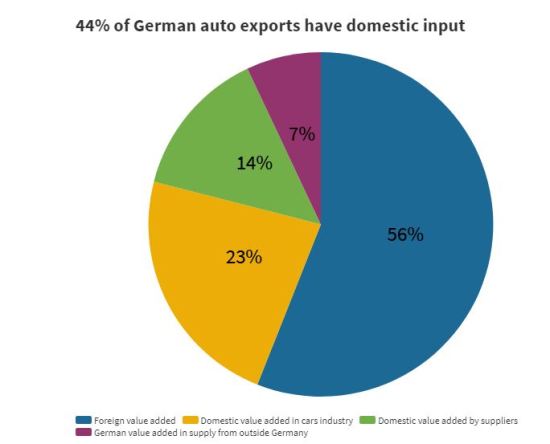
When factoring in how much of that export figure is actual German “added value,” the bank estimated that total economic output for the country could fall by around 0.25 percentage points.

“All the more dangerous in a situation where the German economy is only just managing to avoid a recession,” it read.