German Of The Day: Diktieren

That means to dictate. You know, like dictators do?

Herbert

When Gutmenschen (do-gooders) go bad. Like all left-leaning artists everywhere, German singer Herbert Grönemeyer routinely goes out of his way to demonstrate how he is on the right side of history by being on the left side of history. But unlike many of his anti-right-wing friends, he actually comes right out and admits on stage that if the populace doesn’t think the right way (namely left) then “it’s up to us to dictate what society must look like.” Sounds vaguely familiar, doesn’t it? Think Germany 1933.

Grönemeyer: „dann liegt es an uns, zu diktieren, wie ‘ne Gesellschaft auszusehen hat.”

German Of The Day: Strafzins

That means “punitive interest rate” and refers to a rates below zero.

Strafzins

It’s an accurate word invention. The ECB has cut rates again and those who save are punished.

The German term “Strafzins”, or “punishment rate” is widely used in the country’s media to refer to interest rates below zero. And a day after the ECB cut rates for the first time since the spring of 2016, it is back in the news.

This is despite the fact there is an alternative German word for negative rates: negativzins (as Michael Steen, formerly of the FT and ECB global media chief, pointed out on Twitter).

Admittedly negativ also has . . . negative connotations. But the use of “straf”, or “punitive”, reflects a widespread perception across Germany that the ECB is penalising savers through its monetary policy.

“They want to pump us up with the credit drug.”

German Of The Day: Graf Draghila

That means Count Draghila.

Draghila

You know, as in Mario Draghi, the European Central Bank President?

Mass-selling German newspaper Bild on Friday accused European Central Bank President Mario Draghi of “sucking dry” the bank accounts of Germany’s savers, a day after the ECB cut interest rates deeper into negative territory.

Next to a photomontage of Draghi with fangs and dressed as a vampire, Bild’s headline read: “Count Draghila is sucking our accounts dry.”

Hoping to kick-start economic activity nearly a decade after the euro zone’s debt crisis, the ECB on Thursday cut interest rates deeper into negative territory and promised bond purchases with no end-date to push borrowing costs even lower.

“The horror for German savers goes on and on.”

An Inconvenient Truth

Germany hides the awkward truth about the euro.

Germany

Mr Kohl’s offence — the original sin, I would say, at the launch of the single currency — was to shy away from spelling out to German voters the inescapable meaning of the bargain. It still goes unsaid. In short, Germany is the biggest beneficiary of European integration. The EU supplies the democratic stability and economic certainty on which its prosperity has been built. No country has more to lose from a break-up.

These benefits, understandably, carry a price tag. As the EU’s most powerful economy, Germany bears a proportionate responsibility for the stability of the enterprise.

The mantra in Berlin continues to obfuscate. Germany, it says, will never accept a “transfer union”. In real life, of course, that horse has already bolted. The true choice is between the shadow transfer union represented by the mountain of national central bank liabilities that have built up at the ECB — so-called Target balances — and the creation of an economic union that admits the role of fiscal policy in managing economic demand.

The present catch-22 is that those with room to operate the fiscal levers — Germany and its northern neighbours — refuse to do so. Those pressing for a more expansionary stance — led by France — lack the budgetary headroom.

It Can’t Happen Here

Or at least we’ll pretend that it can’t.

Russia

Russia was behind the murder last month of a former Chechen rebel in Germany, U.S. officials said on Tuesday, rekindling concerns that Moscow is ramping up an assassination campaign against the country’s perceived enemies abroad…

The absence of a German government reaction to Mr. Khangoshvili’s murder has sparked criticism from opposition parties that Berlin is eager to avoid a confrontation with Russia. A spokesman for the German government declined to comment and said the investigation was continuing.

“The United States believes that Russia is responsible for this assassination.”

German Of The Day: Respektlosigkeit

That means disrespect. I don’t know what it means in Chinese, though. Failing to kowtow?

Wong

German foreign minister meeting with Joshua Wong ‘disrespectful’: China – Beijing has slammed democracy activist Joshua Wong’s meeting with Germany’s foreign minister as “disrespectful.” Wong has urged countries to stand by Hong Kong protesters against the long arm of China in the city.

Don’t worry, China. Angela Merkel is already cowering in a back office of the chancellery somewhere and has already made it clear that she won’t meet with him. She knows it would be Wong for her to do that.

“It is extremely wrong for German media and politicians to attempt to tap into the anti-China separatist wave.”

Now This Is What I Call Equality

Germans know how to do this stuff. When everybody loses over here then everybody loses equally.

Merkel

Everyone Loses in Germany – Voters in state elections effectively choose ‘none of the above.’

European elections these days are generally contests between a beleaguered mainstream and insurgent alternatives. Voters in two German states on Sunday chose a form of “none of the above” as the country stumbles out of the Angela Merkel era.

It Doesn’t Matter Who Replaces Merkel. Germany Is Broken.

Doubled Since 2014?

What could have brought that about?

Guns

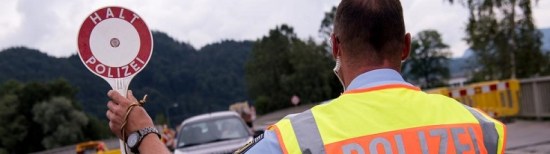
More Germans applying for alarm gun licenses – More and more Germans are acquiring the permit they need to carry a gas pistol, a newspaper has reported. The number has more than doubled in the last five years.

The so-called Kleiner Waffenschein (“small weapons permit”) is relatively easy to acquire in Germany: they are usually available to anyone over 18 with no previous serious criminal convictions, and who is considered “physically and mentally fit.”

“At least since the events at the Cologne cathedral square on New Year’s Eve in 2015 people apparently feel more and more unsafe.”

They’re Only 25 Percent Of The Electorate

And growing. So we’ll just keep shunning them and they’ll eventually go away.

AfD

That seems to be what Germany’s established political parties are telling themselves when it comes to the far-right AfD – a party that owes it’s increasing popularity solely to Angela Merkel’s bat shit crazy migration “policy.” None of these parties are willing to even consider working together with the AfD. Even after yesterday’s results in Saxony and Brandenburg.

This is because the AfD politicians are all “Nazis” (everybody I don’t like – or offers “my” voters an alternative – is a Nazi, right?). So a quarter of the voters who voted in these two federal state elections yesterday are all Nazis, too? Uh, I don’t think so. This is German democracy in action? Here’s a little tip: Once they reach 51 percent you won’t have the opportunity to take the wind out of their sails because they won’t need you anymore.

Far-right AfD bids to encircle Berlin as resentment and division grow.

Isn’t That Special

Germany Isn’t Special – To pull its weight, it needs to start seeing itself as a normal country, subject to the same pressures as all its neighbors.

Germany

Polls before this weekend’s elections in states in the former East Germany show the right-wing Alternative for Germany (AfD) comfortably capturing 20 percent or more of the vote. This is just one of the ways in which the country at the center of Europe is confronting a new state of affairs.

Ever since reunification, Germany has built its liberal democracy on a few key pillars—a disavowal of the extreme right, a focus on economic performance, and a steadfast relationship to the United States—to avoid a return to the conflagrations of the past. By following these guidelines, the country has won itself respect around the globe. But it has also persisted in treating itself as a special case, not subject to the pressures affecting its Western peers. That, in turn, has led to resentment among its partners. It is time for Germany to buck its postwar policy traditions and begin to see itself for what it is: a normal power.

A German friend of mine summed it up more succinctly: Die Deutschen wollen immer eine Extrawurst haben. The Germans always want “an extra sausage” = special treatment. Are those days finally over? In the real world, I mean? Stay tuned.