German Of The Day: Bratwurst

That means bratwurst. Oh, brother. Dopey Americans eating goofy German food.

“It smells like prune juice and beer had a baby.”

Amerikaner mögen Pizza, Burger und Cola. Was passiert aber, wenn sie deutsches Essen probieren? Was halten sie von Vitamalz, Lakritze und Bratwurst? Ein Youtube-Video zeigt die Antwort.


But Nobody Said We Couldn’t Do It Until Now

Trump is right about trade and Merkel needs to do something about it, former German state secretary says.

Trade

In early March, Trump started by implementing tariffs on aluminum and steel imports — measures that did not represent a big impact for China, but did for countries like Japan and potentially Europe too.

Germany has also faced international criticism for its trade surplus, which means its exports outweigh its imports, as some see it as unfair, imbalanced and a cause for protectionism elsewhere.

“Germany is really out there as the main culprit, so to say, because Germany has the highest surplus, much higher than China in terms of GDP… Germany has to do something against it, that’s absolutely clear,”

But Is It Also The World’s Last?

Do you promise?

Dachshund

German dachshund museum in Passau ‘a world first’ – A new museum in the Bavarian city of Passau celebrates Germany’s – and the world’s – affection for the dachshund.

More than 4,500 toys and other items showcase the breed popularly called the “sausage dog”, a symbol of Bavaria.

“The world needs a sausage dog museum.”

If The Deutsche Post Does It It’s Different

As usual, German Scheiße doesn’t stink.

Deutsche Post

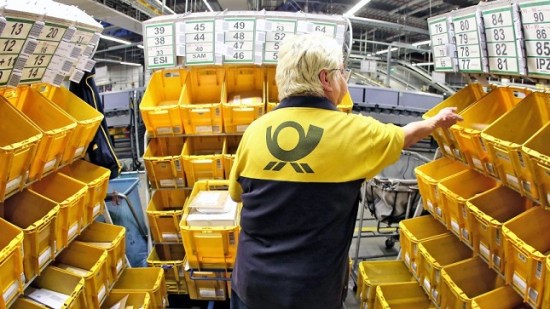
When it comes to data mining = Cambridge Analytica = Facebook = US-Amerika, we’re talking pure evil. The Deutsche Post, on the other hand, is the Deutsche Post so it ain’t no big deal – when they do the same thing. The outrage hält sich in Grenzen (is kept within limits).

Deutsche Post sold client microtargeting data to the Christian Democrats and Free Democrats before the 2017 elections. Is this a scandal along the lines of Cambridge Analytica in the US? That depends on whom you ask.

“German ‘data-driven’ canvassing cannot be compared with the highly sophisticated US campaigns, which use reliable data, experimental findings and data modeling to identify individual voter targets.”

German Of The Day: Aneinander vorbeireden

That means to talk at cross purposes. In this case when German politicians use the same word in different ways – gehören (meaning both to belong to and ought to belong to).

Islam

In an interview with the German newspaper BILD Seehofer said: “Islam is not a part of Germany. Germany has been influenced by Christianity. This includes free Sundays, church holidays and rituals such as Easter, Pentecost and Christmas. However, the Muslims living in Germany obviously do belong to Germany.”

This statement conflicted with the position of German Chancellor Angela Merkel. Merkel said, even though Germany has been influenced mainly by Christianity and Judaism, there are more than four million Muslims in the country, they “belong to Germany and so does their religion.”

Hey, depending upon how you look at it, Germany does not belong to Germany. Neither does Christianity belong to Germany. Let’s not even start with Judaism. So I think Horst Seehofer is right on the money when he says that Islam does not belong to Germany, either. What’s the big deal? We’re all not in this together, folks.

Da muss man schon präzise sagen, was mit dem Ausdruck “gehört” eigentlich gemeint sein soll. Das kann man ja als schlichte Bestandsaufnahme oder Feststellung meinen: Man gehört zu einer bestimmten Familie oder einem Verein an. Man kann es aber auch so verstehen wie bei der Formulierung: Kinder gehören zeitig ins Bett. Dann bekommt die Aussage eine Sollens-Komponente und erhält eine ganz andere Bedeutung. Und drittens könnte die Frage angesprochen sein, ob der Islam die Bundesrepublik Deutschland in ähnlicher Weise geprägt hat wie das Christentum. Je nachdem, mit welchem Akzent man das Wort “gehört” verwendet, bekommt dieser Satz einen anderen Sinn. Diese Unterschiede werden in der politischen Diskussion leider nicht beachtet, und deswegen redet man munter aneinander vorbei. Das ist vorhersehbar und langweilig.

German Of The Day: Verliererin

That means loser. In feminine form.

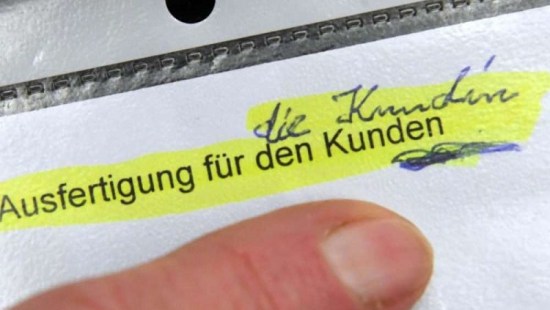
Kundin

A German federal court has rejected a customer’s demand for her bank to include the feminine form of words such as “account holder” on official forms.

The Federal Court of Justice ruled Tuesday that plaintiff Marlies Kraemer hadn’t suffered any discrimination under German law from her bank’s use of the “generic masculine” on forms, a common practice. The German language adds a suffix to turn nouns into feminine form. In the case of account holder, “Kontoinhaber” becomes “Kontoinhaberin.”

Kundin bleibt Kunde: Klägerin unterliegt im Formularstreit.

And The Message From 1886 Read…

“Is Merkel still chancellor?”

Bottle

Message in a bottle tossed into the ocean in 1886 discovered on remote Australia beach.

“Incredibly, an archival search in Germany found Paula’s original meteorological journal and there was an entry for June 12 1886 made by the captain, recording a drift bottle having been thrown overboard. The date and the coordinates correspond exactly with those on the bottle message.”

Nachdem die Finderin die Flasche dem Western Australian Museum überlassen hat, wird sie dort von Donnerstag an zu besichtigen sein. Mit 132 Jahren gilt sie als die älteste Flaschenpost-Sendung der Welt. Laut Guinness-Buch lag der bisherige Altersrekord einer Flaschenpost bei etwas mehr als 108 Jahren.

“Muttiland” Does Have A Nicer Ring To It

But not even Mutti wants to remove Vaterland (fatherland) from the German national anthem. And if Mutti don’t want it, ain’t nothing going to happen. “Equality czar” or not.

Muttiland

Equality czar? What is that? Why don’t they introduce a common sense czar instead? They could call him the sense czar. And he could get rid of all this nonsensical sense-czar-ship going around here these days.

Germany’s equality czar wants to remove words like“fatherland” and “brotherly” from the country’s national anthem, following Canada and Austria in adopting gender neutral phrases.

Kristin Rose-Moehring, equality commissioner since 2001, made the proposal to strike male-specific references from the anthem in a letter to staff at Germany’s family ministry ahead of International Women’s Day, German media reported on Sunday.

Ahead of Women’s Day? How you figure? Every day is Women’s Day over here.

Die Kanzlerin sehe “keinen Bedarf einer Änderung.”

PS: I’m going to ask this woman to look into “mother nature” while she’s at it. It irks the hell out of me every time I hear somebody use that term. The nerve. Person nature will do just fine, thank you.

Acute Threat Now Just A Cute Threat

A senior German politician has confirmed today that hackers have been able to collect confidential information from Germany’s government network.

Cyberattack

He quickly stressed, however, that this information was expressly labeled confidential and he is therefore quite confident that the hackers won’t read it.

“Confidential means in confidence, after all,” he said. “So when one indicates confidentiality it imparts that this information is a private, even a secret matter. Intimate even, although we certainly don’t have any of that kind of material in our network. Strictly forbidden, you know. So why would one who is not in confidence read confidential information? Would you? Of course not. I wouldn’t, either. I just wouldn’t have the confidence to do so. Well, it’s been a long week everybody. Have a nicer weekend!”

According to reports in German media, the hackers focused their attack on the foreign ministry, which in the view of some lawmakers would suggest a foreign intelligence agency as the orchestrator of the hacking operation.

More Redistribution Needed

Or that’s what this article seems to suggest.

Redistribution

And this in a country that has already been redistributing the wealth for decades and decades or longer.

When it comes to the superrich, however, there are relatively reliable estimates in the form of lists of the world’s wealthiest people, with the one compiled by the US business magazine Forbes leading the way. A similar list is compiled in Germany by manager magazin. A team of tax experts led by Stefan Bach of the German Institute for Economic Research (DIW) has examined the wealth statistics compiled by the ECB and augmented them with lists identifying the ultrarich. And the team did so for three countries: Germany, France and Spain.

The result: The 45 richest households in Germany own as much wealth as the bottom half of the population. Each group possessed a total of 214 billion euros in assets in 2014.

Bad superrich! Bad!

Why would more redistribution be necessary in a country like Germany? Maybe because it doesn’t work. It can’t work, in fact. It is not, nor has it ever been, a zero sum game, this wealth business. Here or anywhere else. But it’s a great way for redistributing politicians to get elected. Again and again and again. To no avail.

“Most economic fallacies derive from the neglect of this simple insight, from the tendency to assume that there is a fixed pie, that one party can gain only at the expense of another.”