Trump To Follow Germany’s Lead

After Germany introduced a ban on German vehicles in the city of Hamburg today, President Donald Trump has announced plans to do the same in US-Amerika, as well. Sort of.

Trump

A report that U.S. President Donald Trump has threatened to pursue German carmakers until there are no Mercedes-Benz rolling down New York’s Fifth Avenue dented shares in the luxury car manufacturers on Thursday.

An excerpt from German magazine Wirtschaftswoche’s article, which cited several unnamed European and U.S. diplomats but did not include any direct quotes, could not be independently verified, while a United States Embassy spokesman in Berlin referred questions to Washington.

The news and current affairs magazine said Trump had told French President Emmanuel Macron in April that he aimed to push German carmakers out of the United States altogether. Macron’s administration in Paris declined to comment on the report.

Eine harte Antwort wäre für die deutsche Wirtschaft riskant: US-Präsident Trump hat neben den Metall-Zöllen auch Zölle auf ausländische Autos ins Spiel gebracht.


Poland Gets It

The U.S. doesn’t stand to lose anything by accepting Poland’s generous proposal and gradually relocating troops there from Germany. A move of this kind would be consistent with stated U.S. goals, such as deterring Russia. It would also allow the U.S. to support an ally eager for closer military ties.

Poland

It might also force Germany to give more thought to its position. Would it feel unprotected with a smaller U.S. presence? Would it, perhaps, be motivated to enhance its own defense? Or would it still be secure in its apparent conviction that no one is interested in attacking it?

The U.S. should offer protection to the countries that want it most, and reduce its involvement with nations that benefited in the mid-20th century. The American military presence should be aligned with its allies’ sense of being threatened. This anxiety gets stronger the closer a country is to Russia’s borders. Ignoring that makes little military or political sense.

What’s Wrong With The SPD?

First they roll out a foreign minister who talks tough to Russia and then they provide a finance minister who has trouble spending other people’s money.

Scholz

Damn. Maybe I could become a social democrat (bourgeois socialist), too.

Germany’s new Social Democrat finance minister, Olaf Scholz, is frustrating both key ally France and his own struggling center-left party by adopting the same fiscal rigor as his conservative predecessor, Wolfgang Schaeuble.

During his first two months as treasury chief of Europe’s largest economy, Scholz has committed to a continued goal of no new debt and limited public spending.

“We act pragmatically and properly – and do not worship a fetish (of fiscal conservatism).”

Speaking Of Corruption…

As far as I can tell, there isn’t a German automobile company that isn’t involved in emissions manipulation. Or maybe this is just another misunderstanding/accident kind of thing again.

Daimler

Remember when Germany used to have a clean image? Me, neither. It has been a while now, hasn’t it?

Daimler faces a recall order for more than 600,000 diesel-engine vehicles including C-Class and G-Class models because of suspected emissions manipulation, German magazine Der Spiegel reported on Friday.

Auch Daimler soll bei Diesel-Pkw bei den Abgaswerten getrickst haben. Das Kraftfahrt-Bundesamt könnte einen Rückruf von über einer halben Millionen Autos anordnen.

German Of The Day: Vorschriften

That means regulations. You know, like the regulations that were “intentionally” ignored 97% of the time while asylum requests were being processed at the BAMF in Bremen?

BAMF

So much for German efficiency, again. And chalk one up to German corruption, while we’re at it. Again.

Larry the lawyer and his other lawyer buddies must be having a real heyday up there. By the way, how can you tell when a lawyer is lying? Their lips are moving.

Anwälte bekamen 97 Prozent ihrer Asylfälle anerkannt.

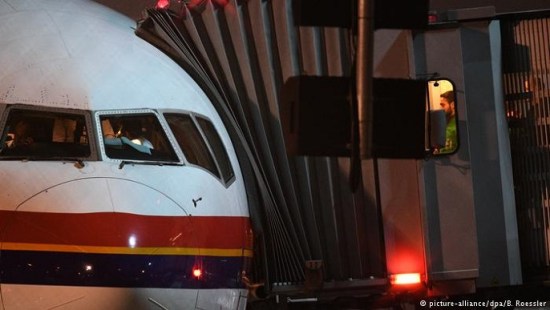
How Deportation In Germany Doesn’t Work

And keep in mind before your read this that half of those rejected asylum seekers actually selected for deportation are, well, never actually deported (they just don’t bother to show up for the flight, for instance).

Deportation

If an application for asylum is rejected, the Federal Office for Migration and Refugees issues a refusal notice and a deportation notice. The refusal notice says you have to leave within a certain time and warns that police will deport you if you don’t comply.

However, everyone has the right to appeal the refusal and postpone the deportation. There are several opportunities to appeal in the courts. The first appeal is through the administrative court. If this fails, you can take the case to a higher administrative court, and then in rare cases, to the Federal Administrative Court. After this, you can submit a complaint to the Federal Constitutional Court. If you believe that a deportation decision is violating your human rights, it is possible to appeal to the European Court of Human Rights in Strasbourg.

Even if you do not appeal a rejection, deportation can only take place if it is “practically possible and compatible with the law.” If deportation is not possible due to legal or medical reasons, the Migration Office can grant a tolerated residence permit. Currently, nearly 200,000 people in Germany hold a tolerated stay. Almost half of them have been tolerated for at least ten years.

Fast jede zweite geplante Abschiebung abgebrochen.

It Won’t Stop Here

After the “mistakes” the Federal Office for Migration and Refugees (BAMF) made in its rulings. The truth has a way of raising its ugly little head and there will soon be more to follow, I’m sure.

Migrants

An internal review by the Federal Office for Migration and Refugees (BAMF) of 4,568 asylum rulings had found that the Bremen branch knowingly and regularly disregarded legal regulations and internal rules, the Interior Ministry said…

More than 1.6 million migrants, many from the Middle East, have arrived in Germany since 2014, becoming a hot political issue which helped propel the far-right Alternative for Germany into parliament for the first time in last year’s election.

It’s alleged that the Bremen branch of the Office for Migrants and Refugees (BAMF), which is subordinate to the Interior Ministry, simply admitted more than 1,200 refugees to Germany without properly reviewing their cases. Bremen prosecutors are currently investigating whether bribes changed hands, and questions have been asked whether BAMF head Jutta Cordt kept herself adequately informed, and if she did enough to investigate the possible irregularities.

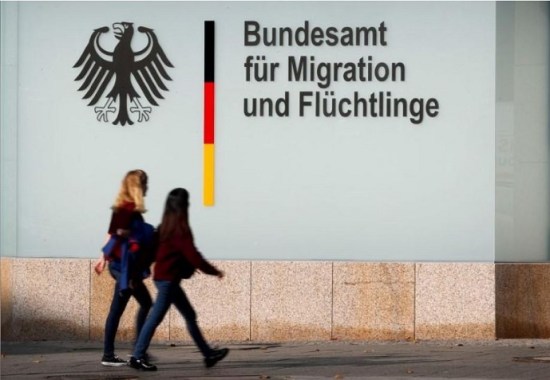
German Of The Day: BAMF

That stands for Bundesamt für Migration und Flüchtlinge, which means the Federal Office for Migration and Refugees. It turns out they should have translated that as the Bureau for Asylum and Migrant Fraud, however.

BAMF

This is one of those tip of the iceberg stories, folks. Employees at Bremen’s BAMF have been accused of improperly granting asylum in 1,200 cases between 2013 and 2017 and now an investigation has been launched in which 18,000 additional successful asylum applications will be reviewed. In the meantime irregularities at other BAMF offices have come to light.

Internal email correspondence at the Bremen office has emerged in which an upper-level manager appears to be aware of this systemic problem but asks that an internal investigation be carried out in a “noiseless” manner.  Nor should “everything be examined down to the last detail.”

Same old same old, isn’t it? We’re from the government and we’re here to help.

Angeschrieben wegen möglicher Unregelmäßigkeiten in den Bremer Asylverfahren, habe der zuständige Abteilungsleiter des Bundesamts im Februar 2017 zwar eine Prüfung angeordnet, zugleich aber verfügt, dass diese „geräuschlos“ geschehen solle. Er wolle nicht, heiße es in seiner E-Mail, „dass alles bis ins Detail geprüft wird.”

This Is Chump Change

With the emphasis on chump. What’s a mere 78 billion euros of migration-related spending through 2022 for Germany? Especially when everybody here knows that the amount will probably be three to five times higher?

Migration

It’s not like Germany needs this money to improve its rotten education system and schools, fix its backward digital infrastructure or spend more on defense, to name just a very few. No, German “leadership” knows where to set its priorities: To throw money helplessly at a crisis that she, I mean they, created.

Germany expects to spend around 78 billion euros on migration-related issues through 2022, including 31 billion euros to combat the root causes driving people to leave their homes and head to Europe, Der Spiegel magazine reported on Saturday…

German is working to integrate over a million migrants who entered the country in 2015 and 2016 after a key decision by German Chancellor Angela Merkel that has hit her popularity.

PS: German of the day: “Frau am Steuer, das wird teuer.” There’s a woman behind the wheel, that’s going to cost you (only it rhymes).

German Of The Day: Bekömmlich

That means easily digestible, wholesome, beneficial to your health.

Beer

And these are bad things to call beer, a German court has ruled – even though bekömmlich also implies tastiness. Thanks, judge. Chalk another one up to political correctness.

The German Federal Court of Justice upheld a lower court finding that the word could not be used in advertisement for beverages containing more than 1.2 percent alcohol.

The German court said bekoemmlich, which does not have a direct English translation but would be something akin to “wholesome”, described more than the taste of the beer.

When used to describe food, it means that the product is easily absorbed and tolerated by the digestive system even alongside long-term consumption, the court said, adding that beer sometimes did cause health problems.

“The term ‘bekoemmlich’ is understood by the relevant public to mean ‘healthy’, ‘beneficial’ and ‘digestible’,” the court said.