If you were catastrophically inept at your last job, it’s time for you to get a promotion.
Everybody’s doing it. See Ursula von der Leyen who got promoted to President of the European Union after bungling her job as German Defense Minister – and two or three other jobs before that.
Germany’s Baerbock elected as UN General Assembly head – Former Foreign Minister Annalena Baerbock was voted in as president of the UN General Assembly. Meanwhile, Germany’s tough migration policy has been dealt a setback in court.
Or was it the diapers that caused the “hurt religious feelings?”
I didn’t know people even had religious feelings anymore these days.
A performance inside a Catholic cathedral in Germany earlier this month that featured raw, plucked chickens wrapped in diapers onstage — and the country’s president and the local archbishop in the audience — has prompted the church and municipal leaders to apologize that the show “hurt religious feelings.”
The show, “Westphalia Side Story,” was part of a May 15 celebration to mark the 1,250th anniversary of Westphalia, a region in northwestern Germany.
Video footage shows one woman and two shirtless men singing “Fleisch ist Fleisch” (“Meat is meat”) — apparently spoofing Austrian band Opus’ 1984 pop song “Live is Life” — with scythes and dancing with the dead chickens on a stage in front of Paderborn Cathedral’s altar.
It’s the never-ending cycle of “climate crisis” hysteria.
Not enough rain: How can Germany cope with drought?
This spring was one of the driest on record in Germany. Agriculture, groundwater, and even retail prices are suffering. Plants and ecosystems are already in drought stress. What can be done?
Then an agreement is reached and the tariffs are lowered. We could ask Elon but this doesn’t seem like rocket science to me.
Trump’s Tariffs Cost BMW $11 Million A Day, So Germans Want A Deal – European carmakers are losing millions daily to US tariffs despite American production bases.
Trade wars rarely end well for anyone involved, and when the crossfire hits the automotive industry, the damage adds up fast. Nowhere is that more evident than in Germany, where the ongoing tariff standoff is racking up some eye-watering costs. According to a new report, BMW is losing a staggering $11.3 (£8.4 / €10) million per day thanks to U.S. tariffs.
Being that everything in Germany is already busted, I’ll go with boom.
Could German infrastructure be the next hot investment?
Germany’s newly minted government is looking to the private sector to help save the country’s ailing infrastructure.
Economy minister Katherina Reiche called for a cash injection earlier this month:
“We need speed and investments, and we need private capital,” she told CNBC. “Of all the investments we will do, 10% of them could be done with public money, we need 90% of private sector investments.”
German chancellor promises to help Ukraine produce long-range missiles – Germany’s new chancellor, Friedrich Merz, has told Ukraine’s Volodymyr Zelensky that Berlin will help Kyiv produce long-range missiles to defend itself from Russian attack.
“We want to talk about production and we will not publicly discuss details,” he said, when asked by reporters in Berlin if Germany would supply Kyiv with its Taurus missiles.
German government restricts migrant family reunification, path to citizenship – Germany’s government approved measures to restrict family reunification for migrants and delay citizenship access on Wednesday, forging ahead with a major shift in migration policy under conservative Chancellor Friedrich Merz.
The cabinet agreed to a two-year suspension of the right for migrants who do not qualify for full refugee status, so called “subsidiary protection” holders, to bring their children and spouses to Germany.
‘Crazy’ data rules hit German plans to boost army reserve – Reservists’ association says Berlin has lost contact with almost a million potential reservists.
Strict data protection laws are hindering Germany’s efforts to swell the ranks of the armed forces of Europe’s largest nation, its reservists’ association has warned.
Patrick Sensburg, head of the Reservist Association of the German Armed Forces, said tough German and EU privacy rules meant it could not keep in contact with close to a million people who might help boost the country’s reserve forces as it seeks a stronger role in European defence and security…
Sensburg, a former member of parliament from Merz’s ruling Christian Democrats, added that while some might be unwell or uninterested, if even only a quarter of the 1mn agreed to serve it would be enough to meet the target for reservist numbers.
He said it was absurd that the body responsible for collecting Germany’s annual television fee could contact citizens a few weeks after they had moved house, while he had no way of tracking down people whose names were in the association’s records.
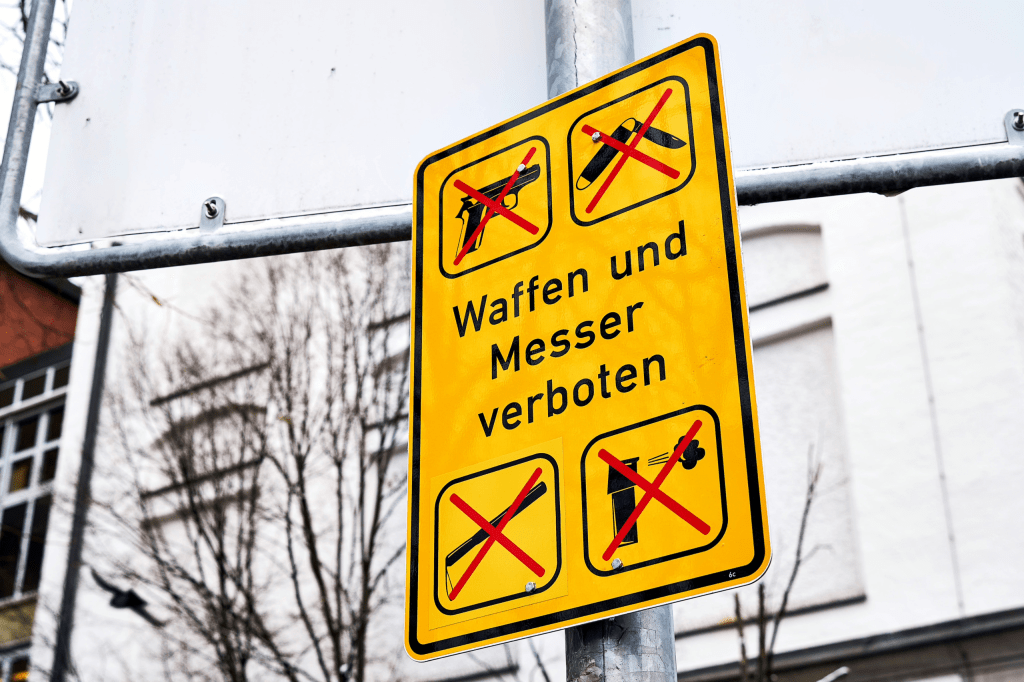
That means weapons and knives are forbidden (here).
Why didn’t anybody think of this before? Problem solved. At least “temporarily.”
Federal police declare temporary knife ban at major Berlin train stations – A temporary knife ban at major Berlin stations promises safety but raises questions about policing and public space.
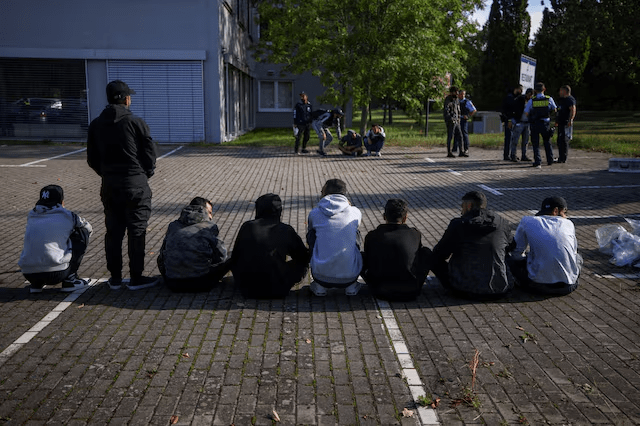
Starting next week, Berlin’s central train stations will become no-knife zones, at least for part of the day. In an effort to curb rising violence, federal police are instituting a month-long weapons ban across twelve of the city’s busiest stations.
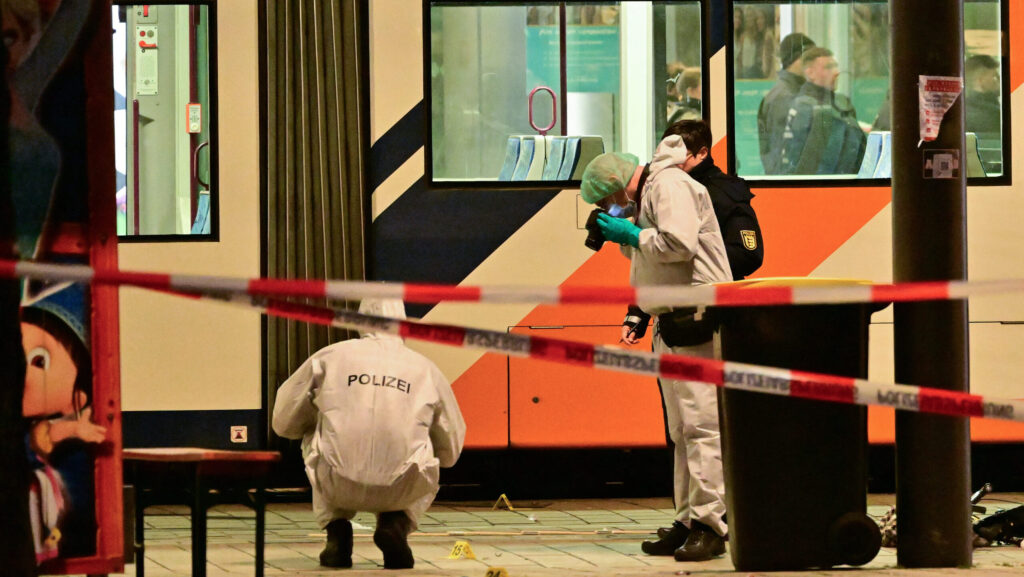
It Is Time for Germans To Get Seriously Angry – Early Sunday morning (last week), Germany was hit by Islamist terror—again. Five people were severely injured, two critically, in a knife attack. The perpetrator, identified as a 35-year-old Syrian refugee, was finally tracked down and arrested by police on Tuesday, 42 hours later. He reportedly entered Germany illegally two years ago. Fellow residents at his asylum shelter told reporters he maintained close connections to Islamist circles—a claim supported by evidence found in his room during the police investigation.
Germany, that much is clear, is in deep trouble. And its establishment—though the police have done a commendable job hunting down the perpetrator—remains unable to get a grip on the persistent terrorist threat.






 Observing Hermann