Greens Ask Germans To Lower Anxiety Level

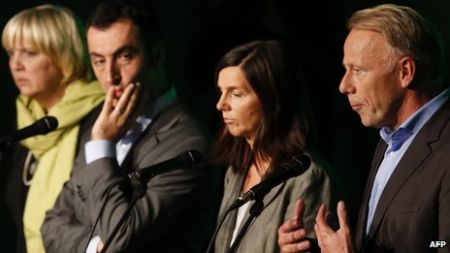
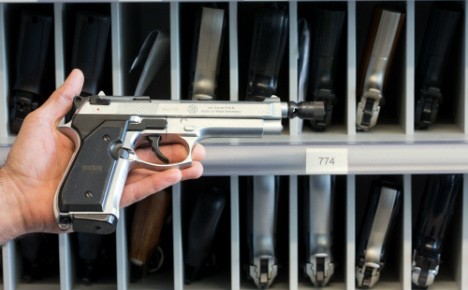
Explaining that “if more people are carrying weapons it will lead to an escalation rather than a calming of the situation,” German Green spokesperson Irene Mihalic wishes to explain to her unenlightened subjects how the current sharp increase in non-lethal weapons sales over the past three months in Germany is just not nice and ought to be like stopped immediately already, you guys.
Guns

Damn. Why didn’t anybody else think about telling the rabble this before?

Mihalovic, who is Green Party spokesperson for internal security, explained the increase in demand for licenses through a growing sense of insecurity in the population.

Damn number 2. Another clever observation. I may have to rethink my stand on these German Green Shirts after all.

“Nach der Kölner Silvesternacht gibt es viel Aktionismus.”
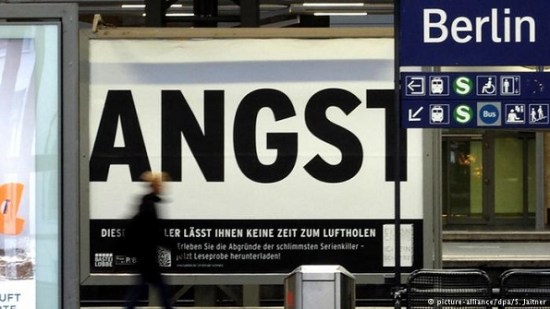
German Angst Is Back?

What do you mean, back? Did it like step out for a quick cigarette when nobody was looking or something? I certainly never saw it leave.

Angst

I mean, Germans have angst when they don’t even need to have any angst (it’s “the German lifeblood“). That’s why they qualify German ‘angst’ with the ‘German’ part. They’re sure as hell going to have some angst whenever there’s a good reason to have angst. Talk about your no-brainer.

Here, help me answer these:

– Do we react more skittishly to change than others?

– What unnerves the Germans so much about this large influx of refugees? Is it fear of terror, or concern about rising crime, or diluting the culture?

– Are we being overcome by a fear of the future?

– Is there a typical anxious German?

– Is the political landscape in Germany fundamentally changing?

I’m glad you asked me that, Deutsche Welle. The answer here is, of course, yes.

German Of The Day: Bombenstimmung

That means a tremendous, “bomb-like” atmosphere. And that’s definitely the kind of mood some of those fine, wholesome folks down there in that little old one-horse town called Freital, Saxony seem to be in.

Freital

A local politician who supported a plan to house refugees in the town of Freital outside Dresden has been the victim of an arson attack. The Left party said that Michael Richter was the target of right-wing threats…

In recent weeks, Freital – just 10 kilometers (6 miles) southwest of Dresden – has been the scene of increasingly tense political rhetoric and sporadic violence after city authorities announced in June that the town of around 40,000 would house 280 refugees in a former hotel. Some locals responded by launching a series of increasingly virulent anti-asylum seeker demonstrations, culminating in a July 6 town hall meeting which saw protestors clash with town politicians.

Sheesh. Ugly Germans of the week? These folks have now been awarded the entire month of July.

Germany And USA Divided Over How Best Not To Do Anything In Ukraine

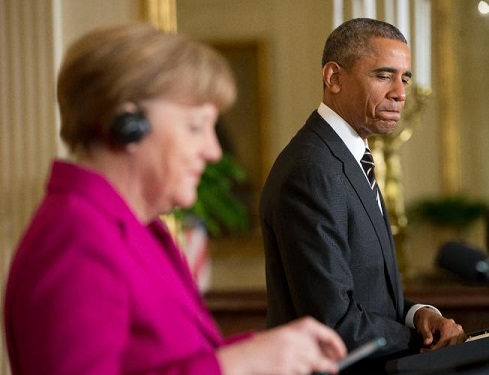
Although President Obama just went out of his way to stress that Russia’s aggression against Ukraine only reinforces the unity of the US and Europe to not do anything about it, Chancellor Merkel’s visit to Washington today nevertheless made clear once again just how wide their views differ when it comes down to the how-not-to-do-anything-about-it part.

Ukraine

Washington, on the one hand, prefers talking about maybe sending weapons someday perhaps but let’s not rush into things because these are weapons we’re talking about here after all people while Merkel, for her part, categorically rejects the idea of sending weapons that are never going to be sent anyway, preferring instead more negotiations about negotiations with whoever feels like negotiating about anything at anytime anywhere, stressing here how crucial it was “that the West stand up for Ukraine,” provided, of course, that this remain a purely figurative expression devoid of anything that could even remotely be interpreted as meaning “like actually standing up for Ukraine or anything.”

“If we give up this principle of territorial integrity of countries, then we will not be able to maintain the peaceful order of Europe.”

Germans Aren’t Scaredy-Cats

They’re Fear Rabbits (Angsthasen).

Angst

And what’s the number one angst in Germany these days? Ukraine? Ebola? Nope. Money. Money, the environment and health, in that order.

“The majority of Germans are afraid the Eurozone crisis will hit tax payers hard and that the cost of living is rising.”

Im westlichen Kokon scheint der Blick gelegentlich getrübt – ein wenig mehr Realismus könnte den Deutschen nicht schaden.

Inconvenient Truths

Greens

No, not just the one about top German Green party leaders having to resign after seeing their party’s vote drop to 8.4 percent under their leadership (from 10.7 percent in 2009).

Climate

There is also the one that climatologists are going to have to face – according to the Spiegel, of all places – about the data showing how global temperatures just aren’t rising the way they had so alarmingly and repeatedly predicted they would.

This is a dilemma. Or another moment of inconvenient truth? I guess the question now is how the Greens and the climatologists are going to get together and manage to kick-start the fear and get it reved up again. Or what other options could they possibly have?

The number of people who believe in such a coming apocalypse, however, has considerably decreased. A survey conducted on behalf of SPIEGEL found a dramatic shift in public opinion — Germans are losing their fear of climate change. While in 2006 a sizeable majority of 62 percent expressed a fear of global warning, that number has now become a minority of just 39 percent.

PS: It must be hard to be cool and smug and still get whooped bad by  a dull, frumpy and uncharismatic “Swabian houswife.”

Makes Sense To Me

“US Experts Want More Leadership from Germany”

There hasn’t been any leadership in the US for about five years now. Somebody ought to start doing  it one of these days.

Obama in Berlin

Germans aren’t the only ones with interests at stake in next month’s election. The US is watching too — and Washington is hoping that, once the campaign is history, Germany will show more leadership on global issues.

“I think the assumption Americans have is that Germany should always step up and take responsibility commensurate with its weight in the world.”

PS: There was yet another anomaly in the GCG (Gun Control Germany) yesterday.

It’s Good To Be In A Crisis

Money is like water (or maybe like beer). It has to go somewhere. And 40 billion euros just made its way to Germany.

Crisis

While fear has driven money away from Greece and Spain and co, making the government cost of repaying debt in these countries seem prohibitive, in Germany it has been quite different. Fear has boosted Germany coffers…

One thing is for sure, putting it in Greek bonds is risky. Spanish, Italian and Portuguese bonds don’t seem much safer either. But German bonds, in contrast, feel as safe as a safe house in a land with no crime. In fact so safe are German government bonds or bunds, perceived to be, that there have been times when the yields on some of them have been negative.

So actually, Germany has done rather well out of fear created by the euro crisis – or should that be the other way around – a euro crisis created by fear?

Guy Paid To Warn Germans About Too Much Video Surveillance Warns Germans About Too Much Video Surveillance

This guy and millions of other Germans, too (although they don’t get paid and therefore do it for free).

Video

Datenschutzbeauftragten (data protection officers) are just that way over here, whether they’re Datenschutzbeauftragten or not.

It doesn’t matter that most of this video surveillance might be taking place for a reasonable reason (like crime prevention/fighting – think Boston Marathon), there is clearly a pathological fear of being watched in play over here (and not just over here, either). It’s a sign of the times, I guess. I know. It’s only paranoia (but I like it).

Oh. This suddenly reminded me of some old lyrics (sort of) to Frank Zappa’s Didja Get Any Onya?

…Years ago in Germany when I was a very small boy, zere was a lot of people standing around on ze corners asking questions: “Why are you standing on ze corner, acting ze way you act, looking like you look? WHY DO YOU LOOK THAT WAY?” And they ask me and I only would say: “I don’t . . . I don’t know, I’m just standing ’round ze corner waiting here . . . just in . . . in ze evening, and . . . and it’s so nice outside . . . the night is so nice . . . why . . . are you just asking these questions . . . ”

“Offenbar scheint eine notorische Neigung zu bestehen, Nachbarn zu überwachen. Und eine pathologische Befürchtung, überwacht zu werden.”

You Can’t Even Count On German Hypochondria Anymore

One can only muster up just so much angst, I guess. Even if you’re a German. There’s just never going to be enough of it to go around to make everybody happy. I mean unhappy.


That’s right. Current German Angstzustände (states of anxiety) just ain’t what they used to be. German angst being the complex, ever-changing and unstable condition that it is, a new Forsa study has indicated that, for the moment at least, Germans are actually more frightened of the ongoing European debt crisis than they are of the worries they make about their own health, or lack of it.

How it could come to this unexpected result is very puzzling for many, myself included, but one researcher has come up with a startling new theory that might explain this sudden and eerie angst turnaround. He believes that the permanent media reports about sicknesses and health risks stir up people’s worries and fears (duh), but with all the media attention being focused on the debt crisis these days, common disease mongering has simply been coming up too short on the angst Skala (scale).

Boy I sure hope that they finally get this Eurpean debt crisis crap over with soon so we can get back to business.

“Es scheint, als ob permanente Medienberichte über Krankheiten und Gesundheitsrisiken auch die Ängste der Menschen schüren.”