We Must Save The World But It Must Be Affordable

Cheap, in other words.

Germans everywhere are slowly waking up to the fact that their revolutionary switch to renewable energy sources is going to cost way too way much more than they ever thought they would ever have to pay – and the German government has now woken up to this.

That is why they have now begun a quiet backpedaling policy designed to prepare the German population for a slow turnaround from the energy turnaround that hasn’t even begun to turn around yet.

“For me it’s a priority that electricity remains affordable,” Germany’s new Environment Minister Peter Altmaier says, for instance.

He also says he doubts that Germany will be able to reach its goal of introducing one million electric cars by 2020.

Nor does he think that Germany will be able to cut its energy consumption by 10 percent that year, a precondition for reaching the illusory goal of 35 percent renewables the government is still aiming for, sort of.

This is the German Environment Minister talking here, folks. So you get the message, don’t you? And if you don’t get it now, you’ll get it later.

Regierung fürchtet die Strompreis-Wut der Wähler
Bundeswehr On The Front Line Again

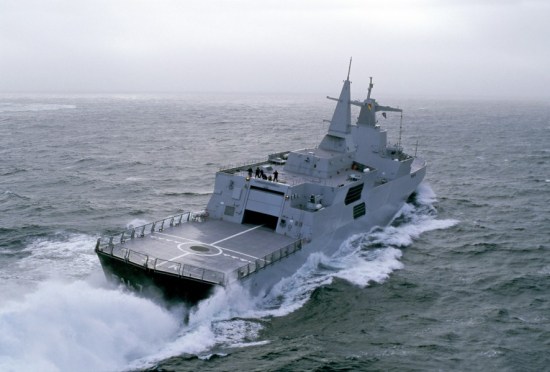
When it comes to fighting for German weapon system exports, I mean. Talk about your military industrial complex. The Germans sure have one – and are clearly in denial about it – which is the real news item here if you ask me. Take the latest sale of frigates to Algeria, for instance (I mean please).

These pacifistic (German made) and very expensive peaceships not only make big profits for traditional Waffenschmiede (weapons makers) like Thyssen-Krupp Marine-Systeme, they finally give Germany’s alibi army something vernünftig (reasonable) to do: Train the folks who might actually be using these weapons one day – and in a thoroughly German thorough way, too, I am sure.

Who says the Bundeswehr isn’t an effective force? No, not a fighting one, as a sales force.

“Die Ausbildung wird in Deutschland und auf Hoher See stattfinden.”

What Germans Want

An online German government poll has just found out that Germans want legalized dope, a ban on sex with animals, more home births, a ban on genocide denial and more affordable artificial insemination, although not necessarily in that order.

Of course nobody asked how they would feel about the possibility of getting rid of online polls like these one day, but give them some time.

The online poll is part of an ongoing government initiative called “Dialogue on the Future” that aims to get ordinary Germans thinking about how to improve life in Germany.

PS: And in another survey it turns out that 57.6 of German women asked would rather watch “Sex and the City” (TV) than have sex.

German Solar Energy Industry Tanks, German Tanks Don’t

Unable to compete in the global market without the subsidy drug, state-ordained “energy turnaround” or not, Germany’s solar energy industry is getting eaten alive by cheap Chinese imports as we speak, so-to-speak.

“Ah, screw it,” German industrialists elsewhere in the country say to that. “We’ll just keep making a killing producing what we’ve always produced best: War technology. Tanks, Saudi Arabia!”

“But it’s not like we don’t continue to support the Arab Spring or anything,” another tankful German industrialist added ruefully.

German paper says Saudis want 600-800 tanks.

Genetically-Unmodified Germans Still Opposed To Genetically-Modified Foods

Who cares if genetically-modified crops are now making up a large proportion of harvests in North and South America?

Germans aren’t buying any of this dangerous, hi-tech agro-terror crop, I mean crap because, well, genetically-modified crops are now making up a large proportion of harvests in North and South America (the key word here is North).

After all, any German you ask will tell you that the effect of consuming GM crops is unknown. Other than becoming hungry if you don’t eat them maybe, which is also unknown here. And this only backs up their argument, I think, sort of.

Nach den Plänen der EU-Kommission sollen die weniger strengen Gentechnik-Regelungen für Futtermittel auf Lebensmittel übertragen werden.

Mehr Fluglärm? Nein Danke!

The next wave of vociferous protests by residents complaining about excessive aircraft noise is being preprogrammed in Germany. Even if the airport in question is in the middle of German nowhere.

California-based XCOR Aerospace is developing a suborbital aircraft called the Lynx space plane which will carry paying passengers to the stratosphere. Unfortunately for them, capable engineers that they surely are, none of these guys has ever been to Germany. Otherwise they wouldn’t have had the not-so-bright idea to try to use an airport near Cuxhaven for their so-called Sea-Airport.

Germans don’t like airport noise, you see. They don’t like technology that isn’t German, either, or any of that other futuristic Scheiß (crap). And they don’t like “neoliberal” globalisation plans for world revolution (literally, this time). And they don’t like millionaires, either. A ride aboard the Lynx will retail at around $95,000. That means it’s time to agitate again or something, before the project can even begin. Bah! Hamburg! I mean Humbug!

Das Projekt sei freilich erst “in den Anfängen einer Ideenfindung.”

Germans Really Are Peaceniks After All

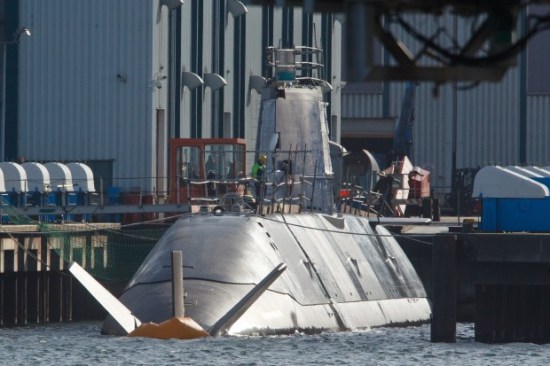
The submarines they have furnished Israel with will certainly be keeping the peace.

Israel is arming these Dolphin class subs with nuclear-tipped cruise missiles. Any nation that attacks Israel with a nuclear weapon will live to regret it. Not for very long, though.

Now this is gun control that really works. And here we thought the Germans were so down on nuclear power and all that.

“Darauf kann Deutschland stolz sein.”

Privacy Concern Has Its Price

And in this case it will be about 300,000 euros per day.

European authorities have taken Germany to court for failing to implement the E.U. Data Retention Directive.

The European Commission announced on Thursday that it wants the European Court of Justice to impose a fine of just over €315,000 (US$391,866) a day.

The Data Retention Directive requires telephone companies and ISPs to store huge amounts of telecommunications information, including data about email, phone calls and text messages, for law enforcement purposes.

So much for Germany being the Musterschüler (model student) in all things EU. Germans don’t like this law because they live in a POLICE STATE or something (albeit one that’s all in their minds). It’s not that Germans don’t trust their fellow Germans or anything, you see, it’s just that they don’t trust their fellow Germans.

Hey, they should know. Where there’s smoke there’s fire and all that? I guess I’d pay up, too.

Weil Berlin geltendes EU-Gesetz über die Vorratsdatenspeicherung nicht in nationales Recht übertragen hat, hat die EU-Kommission Deutschland vor dem Europäischen Gerichtshof verklagt.

What’s 20 (30? 40?) Billion Euros These Days?

It’s peanuts, man. Renewable peanuts.

Damn. This gives power madness a whole new meaning.

Germany mapped out a 20 billion euro ($25 billion) plan on Tuesday to expand its power grid and avoid a “power gap” as Europe’s largest economy switches away from nuclear to renewable energy.

Germany’s government, the federal energy network regulator and transmission grid firms unveiled joint plans for thousands of kilometres of new electricity lines to 2022, to help distribute volatile renewable energy.

Operators say some 3,800 kilometers of new power lines needed through 2022.